Dallas-Fort Worth commuters spent 2 hours longer in rush hour in 2023

Add Axios as your preferred source to
see more of our stories on Google.
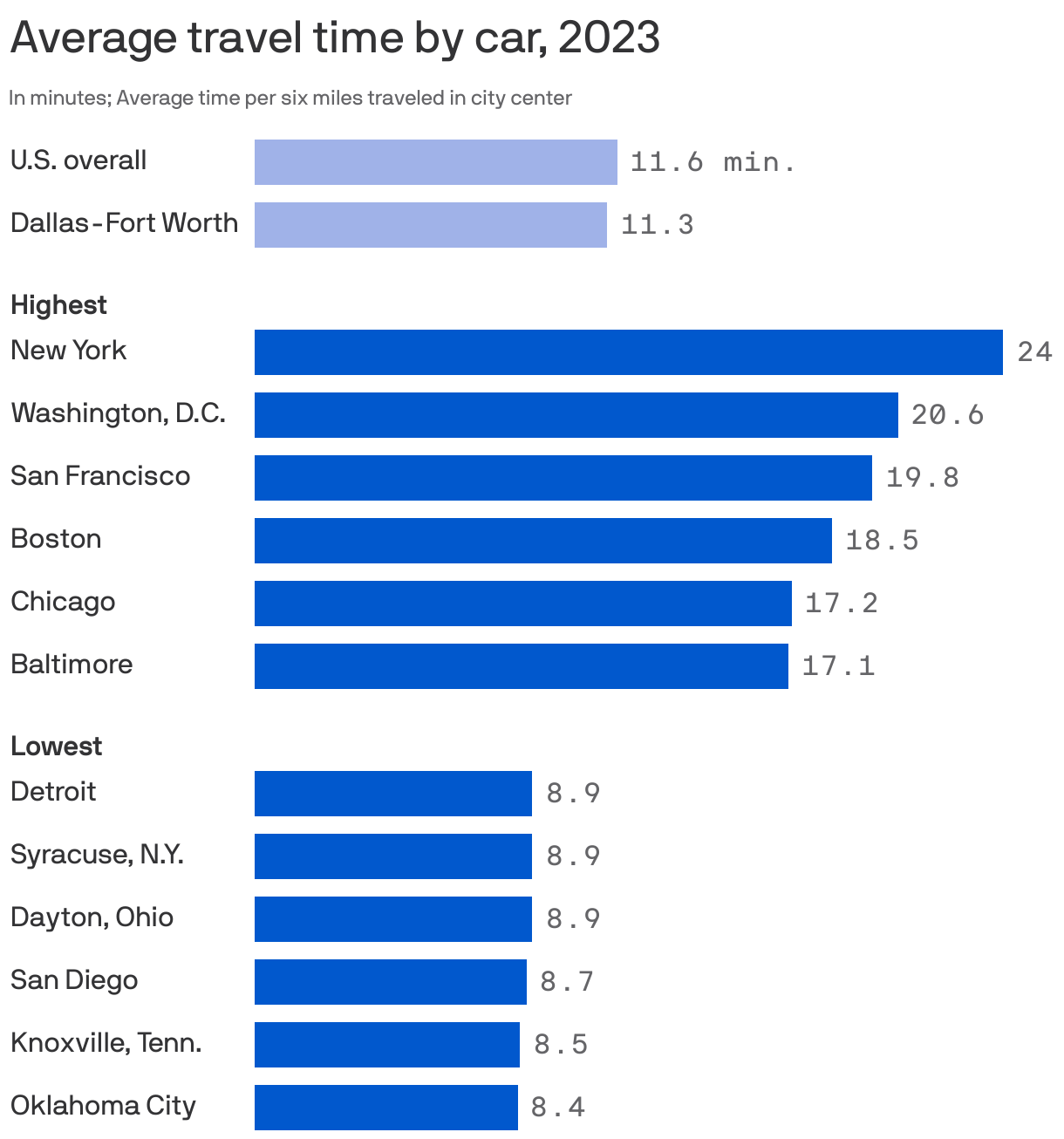
Drive times in Dallas-Fort Worth have increased since 2021 — but you probably already noticed.
The big picture: Car commutes have largely gotten slower across America since the mid-pandemic era, per new data from mapping and location tech giant TomTom.
- Longer commutes are likely due to more people returning to offices last year, reports Axios' Alex Fitzpatrick and Kavya Beheraj.
By the numbers: It took 19 seconds longer last year to drive 6 miles in the D-FW city centers than it did in 2021.
- It took an average of 11 minutes and 40 seconds to drive 6 miles in the city centers in 2023.
- A 6-mile trip took nine minutes and 20 seconds on average across the D-FW metro.
The intrigue: The additional seconds add up. Dallas-area drivers lost an average of 23 hours during rush hour last year, up by two hours and 12 minutes from 2022.
- Local commuters could save 17 driving hours a year by working from home one day a week, TomTom estimates. That would also equal a $52 savings in gas.
Details: Post-work rush hour is worse than morning commutes, per TomTom's D-FW data.
- Evening rush hour adds an average of four minutes to a 6-mile trip, compared to a three-minute longer morning commute.
- The slowest time is between 5-6pm Tuesdays when a 6-mile trip takes 12 minutes and 10 seconds.
Between the lines: Dallas office worker occupancy increased 7% in January compared to the previous year, per the Dallas Morning News.
The bottom line: Hybrid work schedules took employees back to the office just a few days a week after pandemic lockdowns. That has changed.