Dallas-Fort Worth public transit rebounding after pandemic


Add Axios as your preferred source to
see more of our stories on Google.
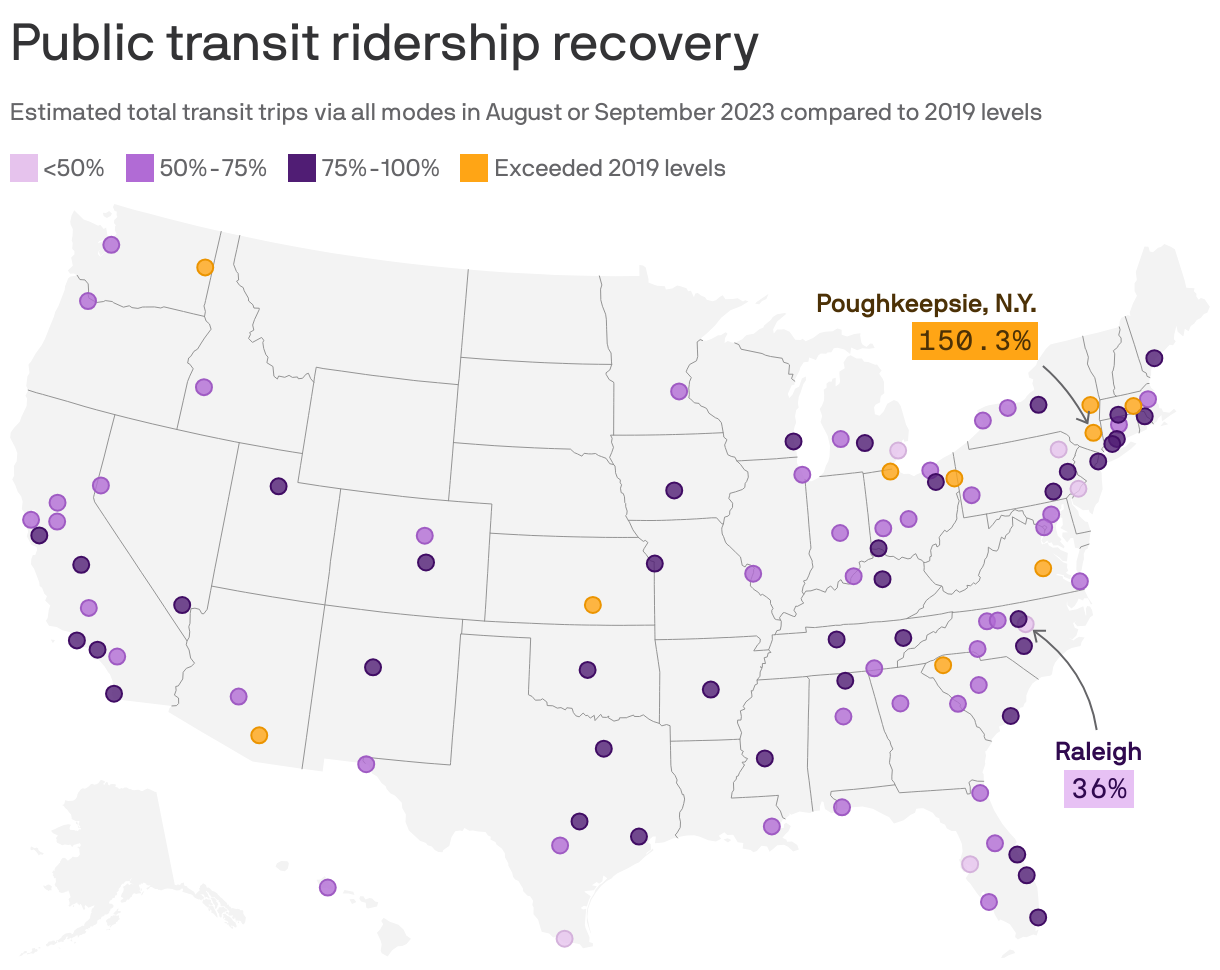
Public transit ridership in the Dallas-Fort Worth area is at 78% of pre-pandemic levels, per American Public Transportation Association data.
Why it matters: Public transit — whether in the form of buses, light rail or even cable cars — makes for cleaner, greener cities and opens up possibilities for those who can't afford a car.
The big picture: Of around 100 U.S. metro areas with more than 500,000 people, September 2023 public transit ridership was at or above 100% of September 2019 levels in just nine metro areas.
- Nationally, "ridership recovered throughout 2022 and 2023 to stand at 77% of pre-pandemic levels in November 2023," per APTA's latest data.
Zoom in: About 5.1 million riders used D-FW public transit in September, down from the more than 6.5 million riders in September 2019.
- But, bus and train use has increased this year compared to last.


By the numbers: Dallas Area Rapid Transit recorded nearly 4.5 million bus and light rail trips this September, compared to just shy of 3.9 million trips in September 2022, according to the national transportation data.
- Fort Worth's Trinity Metro recorded nearly 490,000 trips in September, compared to 455,000 trips last September.
Yes, but: Overall, local public transit ridership was declining before business and government shutdowns in 2020.
- DART bus and train ridership had been dropping for years, down to about 69 million annual passenger rides in 2019, compared to almost 71.3 million in 2013, per the Dallas Morning News.
- And ridership on Trinity Railway Express — which connects downtown Fort Worth to downtown Dallas — had dropped from a peak of 2.7 million in 2009 to 2 million rides in 2019.
Between the lines: DART has been increasing security on its trains and at stations to address riders' concerns about safety, which the transit authority's leadership says had led to declines in ridership.
The bottom line: It may take years for public transit ridership to reach pre-pandemic levels, but workers returning to office and a rebound in all other travel appears to be helping.