Texas Supreme Court hears arguments in abortion ban case

Add Axios as your preferred source to
see more of our stories on Google.
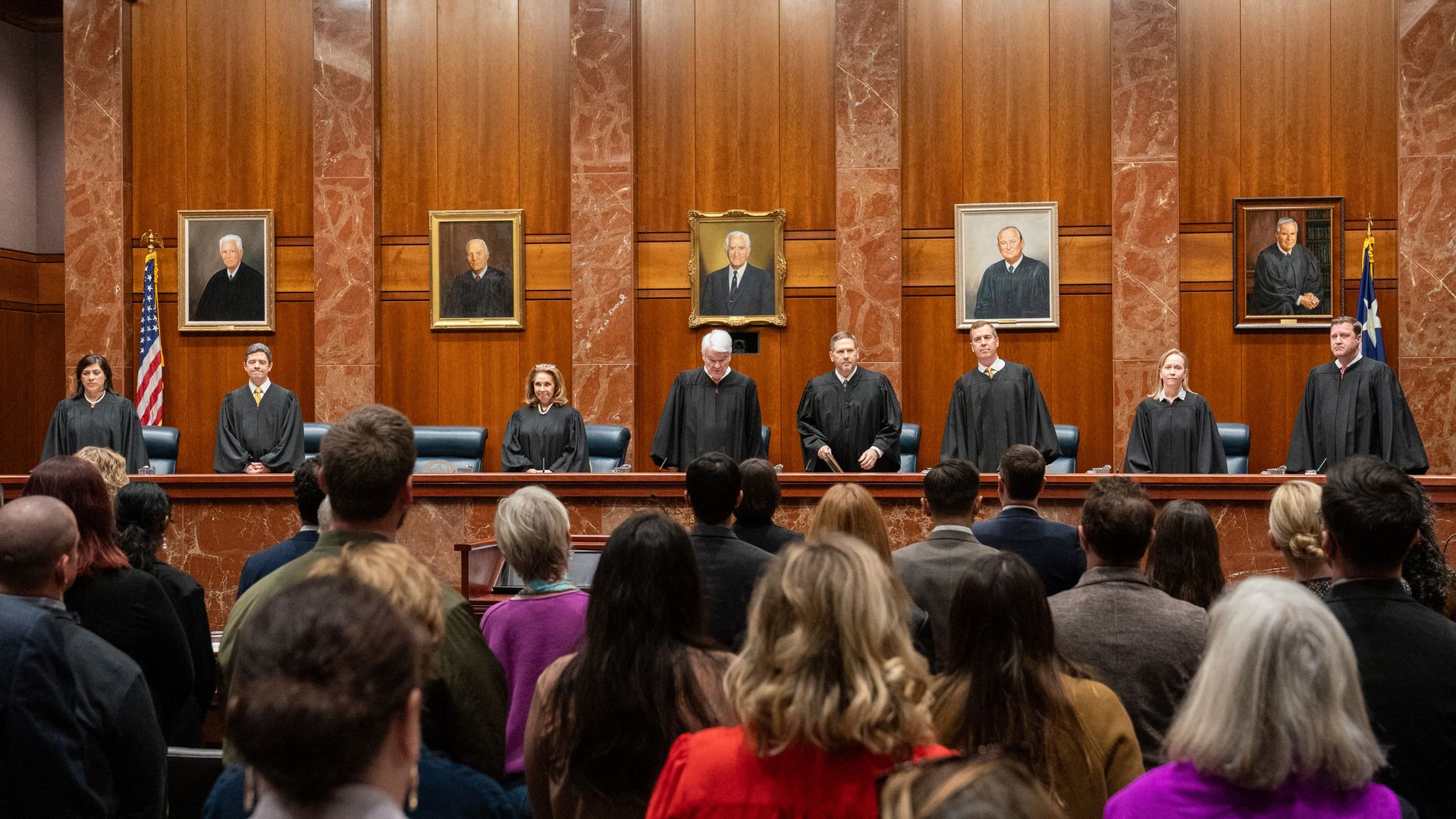
The court heard arguments and asked both sides questions yesterday in Austin. Photo: Suzanne Cordeiro/AFP
The Texas Supreme Court is weighing whether the state's abortion bans should be clarified to give doctors more guidance on treating certain complicated pregnancies.
Why it matters: Pregnant Texans carrying fetuses with severe complications have been forced to seek abortions outside the state or wait for care because their doctors said they couldn't end the pregnancies for fear of breaking the law.
Driving the news: The all-Republican court heard arguments on Tuesday from lawyers representing the Texas attorney general's office, which is defending the state's abortion restrictions, and the Center for Reproductive Rights, the group leading the challenge to the bans.
- At issue is whether doctors can legally perform an abortion when they identify a potentially fatal abnormality in a fetus.
- Health care providers who violate Texas' abortion laws could be charged with a first-degree felony that's subject to up to life imprisonment.
Catch up quick: The lawsuit has grown to 22 plaintiffs, including two OB-GYNs and several women who allege that they didn't receive the care they needed while pregnant because of the state's abortion restrictions.
- Houston-based OB-GYN Judy Levison says the state's bans have led to "widespread fear and confusion" among her colleagues and "has chilled the provision of the standard of practice of obstetric care."
- The AG's office has said that "protecting the health of mothers and babies is of paramount importance" and a "moral principle" enshrined in Texas law, which allows abortions under "limited circumstances."
- Austin-based Bumble was among 40 companies and individuals that filed an amicus brief last week, claiming that Texas' abortion bans have negatively impacted the state's economy, pegging the loss at an estimated $14.5 billion each year.
What's new: Supreme Court justices asked what the law currently does and doesn't allow, why the plaintiffs decided to sue for clarification over seeking to strike the bans entirely, and whether the limitations put physicians in a tough position.
- Some of the arguments on both sides hinged on doctors being required to apply "reasonable medical judgment" instead of being allowed to operate under a broader standard of "good faith."
What they're saying: Arguing on behalf of the state, Beth Klusmann said the women don't have standing to sue the state and could have sued their doctors instead for choosing not to perform an abortion.
- "Some of these women appear to have fallen within the exception, but their doctor still said no. That's not the fault of the law, that's a decision of the doctor," Klusmann said.
- "So that's what gives rise to the need for clarity," Justice Jeff Boyd replied.
- Molly Duane, who was representing the plaintiffs, said that while the bans offer a medical exception, "no one knows what it means, and the state won't tell us."
What's next: The court has until June to issue a ruling.