Dallas allergy season is getting longer and longer



Add Axios as your preferred source to
see more of our stories on Google.
You're probably sneezing more often than a decade ago.
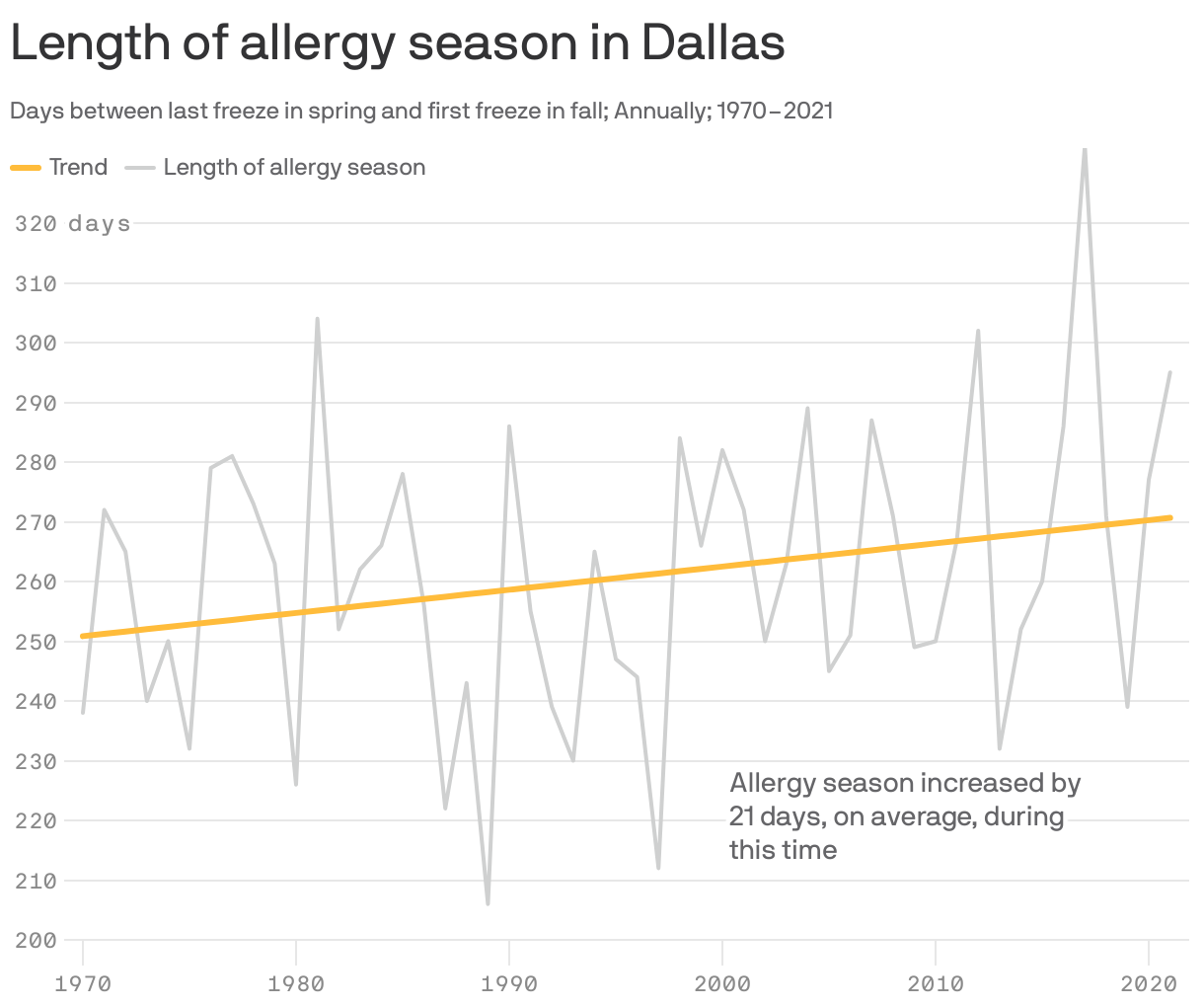
- The Dallas area's allergy season increased by 21 days between 1970 and 2021, per an analysis from Climate Central, a nonprofit climate news organization.
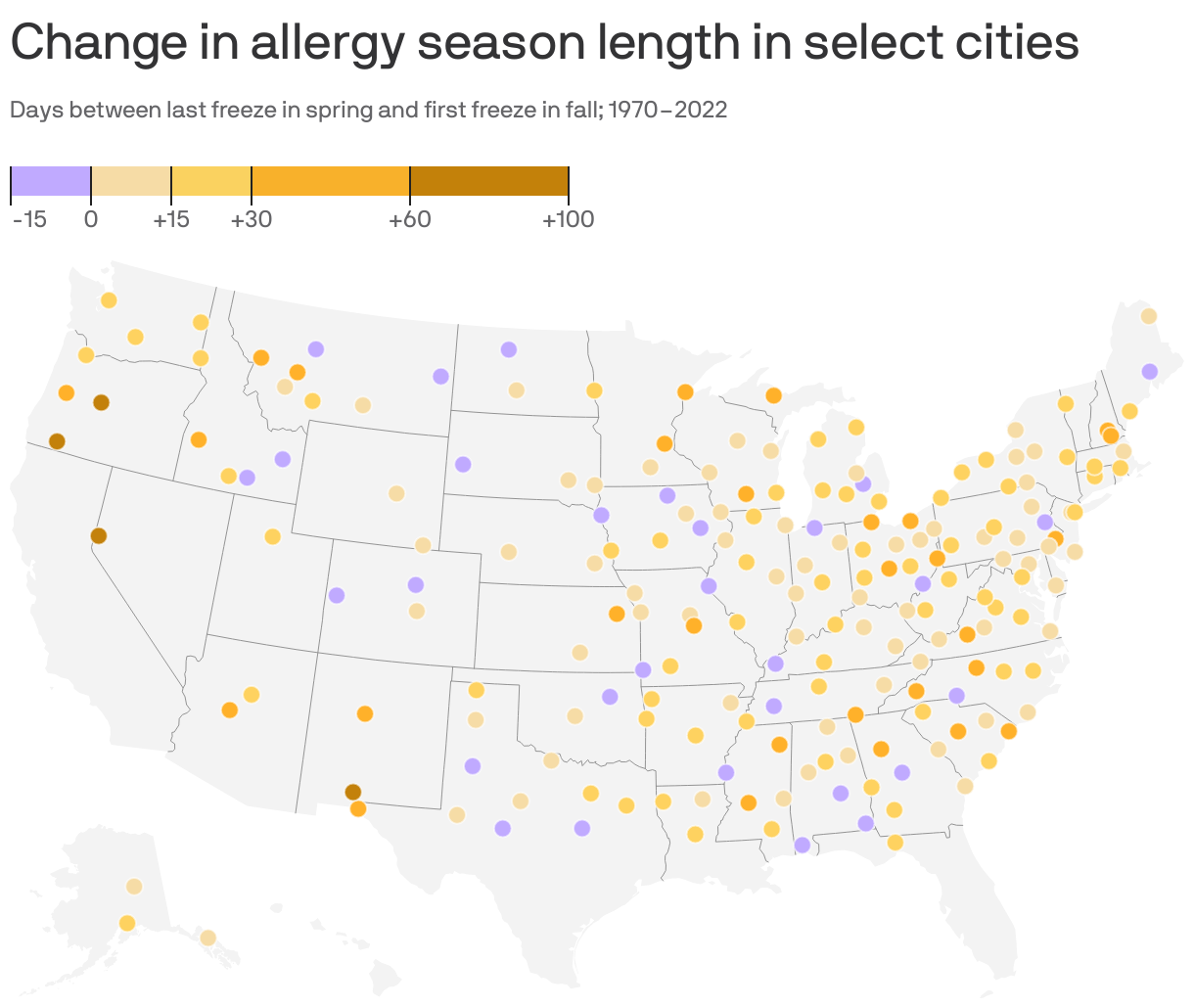
The big picture: Allergy season increased by 15 days on average between 1970 and 2021 across about 200 U.S. cities, Axios' Alex Fitzpatrick and Alice Feng report.
- That's based on the number of days between the last freeze each spring and the first freeze each fall — essentially, the annual window during which seasonal allergy sufferers are most likely to rely on an antihistamine to get through each day.
Why it matters: The lengthening allergy season is tied to climate change, per Climate Central, with big health ramifications for the roughly one-quarter of Americans who suffer from seasonal allergies — and for respiratory health more broadly.
Details: Earlier springs and fewer long freezes mean plants have more time to flower and release gobs of pollen.
- From 1990 to 2018, pollen counts increased by 21% nationwide, with the greatest increases in the Midwest and Texas, according to a 2021 study.
- The "freeze-free" season has lengthened by at least a month in more than 30 cities.
Yes, but: Allergy seasons shortened in some cities between 1970 and 2021, including Denver (-15 days) and Charlotte (-9 days).
What's next: It's only going to get worse, with allergy seasons emerging in areas where they didn't exist before and getting longer and worse elsewhere, reports Axios' Arielle Dreher.
The bottom line: Bless you.