It could take longer for Central Ohio to hit 3 million people

Add Axios as your preferred source to
see more of our stories on Google.
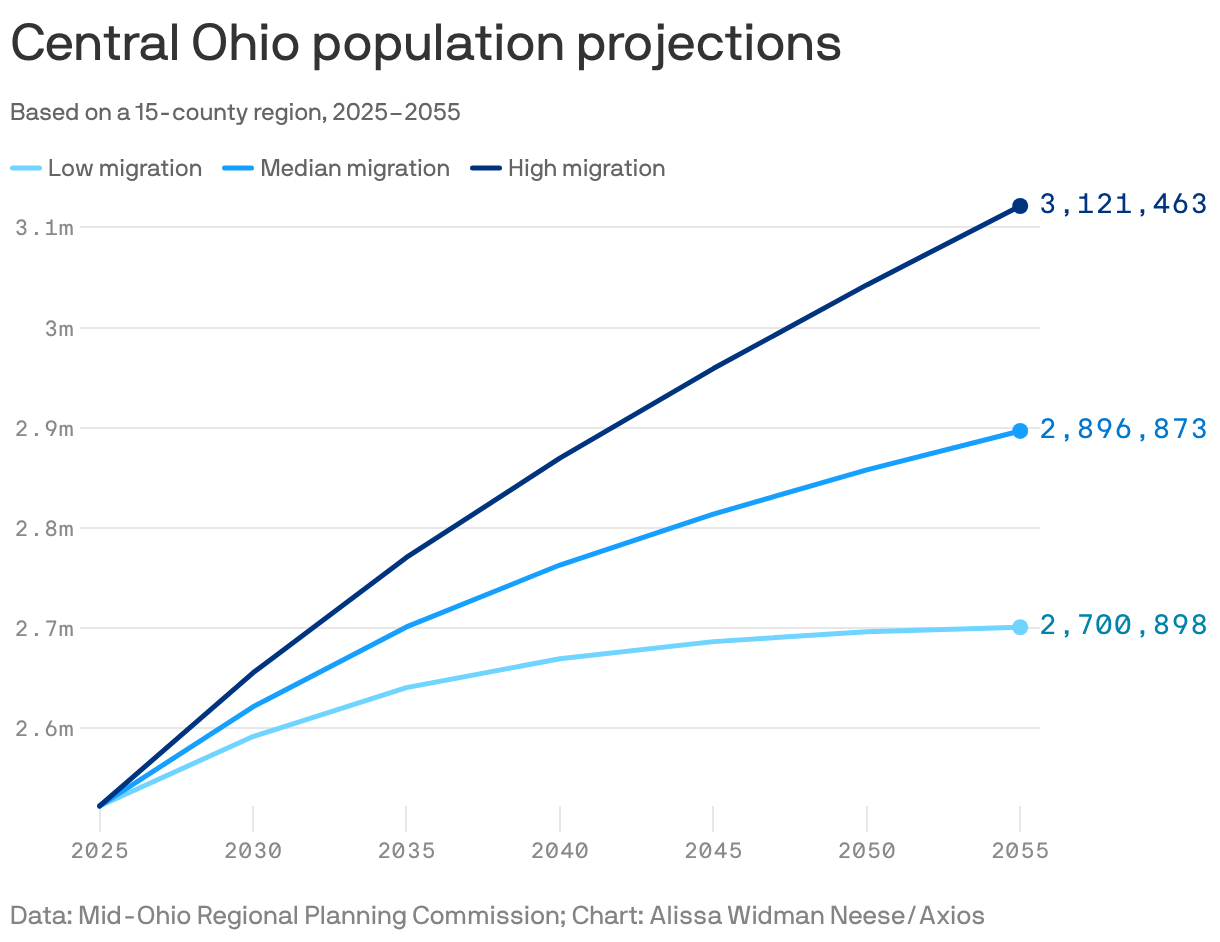
Central Ohio is preparing for a future with 3 million residents, but new projections suggest that milestone may be further away than previously expected.
Why it matters: Routine population forecasts help shape decisions that impact housing, schools, the economy and infrastructure — but they aren't an exact science, especially after the pandemic.
Catch up quick: The Mid-Ohio Regional Planning Commission now projects 2.7 to 3.04 million people will call our 15-county region home by 2050, per a report released last week.
- That's about 100,000 to 450,000 fewer people in 2050 than its last forecast.
- This is the commission's first report to include a range of three possible outcomes, reflecting ongoing uncertainty. Its dataset ends in 2024.
Flashback: In 2023, MORPC predicted a population of 3.15 million by 2050, using a dataset ending with 2019.
Currently, our region currently has around 2.54 million residents, with growth consistently outpacing the rest of Ohio and the national average.
Between the lines: In recent years, local population estimates have consistently fallen below earlier projections, MORPC director of data analytics and strategy Dave Dixon tells Axios.
- Plummeting birth rates nationwide haven't rebounded and baby boomers are aging, with local deaths expected to outpace births by 2040.
Yes, but: Central Ohio is expected to continue growing due to rising migration, especially international immigration.
- That means someday our region's growth could entirely depend on giving people a reason to move here.
- The exact numbers could change based on factors such as business announcements, federal policy and other unforeseen demographic trends, Dixon says.
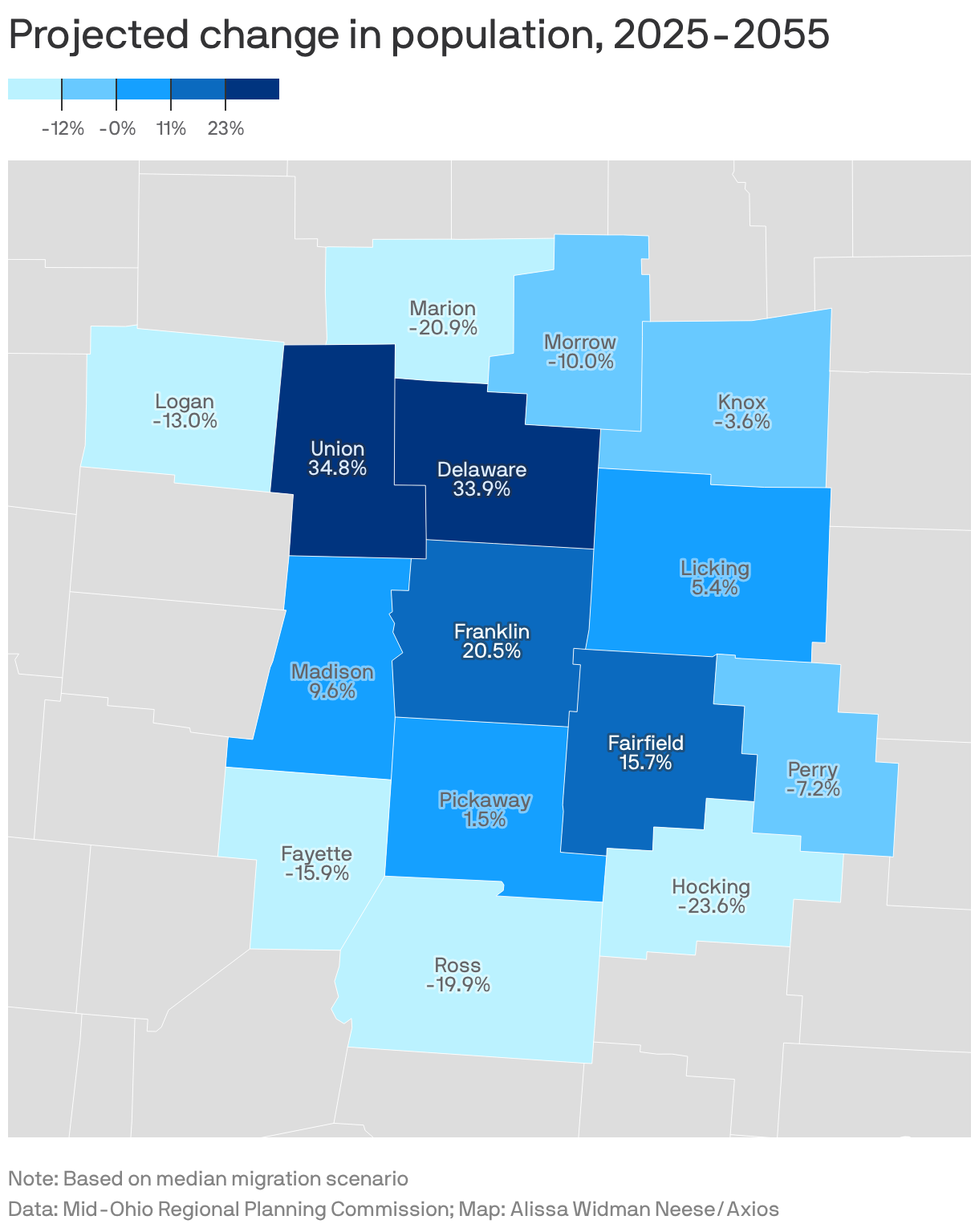
Caveat: Projected gains could vary significantly by county, with those farther away from Columbus, like Hocking, Ross and Marion, actually losing population even in the best-case scenarios.
The bottom line: A projection doesn't have to be exact to be useful.
- "What we want folks to do is plan based on likely outcomes," Dixon says.