The status of abortion laws in Ohio and across the U.S.


Add Axios as your preferred source to
see more of our stories on Google.
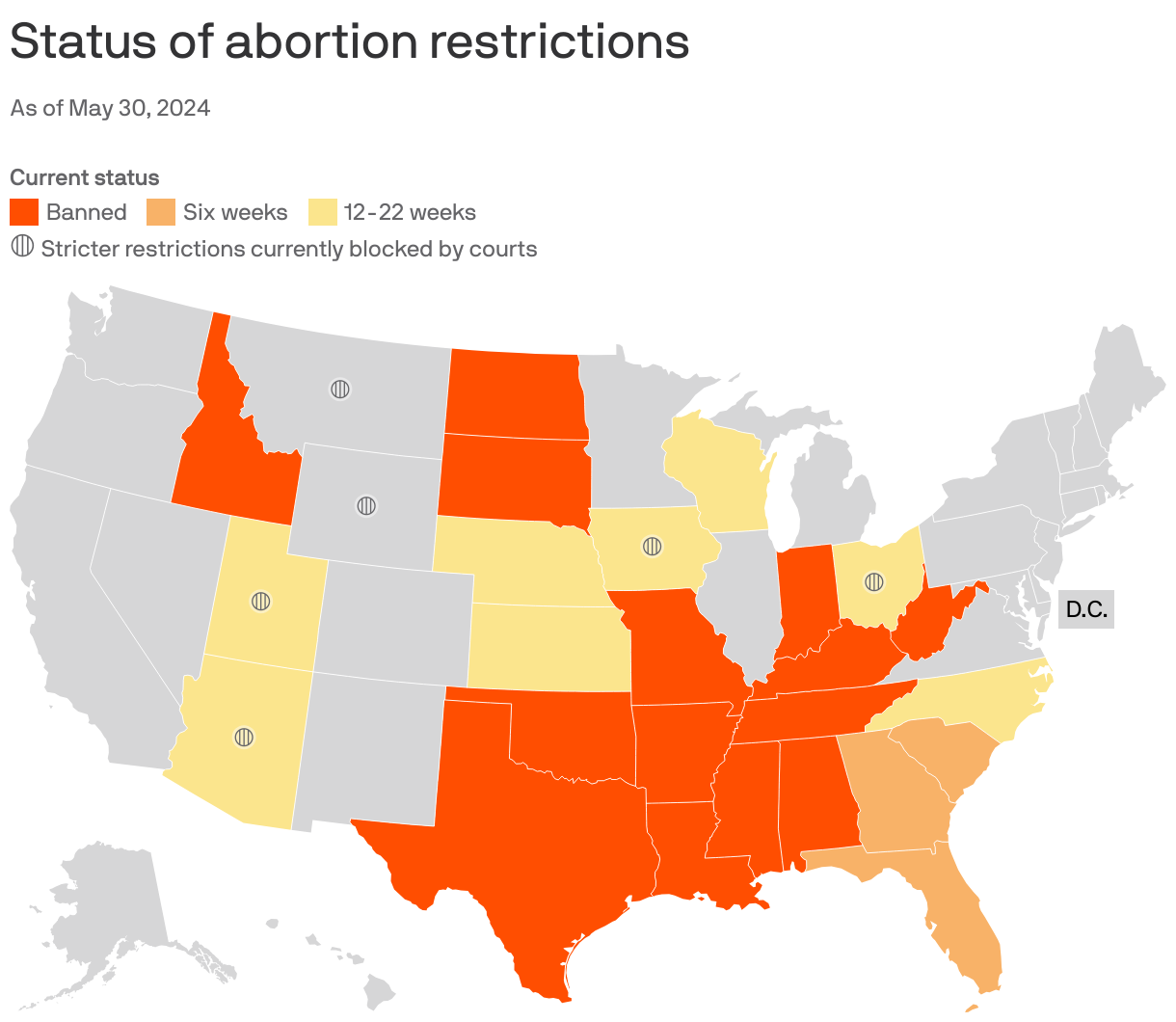
Half of U.S. states have imposed limits on abortion over the past two years, though Ohio voters rendered such restrictions moot at the ballot box.
Catch up quick: Gov. Mike DeWine signed a "Heartbeat Law" in 2019 prohibiting abortions after about six weeks of pregnancy, but a judge blocked its enforcement because of federal rights guaranteed by Roe v. Wade.
- When that precedent was overturned in 2022, it opened the door for the six-week ban to take effect.
Yes, but: Litigation challenging the law continued, and Ohio citizens soon had their say.
Over 56% of voters supported the 2023 constitutional amendment to protect abortion rights up to fetal viability, or around 24 weeks of pregnancy.
- Access therefore remains secure — Ohio lawmakers cannot pass bills to overturn a constitutional amendment.
State of play: Abortion rights advocates still want the 2019 ban officially ruled unconstitutional, along with the removal of other abortion-related statutes, such as a required waiting period for patients.
- Attorney General Dave Yost is conceding the six-week ban's unconstitutionality, but is fighting to keep other provisions in place, the Ohio Capital Journal reports.
What we're watching: If the Ohio Statehouse will take up any other abortion legislation this term, which ends Dec. 31.
- Two Republicans introduced a bill to give lawmakers — not the courts — "exclusive authority" over implementing the new constitutional amendment in an effort to prevent it from taking effect.
- Another GOP bill would ban state funding of abortion care.
- Democrats have proposed laws to protect in vitro fertilization and abortion access.
- None of these bills have made significant legislative progress to date.