What Trump's travel ban means for Boston's Haitian residents


Add Axios as your preferred source to
see more of our stories on Google.
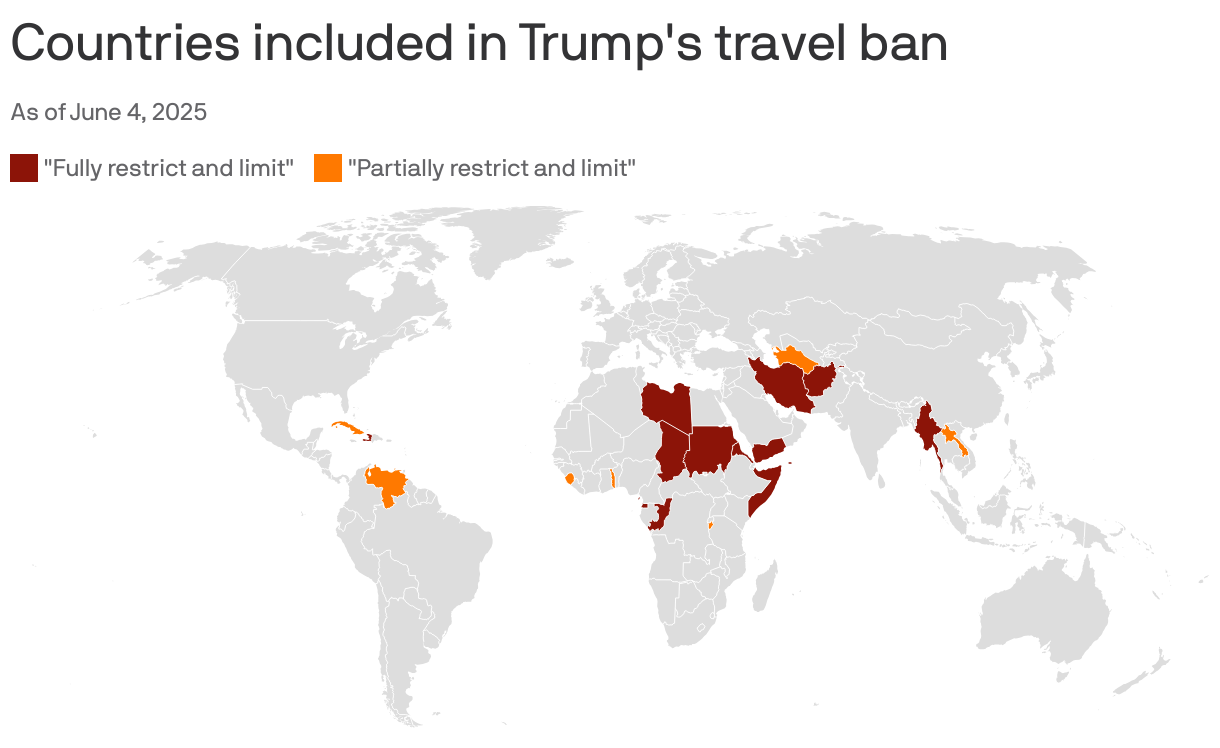
President Trump's new travel restrictions mean widespread concern for the substantial Haitian population in Massachusetts.
Why it matters: Over 80,000 Haitian immigrants reside in Massachusetts. Community leaders say Bostonians with ties to the island are confused and fearful that the new ban cuts off access to family members and visits to their homeland.
- Suspensions of visas for travel to and from Haiti would affect students, family reunification cases and routine travel between the two countries.
- The administration said the high rate of visa overstays among Haitian visitors and the current governmental situation in the island nation call for stronger security vetting.
Catch up quick: Trump issued a proclamation Wednesday that restricts the entry of people from a dozen countries into the U.S., citing national security concerns.
- The proclamation states that he has decided to "fully restrict and limit" entry from Haiti, Afghanistan, Myanmar, Chad, Republic of the Congo, Equatorial Guinea, Eritrea, Iran, Libya, Somalia, Sudan and Yemen.
- "These restrictions distinguish between, but apply to both, the entry of immigrants and nonimmigrants," according to the proclamation.
What they're saying: "A travel ban targeting Haitians only adds to the suffering," immigrant rights advocate Pastor Dieufort Fleurissaint told the Boston Globe.
- "Haiti is a nation in crisis at this point, facing political instability, violence, gangsterization, food insecurity, displacement," Fleurissaint said.
- Sen. Ed Markey (D) said Trump's move is rooted in "bigotry and hatred."
The proclamation, which goes into effect on Monday, includes exceptions for lawful permanent U.S. residents, existing visa holders, other special visas, adoptions, and for athletes traveling for the World Cup, Olympics and other major sporting events.
- Other exceptions will be made "case-by-case for individuals for whom the Secretary of State finds, in his discretion, that the travel by the individual would serve a United States national interest," the proclamation says.