What to know about Trump's new travel bans

Add Axios as your preferred source to
see more of our stories on Google.
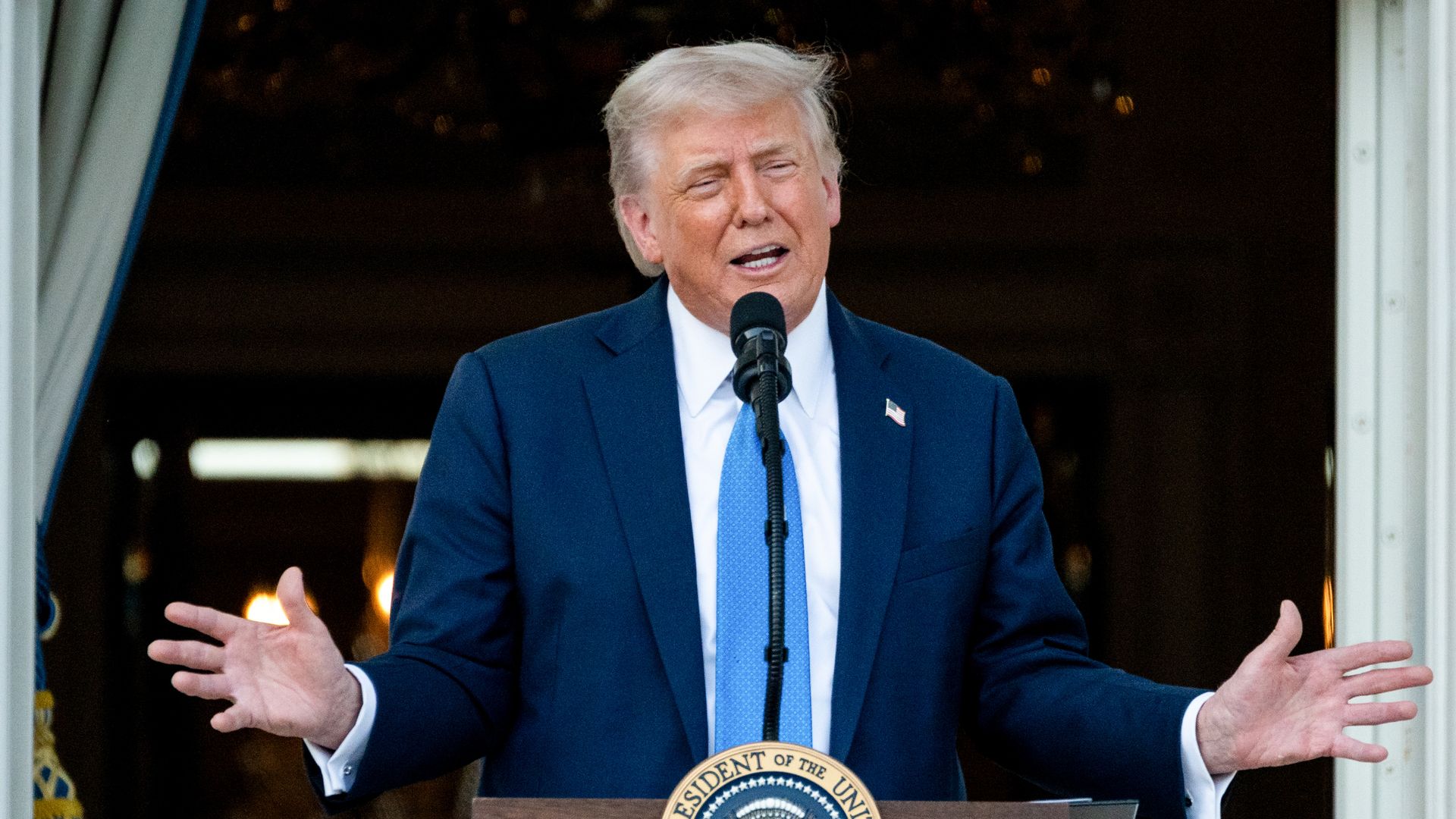
President Trump speaks from the Truman balcony during a Summer soiree on the South Lawn of the White House in Washington, D.C. on June 4. Photo: Eric Lee/Bloomberg via Getty Images
President Trump's newest round of travel bans take effect Monday, furthering his administration's crackdown on unauthorized immigration.
The big picture: Trump's first term travel bans caused immediate confusion, humanitarian concern and were slammed as discriminatory.
What they're saying: "The restrictions in this proclamation are country specific and include places that lack proper vetting, exhibit high visa overstay rates, or fail to share identity and threat information," Abigail Jackson, a White House spokesperson, said in a statement when the bans were announced last week.
- The recent attack in Boulder, Colorado, underscored "dangers" of immigrants who overstay visas, Jackson added. Egypt, where suspect Mohamed Sabry Soliman is from, was not on the travel ban list.
State of play: The bans restrict and limit entry from Afghanistan, Myanmar, Chad, Republic of the Congo, Equatorial Guinea, Eritrea, Haiti, Iran, Libya, Somalia, Sudan and Yemen.
- Trump also partially restricted and limited entry from Burundi, Cuba, Laos, Sierra Leone, Togo, Turkmenistan and Venezuela.
- "Today's proclamation weaponizes and distorts immigration laws to target people that the president dislikes and disagrees with – and it does so based primarily on racial and religious animus," Stephanie Gee, senior director of U.S. legal services at the International Refugee Assistance Project, said in a statement following the announcement.
Zoom in: Syria, Iraq, North Korea and Nigeria were included in Trump's first-term travel bans, but they have been excluded so far from this administration's.
- Many of Trump's first-term targets were countries with predominantly Muslim populations. Several on the new list are also Muslim-majority nations, but the administration said this term's bans are based on visa overstay rates.
Yes, but: Trump's list captures some of the most egregious overstay offenders, but omits others, AP reported.
Trump's first-term travel bans
Trump enacted four iterations of travel bans during his first term:
- In January 2017, Trump banned travel to the U.S. for 90 days for citizens of seven predominantly Muslim countries: Iran, Iraq, Libya, Somalia, Sudan, Syria, and Yemen. He also suspended the resettlement of all Syrian refugees.
- In March 2017, he rescinded the original ban, taking Iraq off the ban list and lifting the indefinite suspension for Syrian refugees.
- In September 2017, the third iteration replaced the second one, removing Sudan from the list and barring certain nationals of Chad, Iran, Libya, North Korea, Syria, Venezuela, Yemen and Somalia. Travel restrictions on Chad were removed the following year.
- In January 2020, Trump expanded the third ban to include Eritrea, Kyrgyzstan, Myanmar, Nigeria, Sudan and Tanzania.
The Supreme Court in June 2018 ruled 5-4 to allow a third version of the executive order to go into force.
- It expanded the list of barred travelers to include some Venezuelan and North Korean nationals.
Between the lines: "The travel bans of the Trump administration's first term never demonstrated any meaningful value as a national security tool," Jeremy Robbins, executive director of the American Immigration Council, said.
- "Sweeping national origin bans declare many innocent people to be a threat based on factors they cannot control in their home countries. There is no evidence this is making us safer."
Go deeper: Trump issues travel ban for 12 countries
