Why tips make up more of Mass. restaurant workers' pay


Add Axios as your preferred source to
see more of our stories on Google.
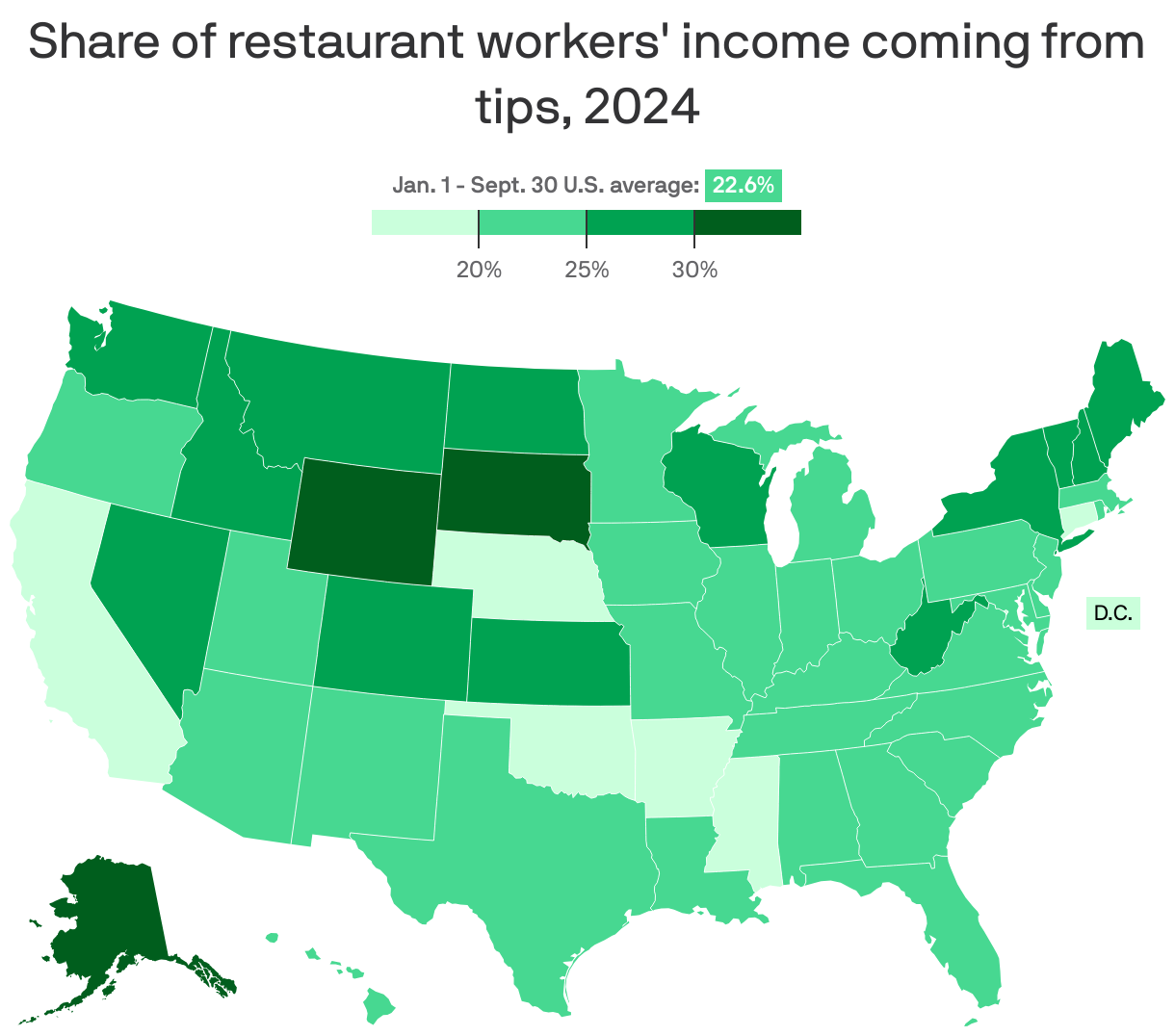
Tips make up an increasingly large share of restaurant workers' pay, per data out this morning from Square, the payments company.
Why it matters: The rise of tipping culture means that servers and bartenders are getting tipped more frequently for services — like takeout orders — that used to go without gratuities.
By the numbers: In October, tips made up 23% of restaurant worker pay — up from 14% in 2019, according to Square's report, which examines payroll data.
- In Massachusetts, workers made 24.9% from tips.
- The average tip percentage was 14.89%.
Zoom in: Voters this month rejected a ballot measure that would have raised the base minimum wages of tipped workers from $6.75 an hour to $15 an hour by 2029.
- 64.4% of voters sided with the restaurant industry and many of its workers to retain the lower wage rate.
- Through political ads and countless signs and t-shirts displayed in eateries, the industry argued that adjusting the wage would cause customers to tip less or not at all, resulting in reduced overall earnings for workers.
The big picture: The restaurant business fell off a cliff in the pandemic, but it bounced back fast. Americans went back to dining out, and restaurants scrambled to hire, driving up wages and prices.
- In recent months, the industry has seen a slowdown. But overall, restaurants have seen an increase in sales volume over the post-pandemic years that has translated into more customers per hour — and more tips, says Ara Kharazian, research lead at Square.
Reality check: Relying more on tips leaves workers in a more precarious position.
- "If you're a restaurant worker who's already in an industry subject to a lot of ups and downs, a large component of your income coming from tips isn't gonna simplify that," says Kharazian.
Between the lines: One of President-elect Trump's more popular campaign proposals was to eliminate taxes on tips.
- Looking at this data, that would mean exempting nearly a quarter of restaurant workers' income from taxes — a meaningful chunk.