Texas families are opting for cremations over burials


Add Axios as your preferred source to
see more of our stories on Google.
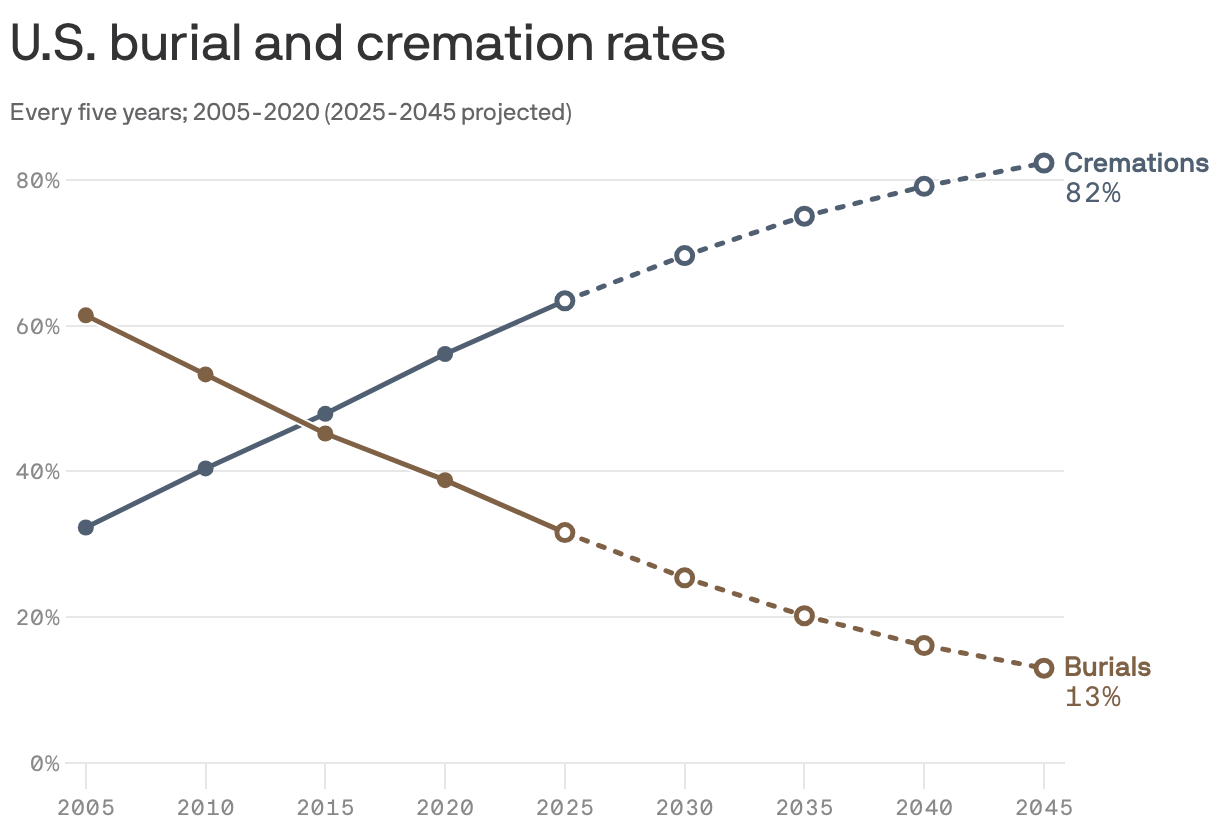
Cremations are now twice as common as burials in the U.S., reversing a norm from two decades ago, according to the National Funeral Directors Association.
Why it matters: Shifting attitudes around religion, cost and the environment are reshaping how Americans — and Austinites — handle death.
By the numbers: Cremation surpassed burial nationwide in 2015 — and the gap has only widened since, with the NFDA projecting cremation will continue gaining share.
- In Texas, the burial rate dropped from 43% in 2020 to 35% last year. The cremation rate surged from 50% to 58%.
- Burials also cost significantly more: In 2023, the median price of a casketed burial with viewing and ceremony was $8,300, compared with $2,750 for a direct cremation, according to NFDA data.
Zoom in: "The number one factor is the cemetery costs have gone up so much," Darrell Woody, chief embalmer at King-Tears Mortuary in Austin, tells Axios. "You have families barely able to pay for a funeral paying for the funeral service — but the final disposition will be a cremation instead of burial."
- Family dynamics in Austin are also playing a role, said Woody.
- Decades ago, adult Austinites were more likely to be from here or raise families here — and families wanted a gravesite to pay respects. Now, "with the migration of people to Texas, they think, 'I'm here, but it's best to cremate me, because no one is going to come to visit my grave anyway because no one here knows me that way," Woody says.
Between the lines: Texas has seen steady growth in cremations, though its rate of increase may be lagging other states because of slower uptake in South Texas and rural areas, Harvey Hilderbran, executive director of the Texas Funeral Directors Association, tells Axios.
- He says areas that tend to be Latino or Catholic have been sticking with more traditional burial services.
- Trying to meet religious rituals but also save money, some customers are doing a hybrid, Hilderbran says. "We're seeing combinations — people getting a casket, doing the visitation, embalming, and then they cremate at the end."
What they're saying: Americans' environmental mindset "is carrying all the way over into death now," NFDA spokesperson Jack Mitchell, a sixth-generation funeral director based in Baltimore, tells Axios.
- Instead of opting for a traditional burial — which requires more land use, upkeep, embalming processes and items like caskets — people are going greener.
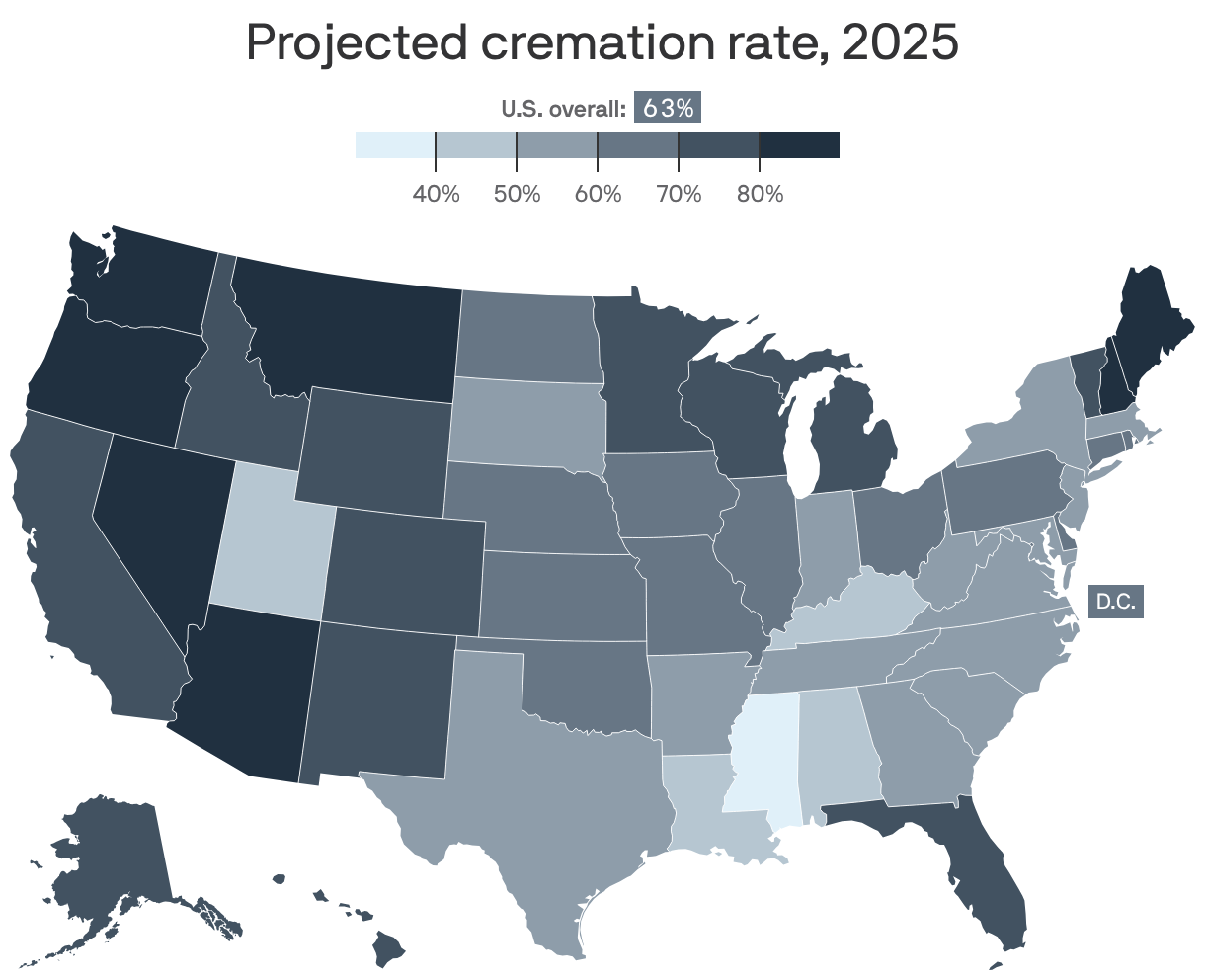
The fine print: NFDA's "burial" and "cremation" numbers rely on how information is recorded on death certificates by state, which depend on state law.
- "Cremation" can include alkaline hydrolysis depending on the state law.
The intrigue: As traditional, religious services decline, remembrance is shifting toward life celebrations and living funerals, sometimes held in spaces called "life event" venues, instead of "funeral homes," Mitchell says.
Stunning stat: By 2045, the cremation rate in Texas is projected to be 79%, per the NFDA.
What we're watching: How funeral ceremonies continue to evolve as more people get comfortable talking about death before they're near it.