Gen Z more likely to want a traditional burial than baby boomers

Add Axios as your preferred source to
see more of our stories on Google.
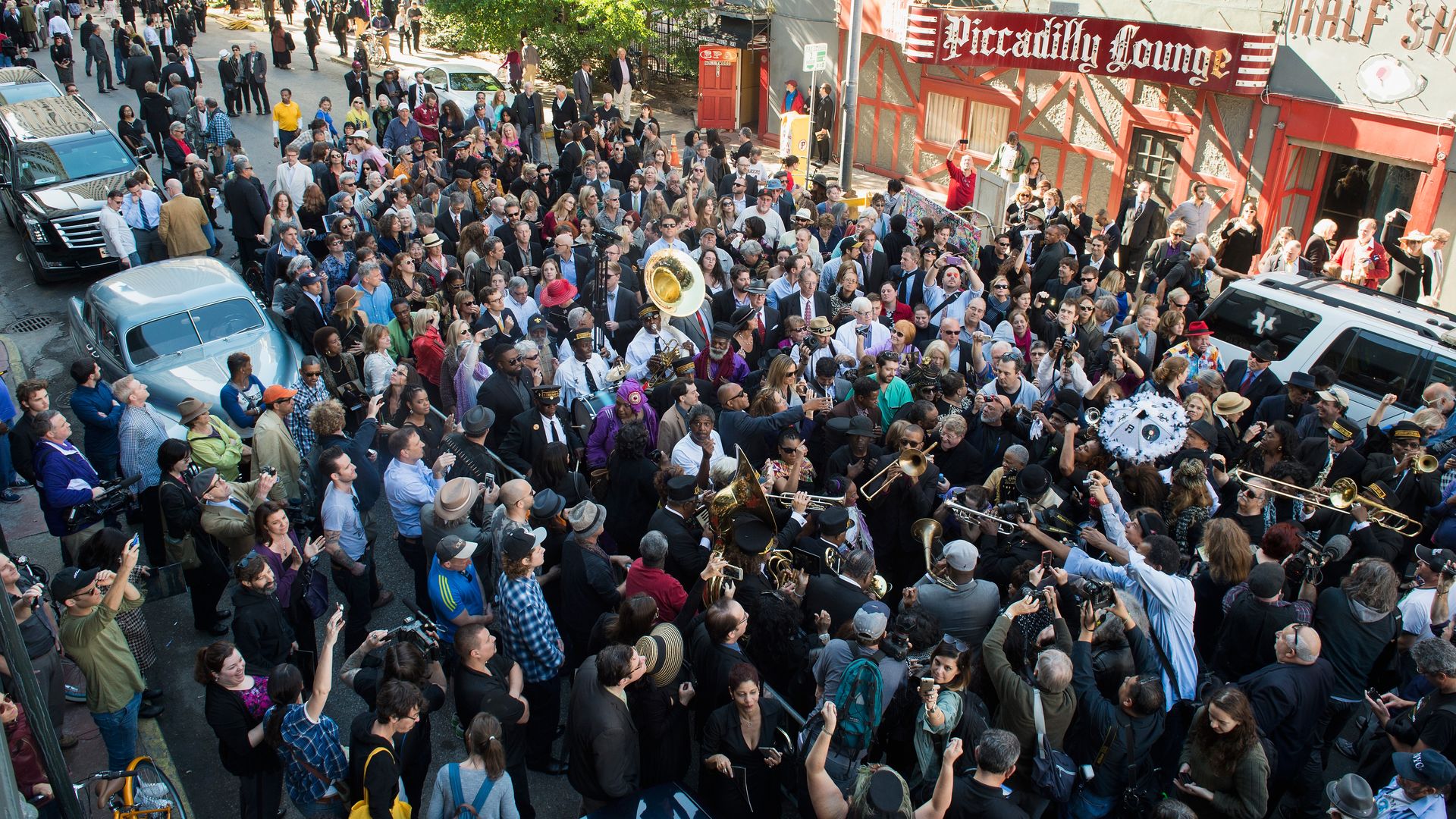
A jazz funeral for Allen Toussaint fills a New Orleans street outside the Orpheum Theater in 2015. Photo: Erika Goldring/Getty Images
Gen Zers should have a long wait before they're worried about dying, but when they do, they'd like to go out with a traditional burial.
Why it matters: First-of-its-kind survey data from the National Funeral Directors Association reveals clear generational divides in how we want to be remembered.
The intrigue: That concept should not be shocking, the data says, because most people are at least somewhat comfortable talking about death in the first place.
Driving the news: The NFDA held its convention last week in New Orleans, though the survey didn't ask questions geared toward the city's unique jazz funeral traditions.
- It did, however, reveal that more than half of Americans consider holding funerals to be an important way to memorialize a loved one.
- Generational divides enter the mix once they start considering other specifics.
By the numbers: About two-thirds of baby boomers, for example, would prefer to have their remains cremated, compared to Gen Zers, who are more likely to want a traditional burial.
- Half of Americans believe it's important to consider the deceased person's wishes when planning a funeral, though at 42%, Gen Zers are a little less likely to feel that way.
What they're saying: "Gen Z wants to go more traditional, and that was a big surprise to a lot of folks," says Indianapolis funeral director Allyse Worland. Cremation seemed to only be getting more popular for body disposition, she says, before the survey data arrived.
- "I really think [Gen Z] will stay on this track, because this generation is [made up of] very genuine people," she says. "They have genuine beliefs, and they are standing firm and digging their heels in on their standards and visions. Look at what Gen Z is doing to the workforce."
Zoom in: At 30, Worland says she's "a super young millennial," but she's already worked in the funeral industry for 15 years, she tells Axios New Orleans. In that time she has seen end-of-life ceremonies and preferences shift, especially during the COVID-19 pandemic.
- "When I first started out, I saw a lot of two-day visitations and the service on a third day," she says. "Now, I've definitely noticed [people want] an all-in-one-day service."
- There's also been a distinct shift away from church services, she says, and a focus more on celebration rather than mourning.
The intrigue: Boomers are less likely than any younger generation to believe it's important to view the body of a deceased person during a funeral service.
- Often, Worland says, when people shy away from body viewing, it's because they had "a not-so-great experience" with that person.
- But, she says, when she advocates for people to include that tradition, she's found that they appreciate it. "There is a power in presence," she says.
How they did it: The NFDA surveyed 2,003 American adults in May 2024.
- Less than 40% of those surveyed lived in the South.