Atlanta uses AI to find potholes before they form

Add Axios as your preferred source to
see more of our stories on Google.
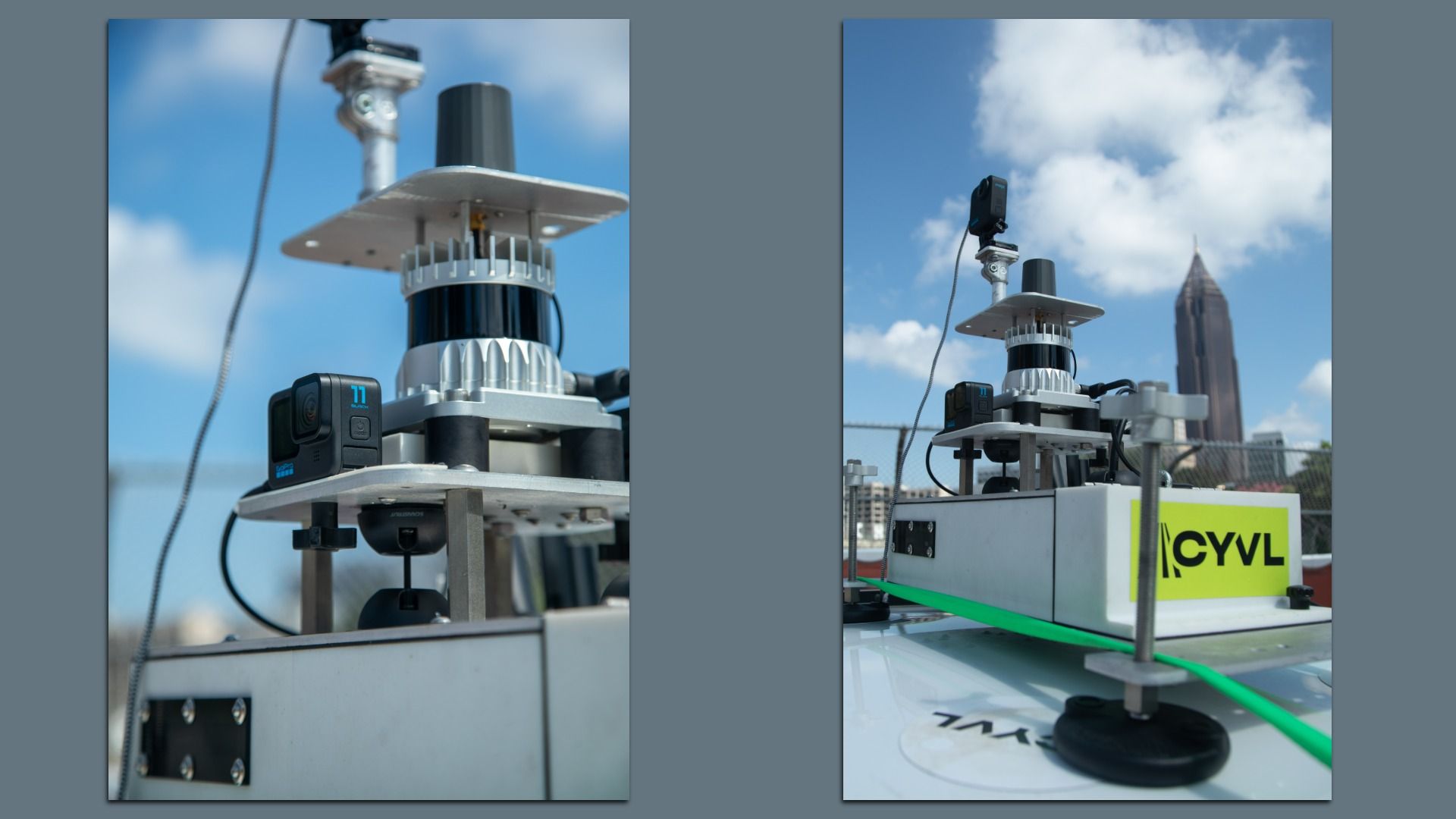
The Atlanta Department of Transportation is using Cyvl's AI technology to scan city streets and log their conditions. Photo: Courtesy of Atlanta DOT
The Atlanta Department of Transportation is turning to artificial intelligence to help keep track of which streets, sidewalks and signs are in need of repair.
Why it matters: With the guidance and oversight of humans, Cyvl's technology aims to help ATL DOT identify and repair those dreadful potholes we dodge during our daily commutes.
The latest: Cyvl uses sensors to map streets and sidewalks to log their conditions, which are evaluated and "gives us an idea of the conditions of our roadways," said Atlanta DOT commissioner Solomon Caviness.
How it works: Cyvl's technology is attached to government vehicles and uses data from high-resolution imaging and lidar to scan roads.
- Caviness told Axios it can also scan reflectivity on street signs and determine when they need to be replaced.
- The platform uses AI and can read the condition of roads and walkways, including differentiating between different types of cracks and what might need to be fixed, Axios' Chris Metinko reports.
- For example, the Boston-based company's technology can detect alligator cracks in asphalt, potholes or early signs of pothole formation.
What they're saying: "What this has done is given us a baseline to identify what needs to be improved, and based on that, we could be more efficient in how we spend our money, and establish where we start our improvements," Caviness said.
Zoom in: Cyvl's first scan in Atlanta was completed in 2024, and another was taken earlier this year.
- The traditional way of mapping DOT's assets would take up to a year, but the Cyvl technology cuts that time down to about three months, Caviness told Axios.
Context: Before incorporating Cyvl into its workflow, DOT crews would go out into the field with cameras and equipment to scan roads, then evaluate them using standards set by the American Public Works Association.
- Cyvl's technology allows for a more thorough scanning of the roads, Caviness said.
- After the 2024 scan of Downtown, Atlanta DOT crews resurfaced corridors in need of repair, resulting in a 60% drop in potholes and a 70% drop in potential potholes.
- "The AI technology told us where we may have potholes forming — where the traditional eyes and cameras might not have caught," Caviness said.
What we're watching: Caviness told Axios the DOT is also using AI to help with traffic signal timing and adjusting them based on pedestrian movements versus traffic.
- During the World Cup, the technology was used to adjust traffic signals to allow pedestrians more time to cross the street.