Atlanta's first autonomous transit route launches Friday

Add Axios as your preferred source to
see more of our stories on Google.
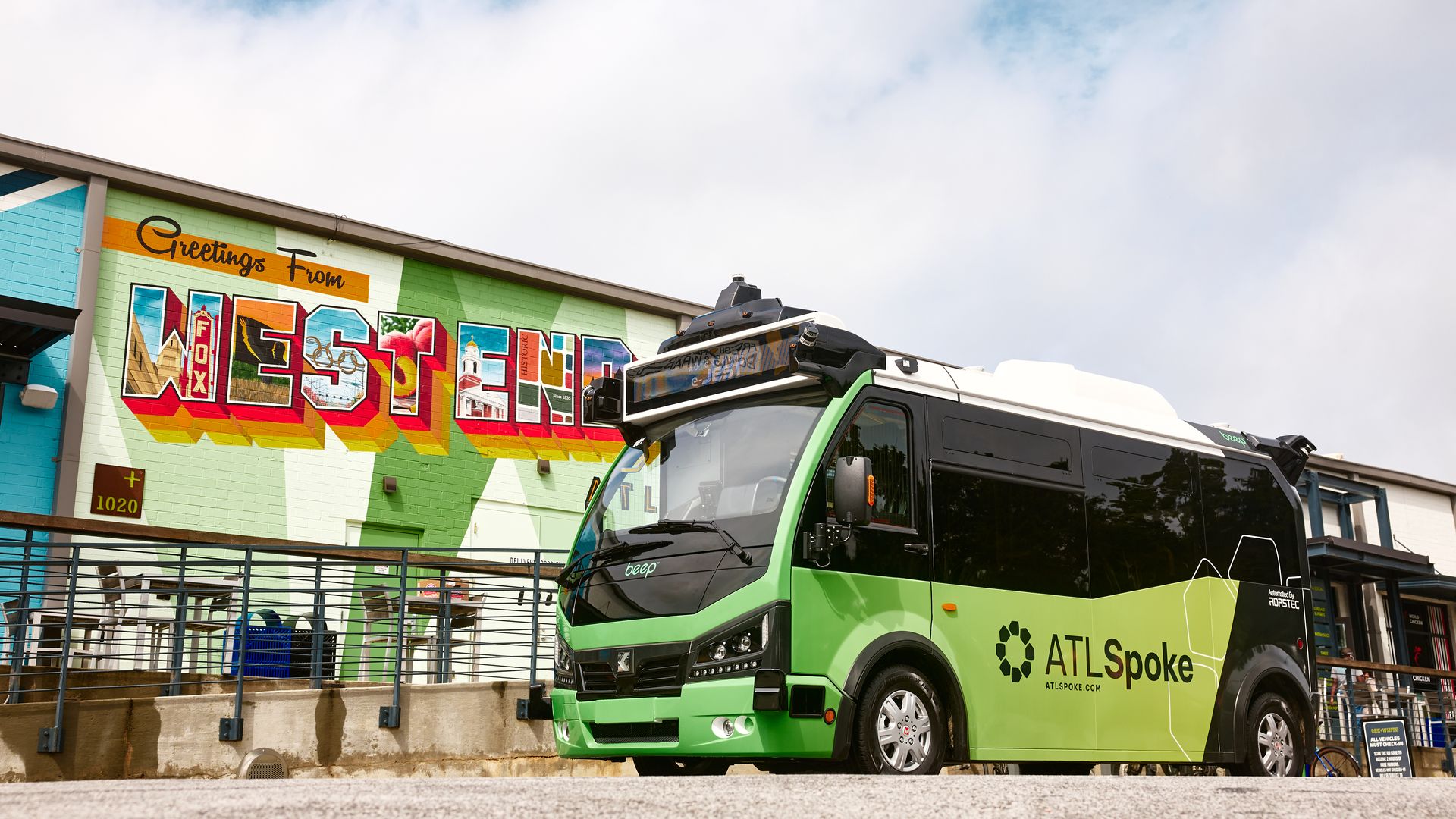
Photo: Erin Sintos/Courtesy of Atlanta Beltline Inc.
Atlanta's first autonomous transit route — and newest robotic designated driver — launches in the West End on Friday.
Why it matters: The ATL Spoke is a one-year foray into technology that advocates say could solve the "last-mile" problem keeping some riders off transit.
- It comes as Atlanta prepares to host FIFA 2026 World Cup fans and during a tense tug-of-war over whether rail transit — or even transit at all — should be the Beltline's future.
Zoom in: The Spoke will connect the West End MARTA Station to Lee & White, the mixed-use district along the Beltline's Southwest Trail that's home to breweries, restaurants, a climbing gym and more.
- Shuttles are free and will run every 12 to 15 minutes from noon to 10pm, seven days a week. The vehicles will operate from 8am to midnight on World Cup game days.
- It's funded by a $1.75 million grant from the Atlanta Transit Link Authority — now the Georgia Transportation Efficiency Authority — plus matching Beltline funds.
In the weeds: Beep will use four Karsan Autonomous e-JEST electric shuttles, which are ADA-accessible and use cameras, sensors, lidar and GPS to navigate. They can carry 12 passengers.
Fun fact: The shuttles are driverless, yes, but an attendant will ride along as the human authority figure.
Between the lines: Some Beltline rail advocates argue autonomous shuttles and pods are a poor substitute for the community-created rail transit vision long envisioned for the corridor.
- Supporters say autonomous transit is cheaper and better suited to coexist with the joggers, bicyclists and pedestrians who pack the Beltline.
Beltline officials have said they view the shuttles and other modes as complementary, not competitive, to the project's overall transit vision.
The big picture: The route is the first public transit initiative in the history of Atlanta Beltline Inc., the city's nonprofit that plans and designs the project.
What's next: Phase two will extend the route to the Atlanta University Center this fall.