Opioid use disorder cases jumped post-pandemic in Georgia

Add Axios as your preferred source to
see more of our stories on Google.
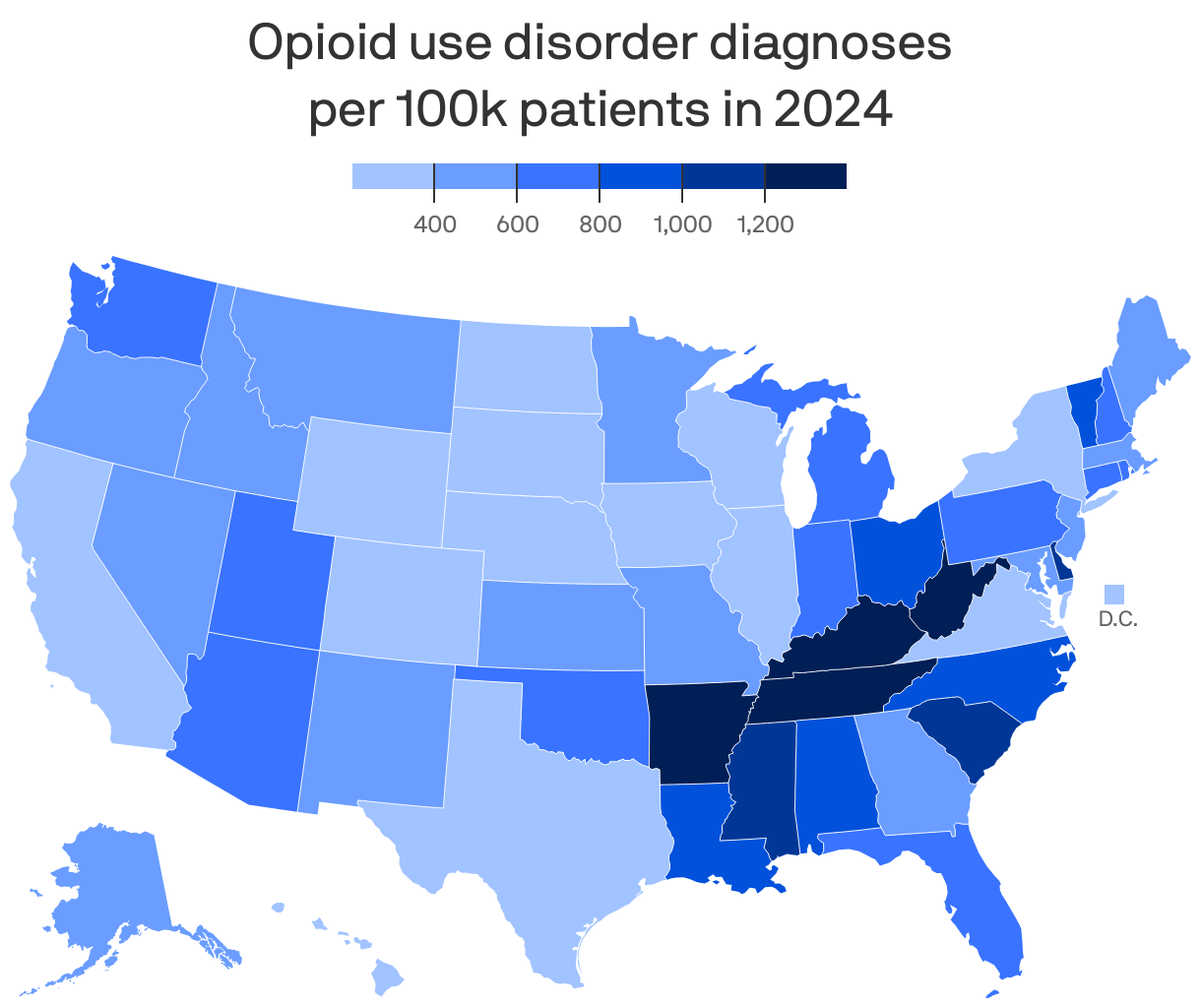
Diagnoses of opioid use disorder among the commercially insured jumped nearly 40% nationwide between 2021 and 2024, according to data from FAIR Health's Opioid Tracker shared first with Axios.
Why it matters: The finding suggests the opioid crisis cuts across demographics and income levels, putting health systems and insurers under mounting pressure to manage addiction treatment.
Zoom in: Georgia had 481 patients diagnosed with opioid use disorder per 100,000 last year.
- That's up from 402 in 2023, 371 in 2022 and 379 in 2021, according to FAIR Health's tracker.
By the numbers: Georgia's opioid use disorder diagnoses were concentrated among adults in their 30s to mid-60s.
- 25% were 31 to 40 years old; 26% were 41–50 and another 28% were 51–65.
- 9% were 23–30, and another 9% were and older than 65, respectively.
- 51% of patients were men and 49% were women.
Yes, but: Georgia is faring better than some of its regional counterparts.
- Tennessee had the highest rate, with 1,447 patients diagnosed with opioid use disorder per 100,000.
- It was followed by West Virginia (1,323), Kentucky (1,281), Arkansas (1,218) and Delaware (1,165).
State of play: Georgia is one of several states set to receive money from national settlements with drugmakers accused of exacerbating the opioid use crisis.
- In July, Attorney General Chris Carr announced the state would receive up to $20 million from the proposed settlements, which will be paid out over time.
- The state will use that money to pay for prevention services and addiction treatment, Carr said.
Zoom out: Across the country, there were 539 patients with opioid use disorder diagnoses per 100,000 in 2024, an increase of 39.8% from 386 per 100,000 in 2021.
Between the lines: Over that time, the national data shows a shift in where opioid use disorder is treated.
- In-office care fell from 43.8% of claim lines in 2021 to 38.6% of claims in 2024.
- At the same time, telehealth services for OUD grew from 4.3% in 2021 to 6.3% in 2024 and care in nonresidential treatment facilities ticked up from 1% in 2021 to 9% in 2024.