Reducing e-scooter injuries demands designing safer streets


Add Axios as your preferred source to
see more of our stories on Google.
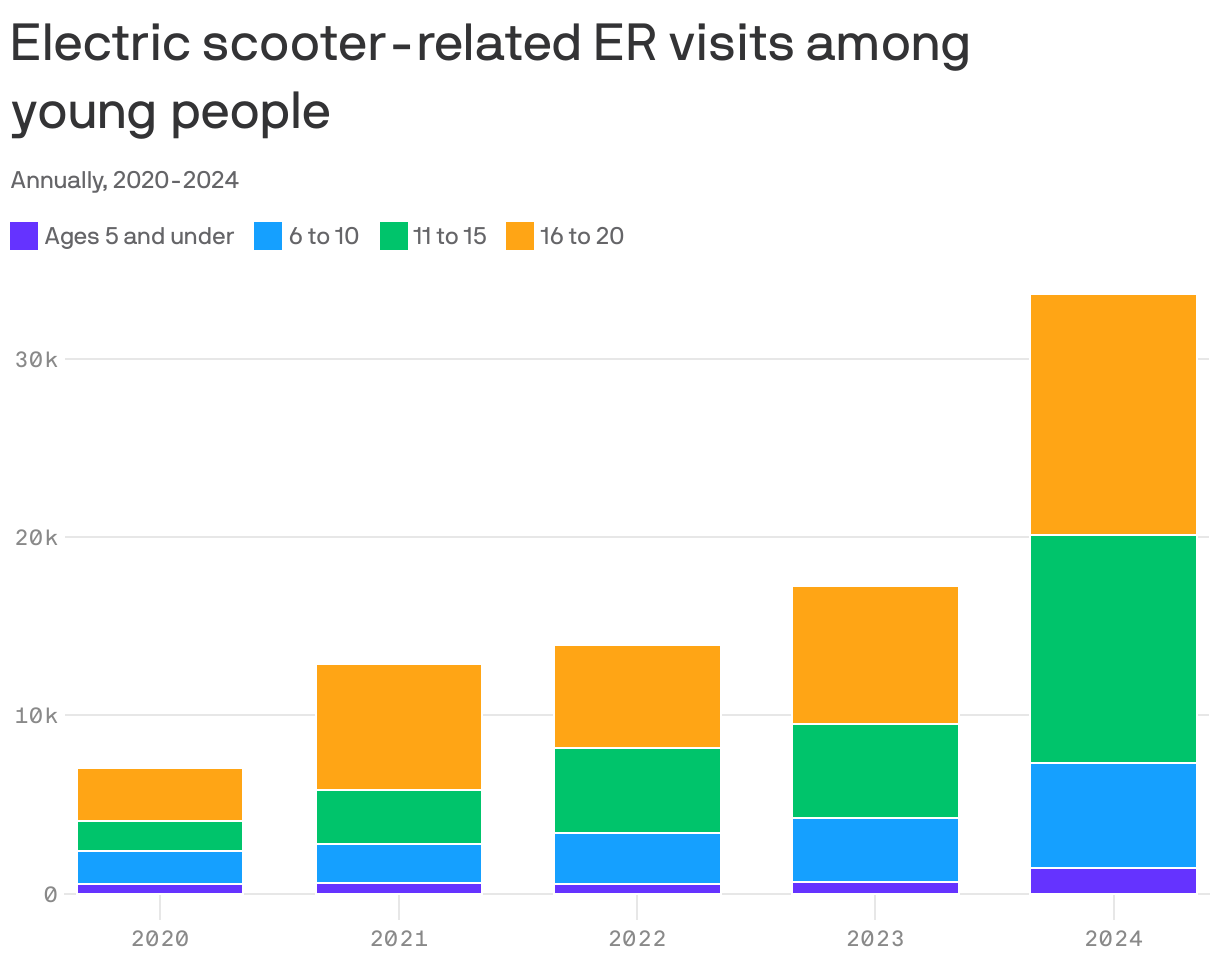
The U.S. is seeing an alarming rise in electric scooter injuries — particularly among children, according to data compiled by ERideHero, a consumer guide to electric micro-mobility.
Why it matters: E-scooters, despite their well-publicized boom and bust history, have become mainstream in many cities, yet lack the safety guardrails that govern other types of transportation.
The big picture: Some 81 million people took trips on shared e-scooters in the U.S. last year, according to the North American Bikeshare & Scootershare Association.
- Approximately 150,000 shared scooters are deployed across the U.S. on a daily basis.
By the numbers: E-scooter injuries in the U.S. rose by 80% to nearly 116,000 in 2024, according to ERideHero's 2025 Electric Scooter Accident Report.
- Accidents among children more than doubled, with nearly 18,000 kids under 15 getting hurt — many suffering head trauma.
- People between 15-24 suffered the most e-scooter injuries, accounting for more than 23%.
- 68% of those injured were male, and over 10,000 injuries involved driving under the influence.
- eRideHero's analysis is based on data sourced from the Consumer Product Safety Commission's NEISS database, which tracks consumer product-related injuries from a sample of over 100 American hospital ER departments.
Zoom in: From 2020 to present day, four people have died and 43 people were seriously injured in crashes involving scooters in Atlanta, according to the city's Vision Zero database.
What they're saying: "I think we're seeing the consequences of treating e-scooters like toys instead of vehicles," says Rasmus Barslund, founder of ERideHero.
- "We're seeing adult-sized scooters marketed to young kids on Amazon — machines that can reach high speeds being given to children who lack the cognitive development to judge speed and distance safely."
- Plus, he said, there's no safety culture around e-scooters. "We basically put motor vehicles on sidewalks and expected everyone to figure it out for themselves."
The industry is responding with safety tips and other programs.
- Lime, a leading scooter company, for instance, offers an in-person safety course for first-time riders and strongly encourages the use of helmets.
In the weeds: Cities could reduce scooter injuries by designing and building streets that are safe for everyone, Shayna Pollock, the principal and founder of policy firm Shift Mobility, told Axios.
- Other policies include reducing speed limits in high-density areas like downtowns and requiring users to corral their vehicles rather than wherever they please.