Air quality improves in metro Atlanta


Add Axios as your preferred source to
see more of our stories on Google.
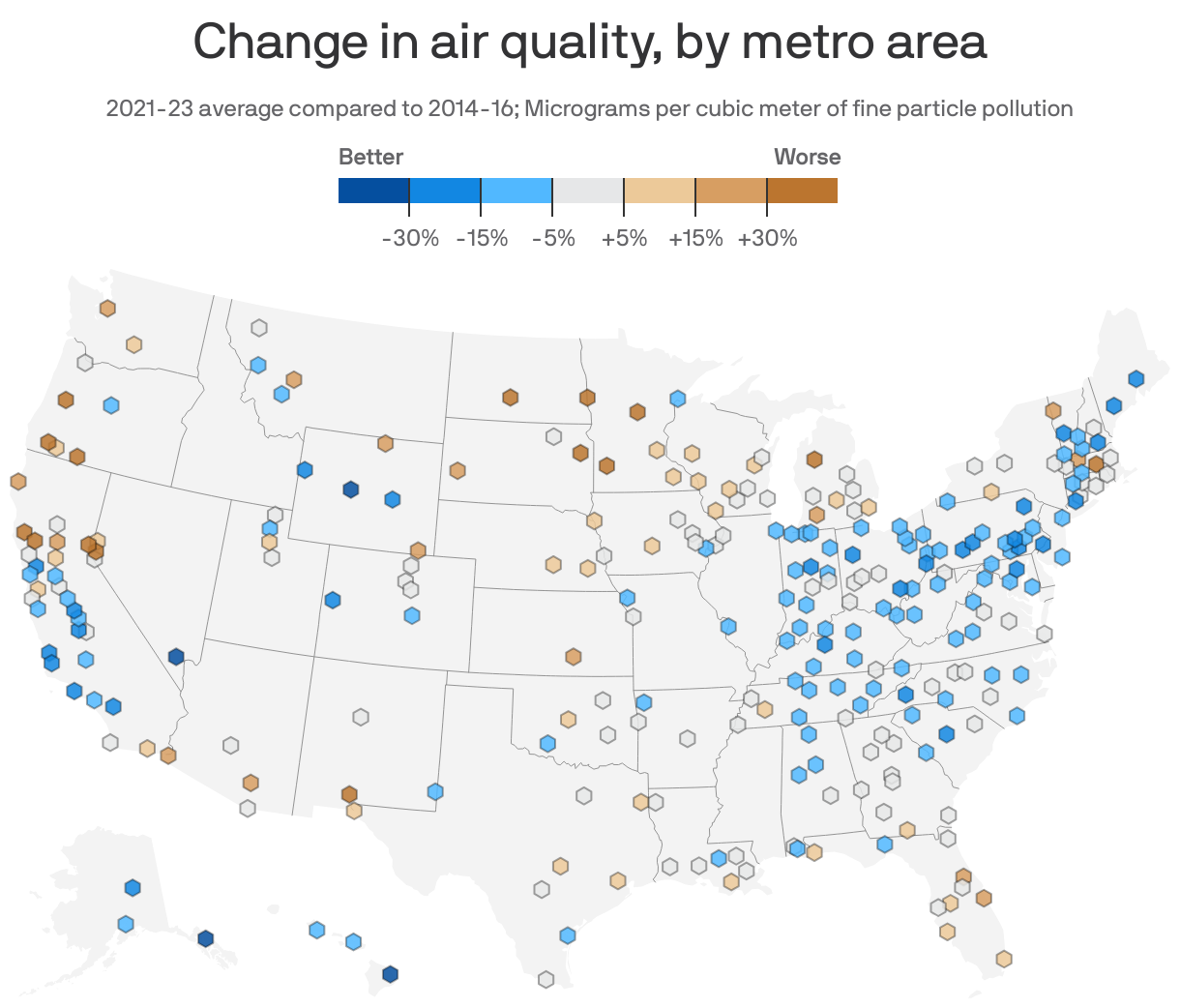
Good news: The air we breathe every day is a bit cleaner than it was a few years ago, according to an Axios analysis of EPA data.
Why it matters: Long-term exposure to poor air quality is harmful to your health.
- A growing body of research shows that polluted air is connected to poor reproductive outcomes, increased dementia risk, and more asthma attacks and other respiratory health effects.
By the numbers: The average percentage of fine particle pollution in metro Atlanta decreased 2.3% from 2021-23, compared to 2014-16.
- The Athens and Albany areas saw the most improvement in air quality levels among Georgia metros, while Valdosta's pollution levels increased by more than 7%.
Reality check: Tracking fine particulate matter (PM2.5) is a helpful indicator of air pollution and a major factor in air quality index scores, but it doesn't account for all variables.
- So air pollution can be worse than it appears on your weather app.
Zoom in: A significant amount of metro Atlanta's air pollution stems from the interstate system and the surrounding roadways, according to the Atlanta Regional Commission.
Flashback: In the 1990s and early 2000s, rapid population growth famously caused metro Atlanta's air quality to plummet to crisis levels.
- Then-Gov. Roy Barnes and regional leaders overhauled road and transit plans and increased air quality monitoring to avoid losing federal transportation funding.
Stunning stat: Statewide, power plants are the largest source of air pollution, contributing roughly 43 million metric tons of carbon emissions, according to 2023 EPA data.
Zoom out: Nationally, 62% of metro areas improved their air quality, as measured by fine particle pollution, according to the federal data.
To stay safe, air quality experts recommend checking your local AQI, and also trusting your nose.
- If you smell smoke — even if the AQI is "green" — limit your time outside.