Georgia gets failing grade for maternal, infant health care outcomes


Add Axios as your preferred source to
see more of our stories on Google.
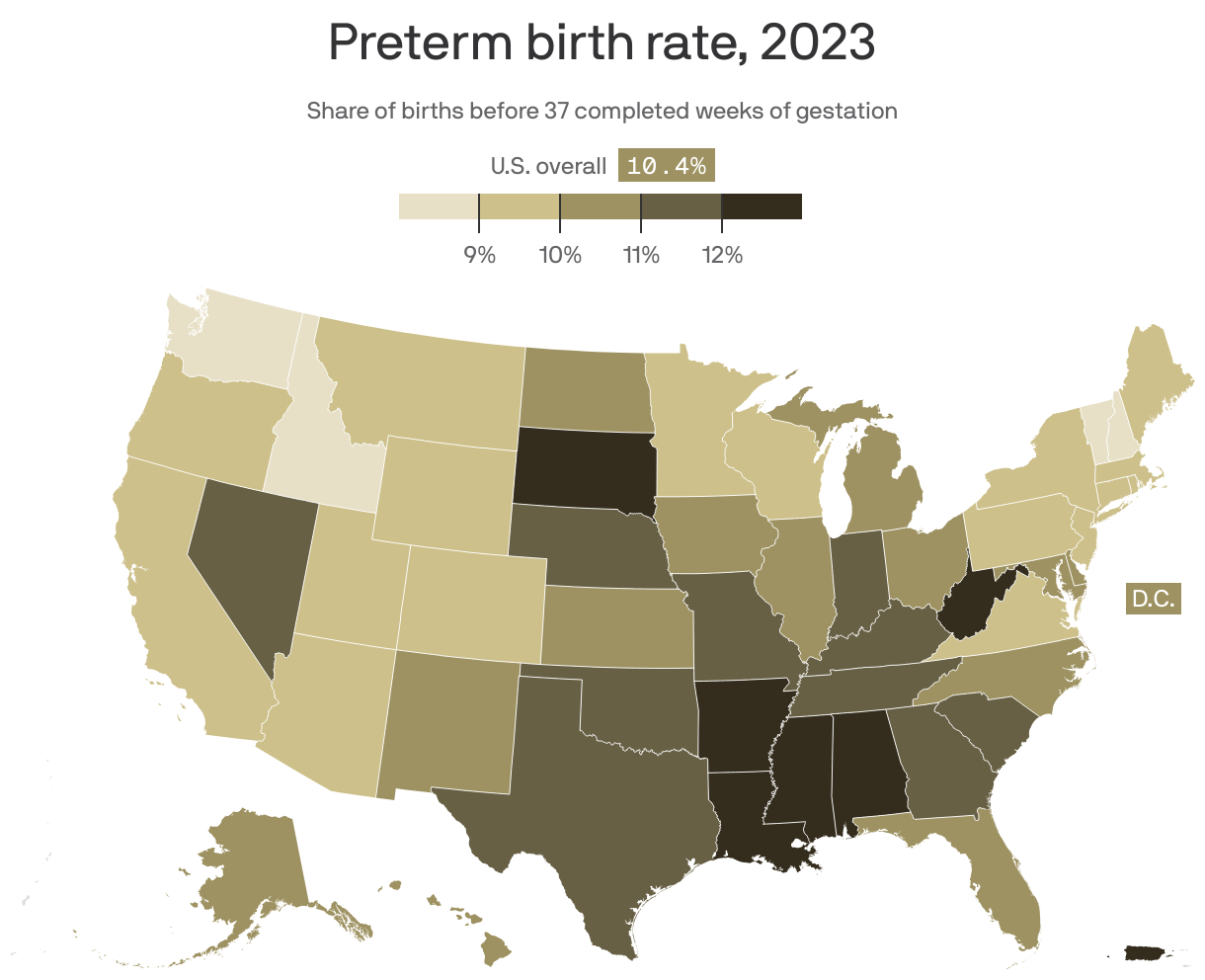
Georgia earned a failing grade in a March of Dimes report on the state of maternal and infant health.
Why it matters: Preterm births and infant deaths are happening significantly more often in Georgia than on average across the country — particularly among Black and Native American mothers.
Preterm births: The national rate of preterm births, which according to March of Dimes can contribute to infant and maternal mortality, was 10.4% in 2023.
- For Black people in Georgia, the preterm birth rate was 15%, according to the report for the state. And among American Indian/Alaska Native people it was 14.6%.
- Meanwhile, the preterm birth rates in Georgia among white people (10.3%) and Hispanic people (10%) were lower than the national rate.
Infant mortality: The national infant mortality rate rose in 2022 for the first time in two decades, the report says, in line with other studies carried out after Roe v. Wade was struck down.
- March of Dimes says the national rate reached 5.6 deaths per 1,000 births nationally, with the highest rates in the South and Midwest.
- In Georgia, that rate was 7.1 deaths per 1,000 births, up considerably from 6.3 in 2021.
- Again, there was a stark racial disparity. Among Black mothers in Georgia the rate was 9.6. The rates among white (5), Hispanic (5.2) and Asian (3.7) mothers in Georgia were less than the national rate.
- Maternal mortality rates in Georgia have climbed in recent years, we reported earlier this year, and Black women account for the majority of those deaths.
What they're saying: Public policy measures could help curb these problems, says Yadira Tabales, maternal and infant health manager for Puerto Rico at March of Dimes.
- Licensing midwives can help when women can't get to a doctor. California and Colorado, which have passing grades in the report, are among those with this policy.
- Mobile clinics in counties with no nearby OB-GYN providers, hospitals or birth centers can also make a difference.
- Complications such as preeclampsia, a spike in blood pressure that can lead to premature births, can also be avoided by prescribing low doses of aspirin to people at high risk, Tabales says.
Another issue affecting women during a pregnancy are underlying health problems such as hypertension and diabetes, which are more likely to cause preterm births.
- In 2023, the preterm birth rate in Georgia among people with pre-pregnancy diabetes was 32.8%, according to the report.
Between the lines: The report called out Georgia's lack of Medicaid expansion, supportive doula or midwife measures, mandated paid family leave, and maternal mortality review committee as policies the state could address to improve outcomes.
- The state fired every member of its maternal mortality review committee earlier this month, ProPublica reported last week.
Environmental factors also increasingly weigh on pregnancies.
- Heat exposure and lower air quality have been linked to prenatal births, low birth weights and neurocognitive disorders.
- Neighborhoods where most of the population is Black or Latino tend to be disproportionately hit by heat and smog due to a lack of green spaces or proximity to highways, studies have found.
The bottom line: "Every family and every pregnant person deserves to get accessible and adequate health care, for the benefit of the pregnancy and us all," says Tabales.
Subscribe to Axios Latino to get vital news about U.S. Latinos and Latin America.