Savannah port strike could spark banana shortage

Add Axios as your preferred source to
see more of our stories on Google.
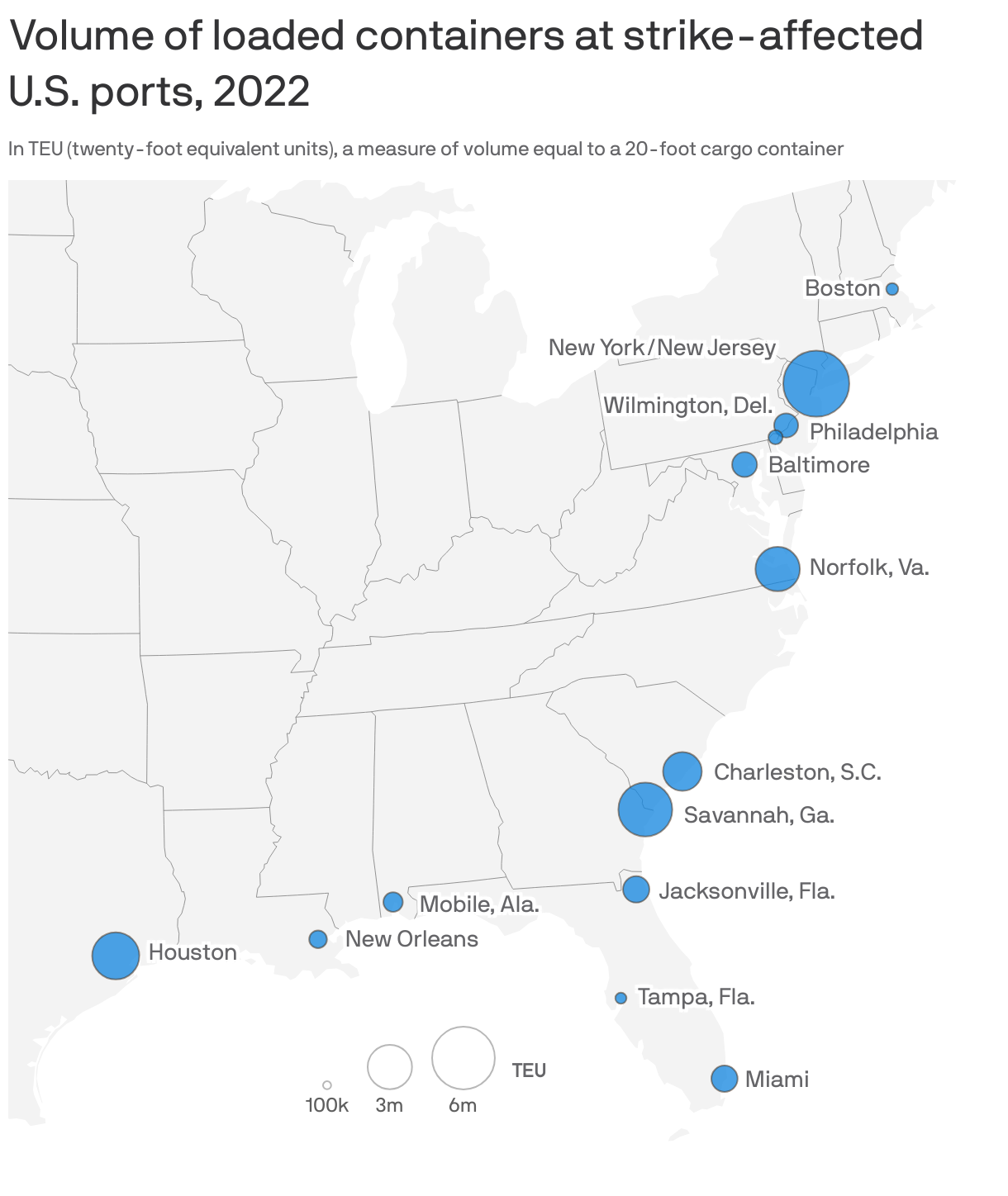
Dockworkers at the Port of Savannah joined more than 40,000 others from Maine to Texas to walk off the job to strike. Consumers could feel the effects when they shop.
Why it matters: A protracted contract battle between the International Longshoremen's Association and the United States Maritime Alliance could strain supply chains ahead of the holiday shopping blitz just as slowing inflation had consumers weighing spending more.
Driving the news: The work stoppage affects ports that handle more than half of the cargo shipped to the U.S. from around the world.
Zoom in: The Port of Savannah is one of the East Coast's largest and an economic engine.
- Port officials say they've operated extended hours and won't charge customers for containers stored during the stoppage.
The big picture: While some companies redirected goods to the West Coast or shipped products early in preparation for a strike, some industries may not be able dodge the blow that would come with a prolonged strike.
Perishables: Bananas, Mangoes, Meats
Perishable products may see the most immediate effects of a strike, as grocery stores aren't able to hold as many items that will unavoidably expire.
- According to the American Farm Bureau Federation, the affected ports handled 75% of the country's banana imports.
Alcohol
Beer, wine and spirits, though they perish less quickly than fruits, could also be impacted.
- According to the American Farm Bureau, 80% of imported beer, wine, whiskey and scotch arrives to the U.S. in containers at East and Gulf Coast ports.
Retail goods
Walmart, Ikea, Samsung and other major retail brands are among the largest importers over the past year through the impacted ports.
- Beyond the added costs from possible shortages in inventory, retailers will likely have to pay inflated warehouse, shipping and trucking bills.