Study shines a light on gentrification and Atlanta's solar energy boom

Add Axios as your preferred source to
see more of our stories on Google.
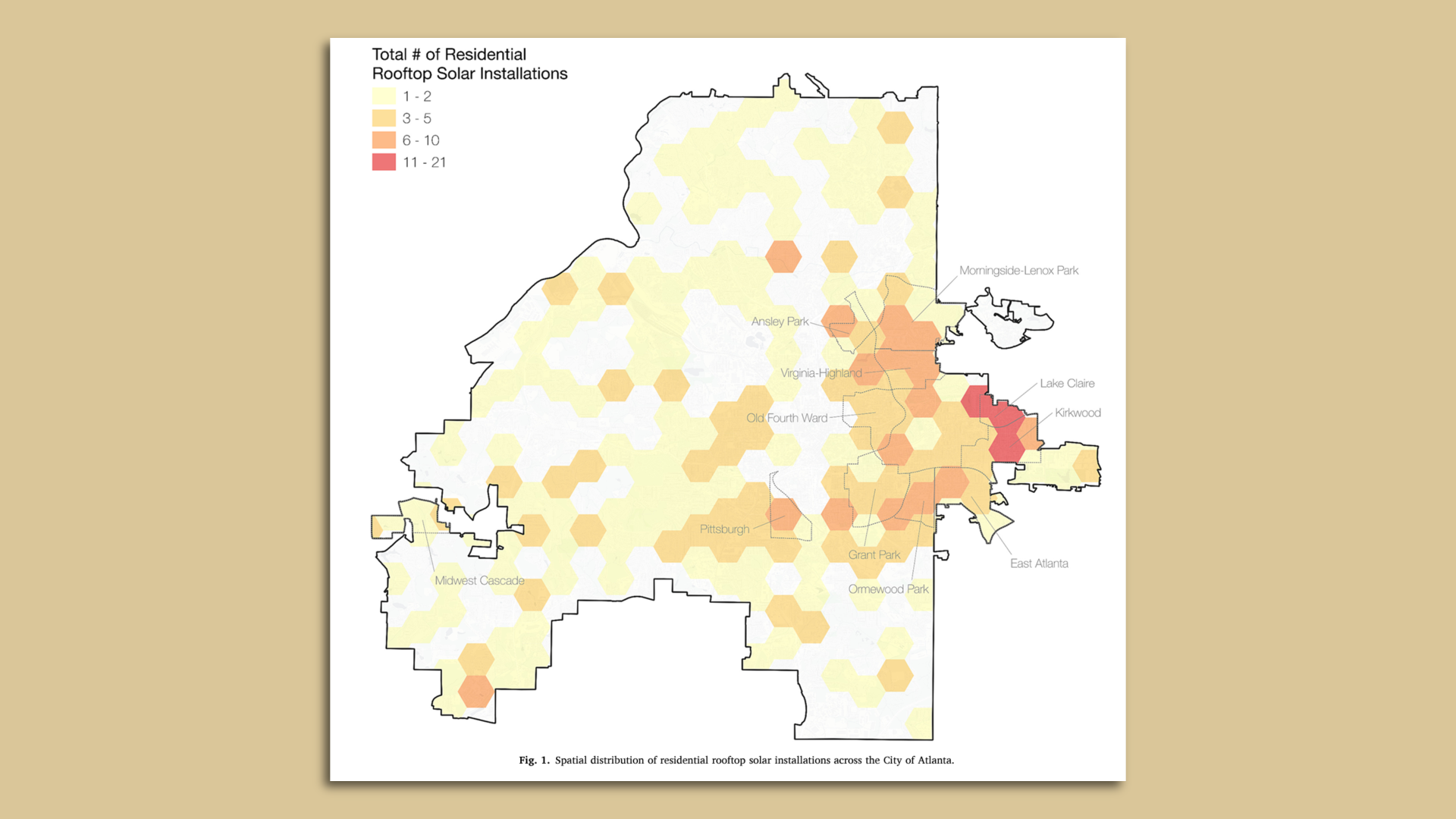
The distribution of solar installations in the city, with larger numbers seen near Kirkwood and Lake Claire. Map: Taylor Shelton and Carys Behnke
The rapid rise of rooftop solar panels in Atlanta's poorer and majority-Black neighborhoods has been driven by gentrification, not necessarily higher rates of adoption of clean energy among Black people, according to a new study.
Why it matters: Solar energy can reduce a person's carbon footprint and lower a home's monthly utility bill — once you get past the installation and setup costs.
- But that benefit might not be felt by people who could use those cost savings the most.
Details: Most of the 539 residential rooftop solar installations in Atlanta analyzed by Georgia State University professor Taylor Shelton and researcher Carys Behnke are in more affluent and white neighborhoods.
- However, majority-poor and majority-Black neighborhoods in the city's southside saw the most significant growth in the past two years.
Yes, but: The rapid rise in those neighborhoods is fueled by more affluent newcomers buying homes that have seen "considerable turnover in recent years driven by speculative market pressures," the authors say.
In the weeds: The authors pulled rooftop solar permit data from January 2018 through December 2022 via the city's online portal.
Zoom in: The city's number of residential rooftop solar installations has grown from an estimated 56 in 2017 to at least 539 at the end of 2022.
- Majority-Black neighborhoods made up 16% of the installation permits in 2018 through 2020, they say. In 2021 and 2022, they made up 56%.
What they're saying: "As gentrification unfolds in previously marginalized neighborhoods, these newcomers become the vanguard of rooftop solar adoption rather than the longstanding residents who would have the most to gain from such technologies."
The big picture: Shelton and Behnke say policymakers and advocates should consider the findings when determining where to target outreach efforts and incentive or payment assistance programs.
The bottom line: More granular data about who is installing solar panels — and not just where — can help policymakers and energy advocates put their limited available resources to best use.
- "The fight against climate change and the fight for housing justice are intimately intertwined," Shelton told Axios. "Pursuing the former at the expense of the latter ultimately just reproduces old inequalities in new forms."
Go deeper: Critics say solar panels threaten Atlanta's historic districts