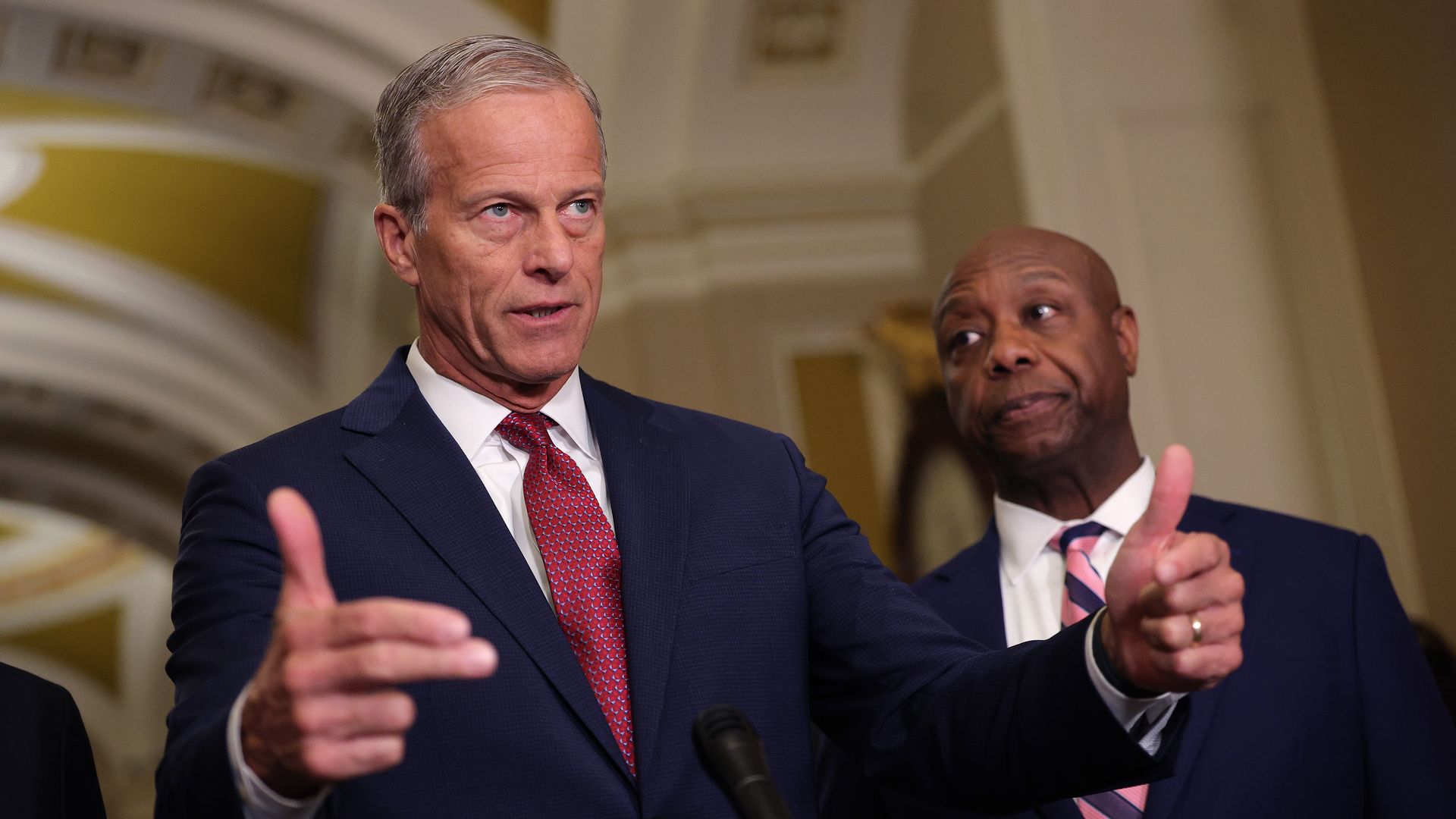
President Trump's top political hands had some surprising advice for Senate Republicans last week: Talk more about health care.
Why it matters: Trump and the MAGA base are fixated on the voter-ID and proof-of-citizenship SAVE Act. But Republican message testing from Trump's own pollster suggests candidates are better off focusing elsewhere.
OpenAI's nonprofit arm is committing $100 million toward a public health effort built around using advanced artificial intelligence to help expand treatment rates for Hepatitis C, HIV, and other conditions.
Why it matters: Hepatitis C is curable in more than 95% of patients, but about two-thirds of Americans living with the liver disease remain untreated and about 40 die each day, officials behind the effort said.
An overhaul of how Medicare pays hospitals for joint replacements could pare hundreds of millions of dollars in program spending while getting facilities to pay closer attention tothe cost and quality of care.
Why it matters: It's an under-the-radar example of how hospitals are the health sector that's being most rocked by the policy changes of President Trump's second term.
More corporations are cutting ties with the three biggest pharmacy benefit managers and striking deals with smaller rivals to help manage their drug costs, a new survey from the National Alliance of Healthcare Purchaser Coalitions found.
Why it matters: The findings are the latest sign of a shift underway in employer-sponsored health care as companies grapple with soaring health costs and a threat of worker lawsuits tied to how well they manage plans.
Artificial intelligence isn't just speeding up early-stage drug development, it's starting to unlock millions of dollars' worth of new efficiencies in clinical trials on cancer treatments, research shared first with Axios shows.
Why it matters: AI-powered tools could shave months offtime-consuming processes like recruiting and enrolling patients, monitoring results and interpreting data.
Providers and insurers are so divided over the process for resolving surprise billing disputes that they can't even agree on the true size of the payouts. And the blame game is likely to continue into next year.
The big picture: The continued sparring four and a half years after a federal surprise billing law took effect is fueling fresh calls for another congressional "fix" to address a staggering backlog of cases and questions, like which disputed items and services can be lumped together.