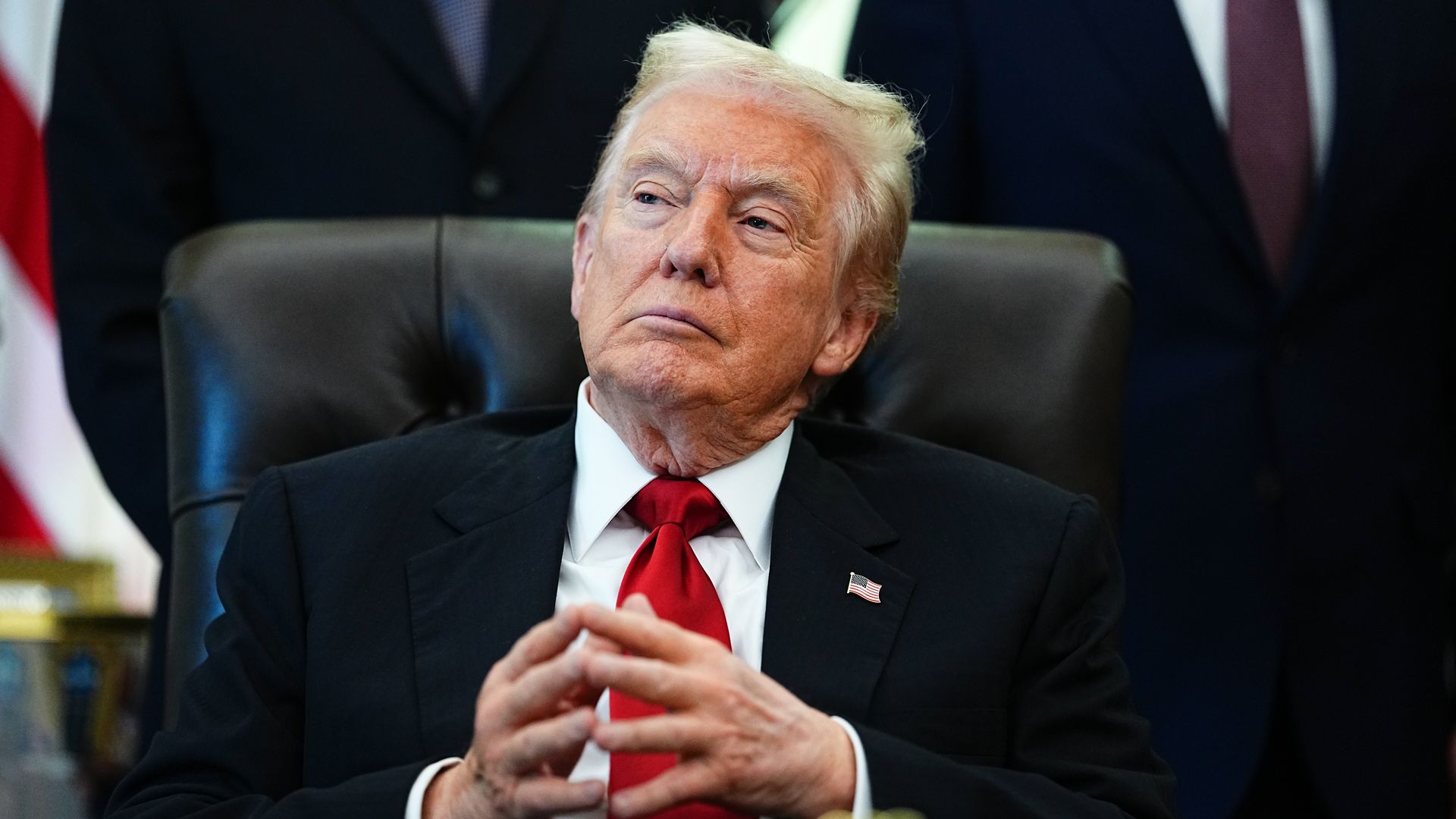
President Trump's doctor revealed Monday the justification for the president's October MRI scan, saying the results were "perfectly normal."
The big picture: Magnetic resonance imaging (MRI) scans are vital to tracking major health issues such as tumors, strokes and spinal cord conditions, among several other potential issues.
President Trump's physician said in a memo released Monday that the results of a "preventative" October MRI were "perfectly normal."
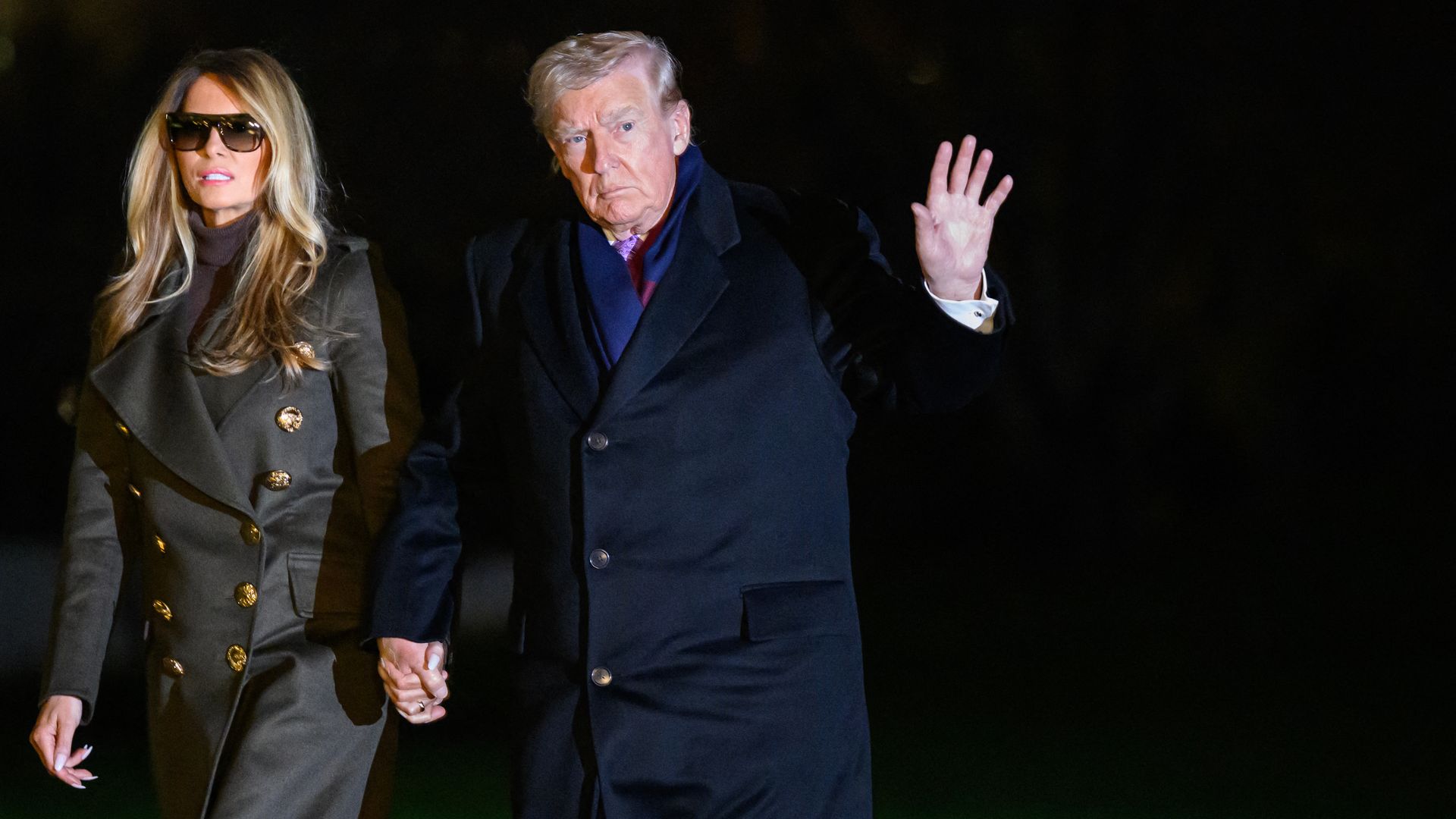
The big picture: Trump, 79, did not initially disclose that he had the procedure. Democrats have seized on the secrecy and questioned his mental capacity and fitness.
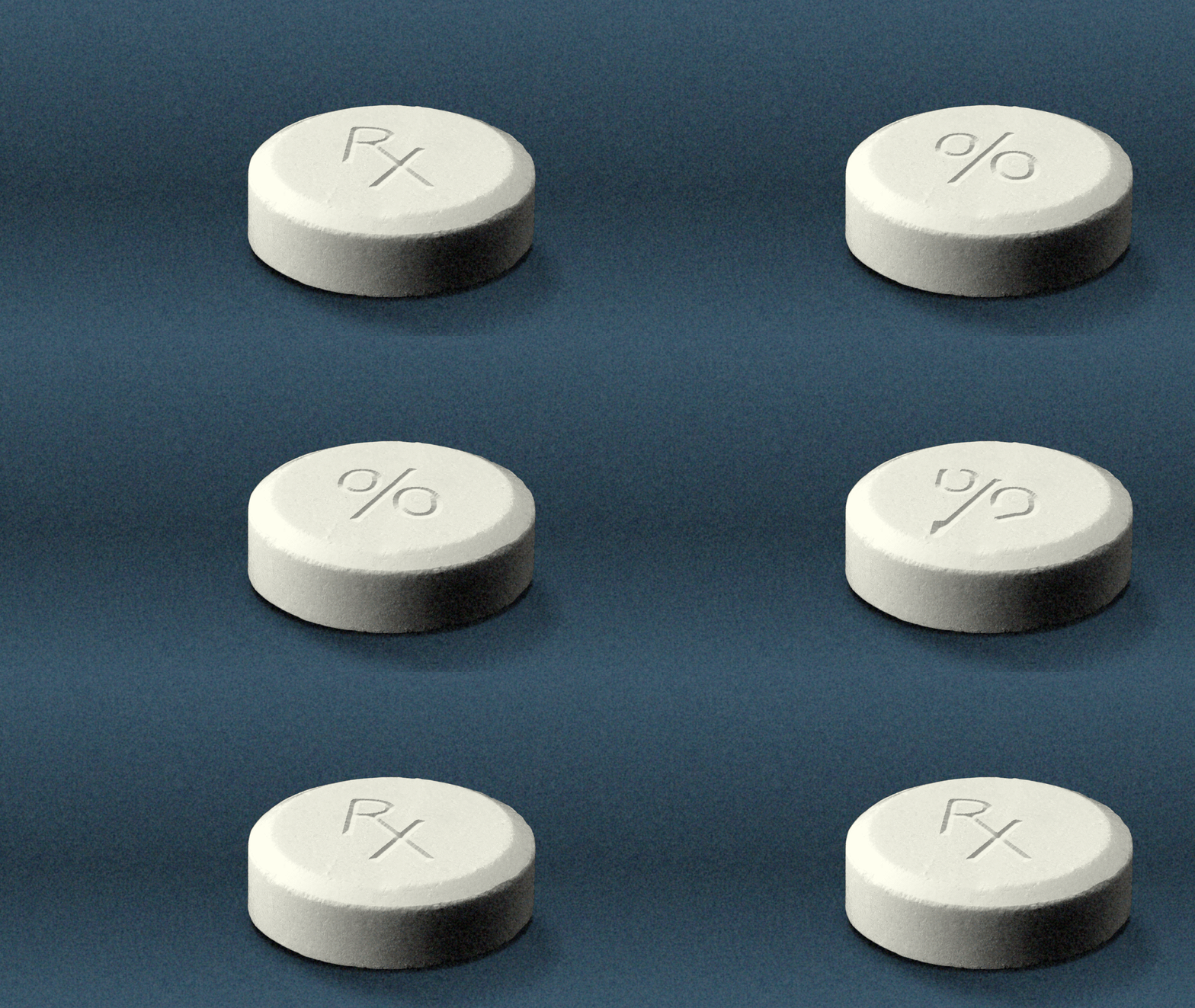
The U.S. and Britain addressed a key unresolved issue in their trade agreement on Monday when the Trump administration agreed to exempt U.K. drug imports from tariffs for the rest of President Trump's term.
Why it matters: Trump's habit of announcing trade deals without offering specifics left unclear the status of medicines that make up nearly one-fifth of U.K. exports, including treatments from manufacturers like GlaxoSmithKline and AstraZeneca.
What's inside: In exchange for the tariff relief, Britain's national health system will increase the net price it pays for new medicines by 25%.
The deal exempts U.K. pharmaceuticals, pharmaceutical ingredients, and medical technology from so-called Section 232 tariffs on individual sectors like pharmaceuticals.
The U.S. also won't target U.K. drug pricing practices in any future investigations under its trade authority while Trump is in office.
Britain will change the way it calculates which drugs are cost-effective for its National Health Service, Reuters reported, citing unnamed sources.
The U.K. now pegs the cost of a treatment to each year a drug adds to a person's life, weighted by how well a patient feels during those extra years.
The upper limit is 30,000 pounds ($39,789) per year.
What they're saying: "When nations fairly share the burden of producing and paying for life-saving medicines, every citizen gains, and the fight against global disease becomes one we can actually win together," Chris Klomp, deputy administrator of the Centers for Medicare and Medicaid Services and a lead negotiator of the agreement, said in a statement.
Between the lines: Both GlaxoSmithKline and AstraZeneca have announced tens of billions of dollars in new U.S. investments in recent months.
AstraZeneca also committed to Trump's "most-favored nation" pricing — the lowest price the drug sells for in other wealthy countries — for Medicaid and newly launched drugs in the future.
Trump's insistence that Americans are paying more for drugs than people in the U.K. and Europe ratcheted up tensions between pharmaceutical manufacturers and the U.K. government over drug spending levels and approval rates, the BBC reported.
Preteens who own smartphones are likelier to have depression, obesity and insufficient sleep than their peers, according to a new University of Pennsylvania-led study.
Why it matters: Roughly half of American kids now own a smartphone by the time they turn 11.
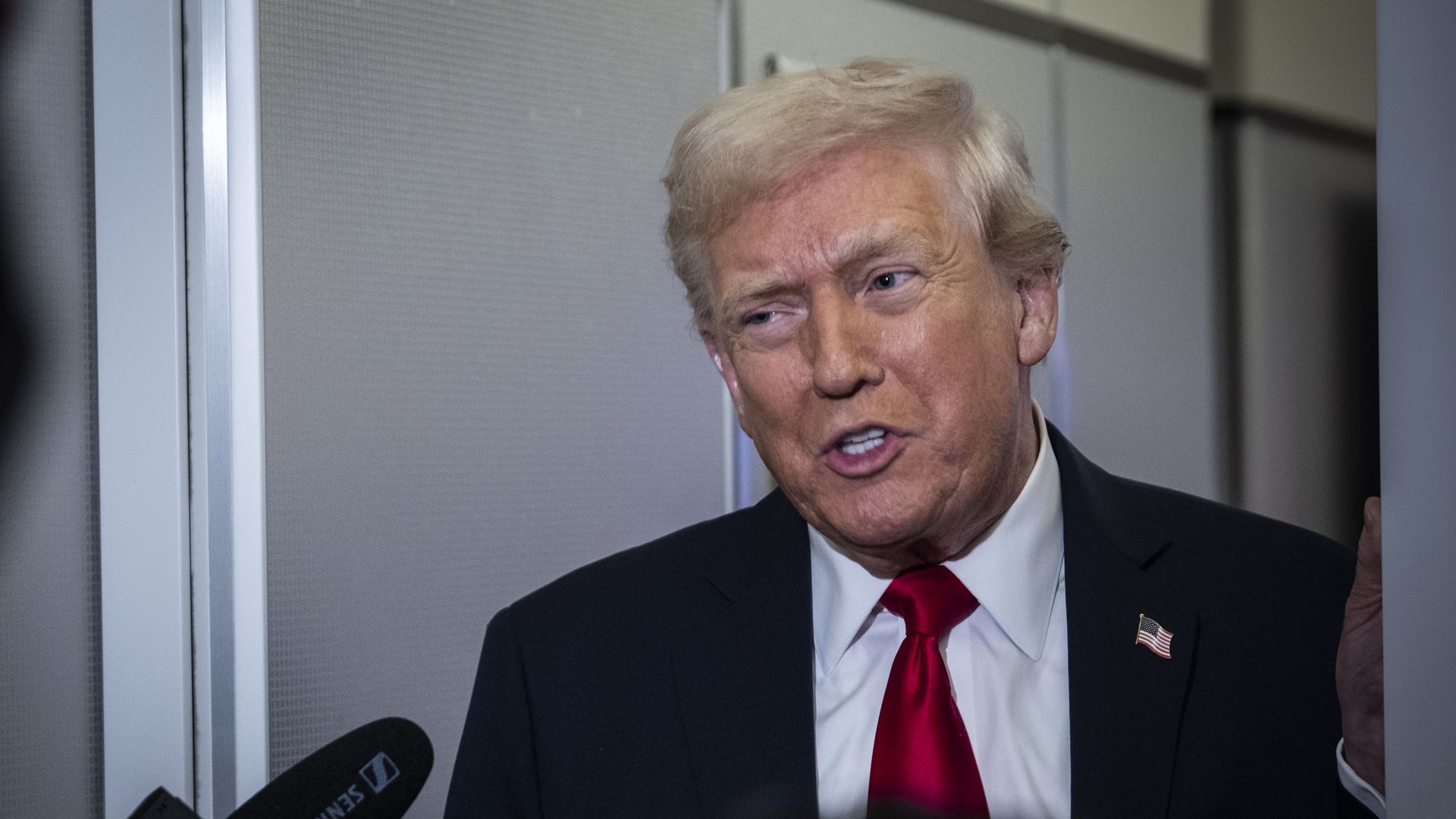
President Trump said Sunday he'll release the results of his "perfect" October MRI scan.
Why it matters: The 79-year-old president has faced scrutiny over his health this year, and leading Democratic figures have called for him to release the MRI test results.
As the U.S. grows more diverse, a quiet civil war is unfolding within American Christianity over who deserves empathy.
Why it matters: Conservatives ranging from evangelical pastors to Elon Musk have started framing empathy not as a virtue but as a vulnerability on immigration, racial justice and LGBTQ+ rights.