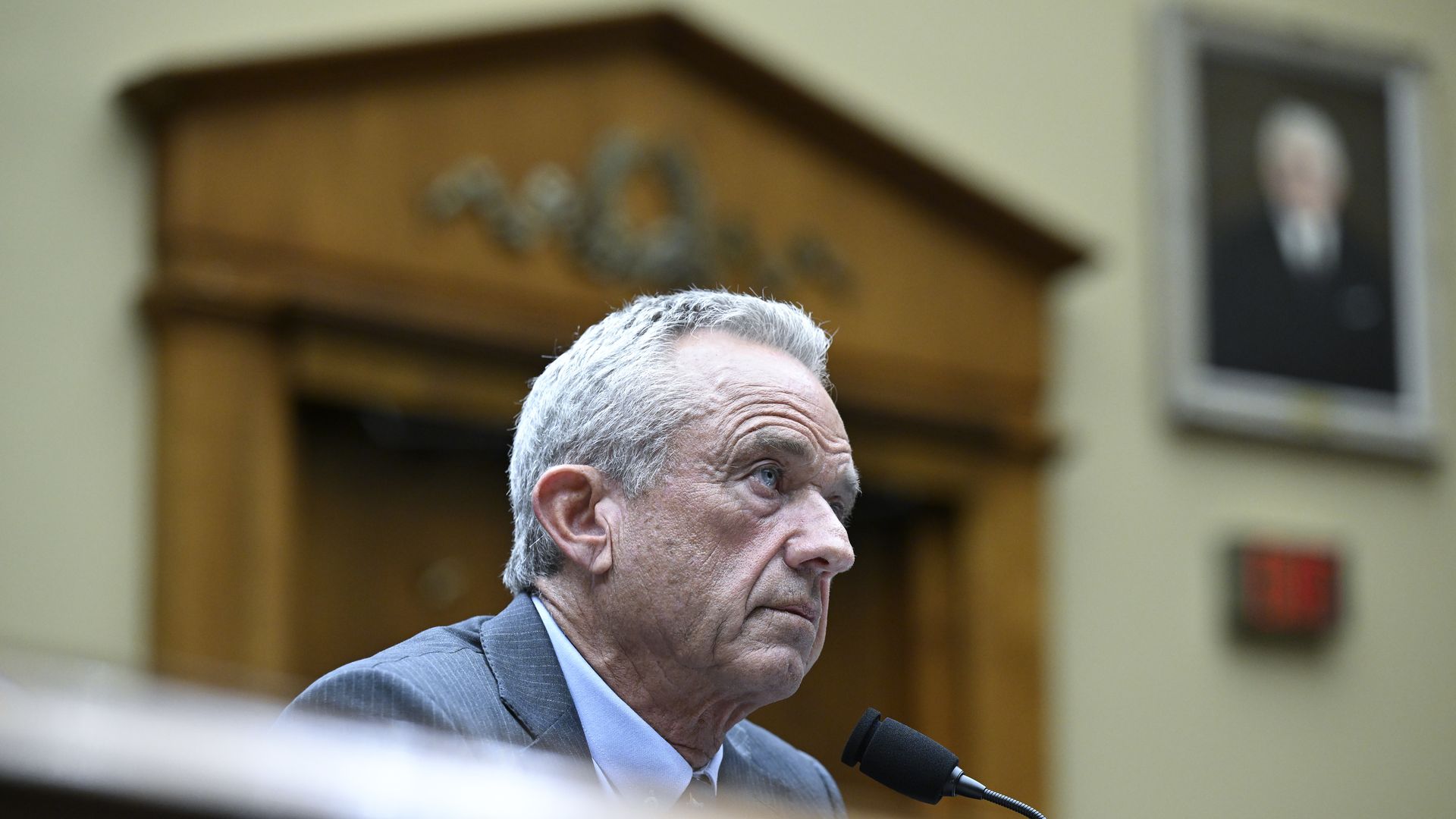
A federal judge in Rhode Island on Tuesday ordered HHS Secretary Robert F. Kennedy Jr. to halt his reorganization of federal health agencies, in response to a lawsuit brought by 19 Democratic-led states.
The big picture: Kennedy will not be able to shutter HHS divisions or undertake additional layoffs as the lawsuit moves through the courts.
Nearly 12 million people would lose their health insurance under President Trump's "big, beautiful bill," an erosion of the social safety net that would lead to more unmanaged chronic illnesses, higher medical debt and overcrowding of hospital emergency departments.
Why it matters: The changes in the Senate version of the bill could wipe out most of the health coverage gains made under the Affordable Care Act and slash state support for Medicaid and SNAP.
The Department of Health and Human Services announced on Monday that Harvard violated Title VI of the Civil Rights Act of 1964 by "acting with deliberate indifference towards harassment of Jewish and Israeli students" after the Oct. 7 attack.
The big picture: The announcement is yet another escalation in the Trump administration's pressure campaign against the Ivy League institution, which has refused to yield to Washington's demands.
Federal officials on Monday said that they busted a series of health fraud schemes spanning medical supply, telehealth and genetic testing companies, as well as opioid trafficking, that involved more than $14.6 billion in improper charges.
Why it matters: As part of the record-breaking operation, the Centers for Medicare & Medicaid Services announced it also prevented $4 billion in fraudulent claims from being paid.
The Senate is moving forward with the massive reconciliation bill after ekeing out a late-night win on Saturday to set up a fierce debate over Medicaid and other health provisions in the tax and spending cut package.
The big picture: GOP leaders want to get the bill to Trump's desk by a July 4 deadline. But it's continuing to expose divisions between moderates and conservative hard-liners and could still undergo significant changes.
Amid the drama, Sen. Thom Tillis (R-N.C.) said Sunday he wouldn't seek re-election next year after voting against starting debate on the bill and telling lawmakers he'd oppose the final version over its cuts to Medicaid.
Rush University Medical Center in Chicago is adding a new twist to its curriculum for medical students and residents, using AI tools and learning modules to teach how to more quickly identify measles rashes on different skin tones.
Why it matters: It's another reminder that diseases once thought to have been eradicated are showing up with increased frequency in clinics and ERs, posing challenges for younger physicians and health workers who thought they were relegated to history.