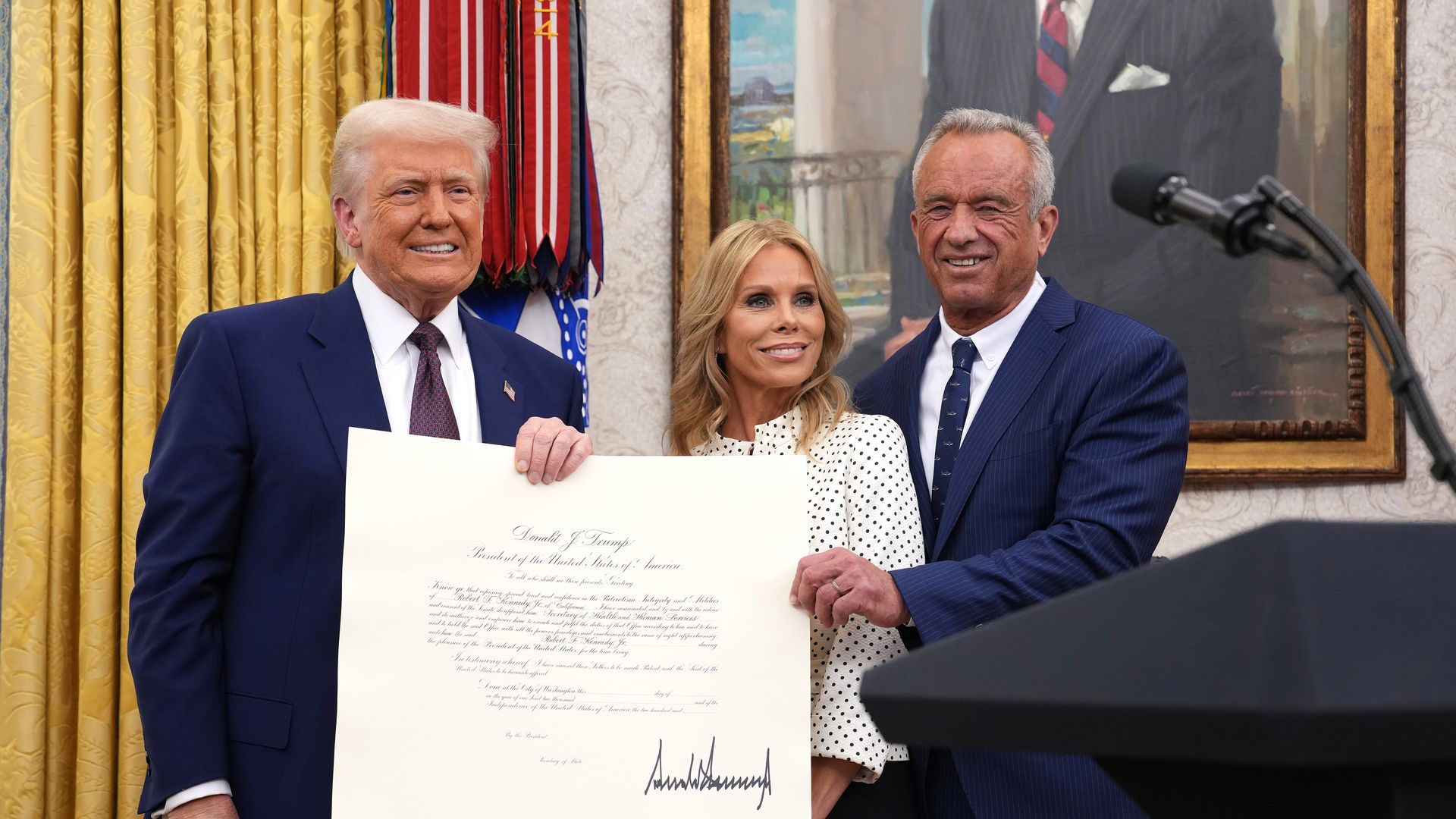
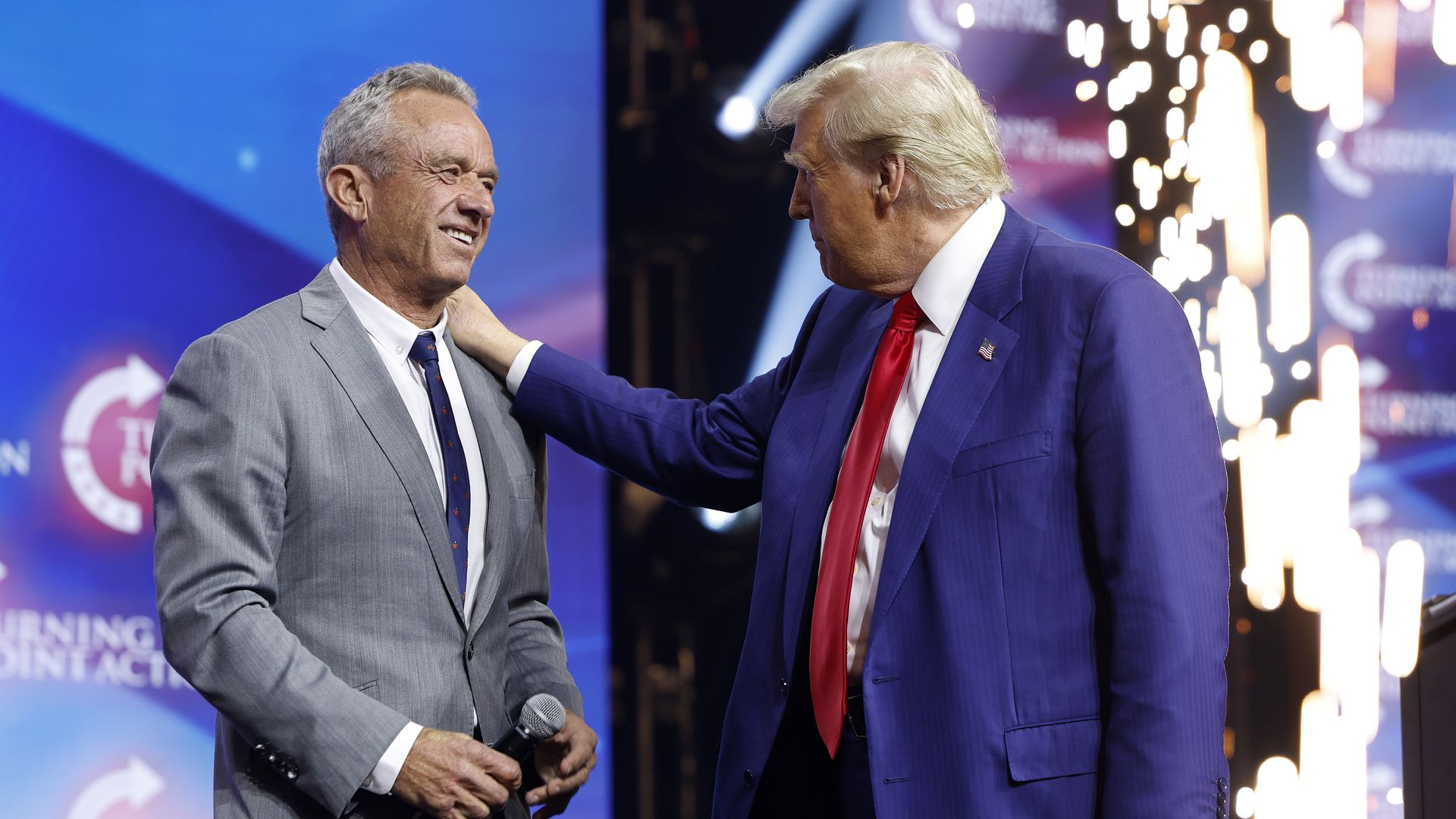
President Trump on Thursday launched a commission to be headed by new HHS Secretary Robert F. Kennedy Jr. that will study childhood chronic illnesses, including asthma, autoimmune illnesses and autism.
The big picture: The Make America Health Again Commission, announced shortly after Trump swore in Kennedy in the Oval Office, is charged with creating a strategy on improving childhood health, with explicit directions to scrutinize the use of common medications like stimulants.
Zoom in: Trump's order calls for a report within 100 days that assesses the "threat that potential over-utilization of medication," along with certain food ingredients and chemicals pose to children.
The order specifically directs the commission to assess widely-used mental health interventions like selective serotonin reuptake inhibitors, antipsychotics, mood stabilizers and stimulants, as well as weight-loss drugs.
The commission will also examine the effectiveness of federal data on childhood health and evaluate current child health education and funding programs.
The group is directed to create a strategy for a response to childhood chronic illness within 180 days.
Kennedy will chair the commission, which will also include secretaries of the departments of veterans affairs, education, agriculture, environmental protection and other agencies, as well as White House leaders including the director of the Office of Management and Budget.
The leaders of the FDA, CDC and NIH are also included. The order does not mention how administrators of Medicare and Medicaid.
The order also directs NIH to prioritize research on the "root causes" of illness.
Agencies should work with farmers to ensure the health and affordability of U.S. food, and all federally funded health research should be transparent and "avoid or eliminate conflicts of interest that skew outcomes and perpetuate distrust," the order adds.
It also indicates that changes could extend into what health insurance plans cover: The order directs agencies to make "expanded treatment options" available and to allow health insurance plans can cover benefits that support lifestyle changes and disease prevention.
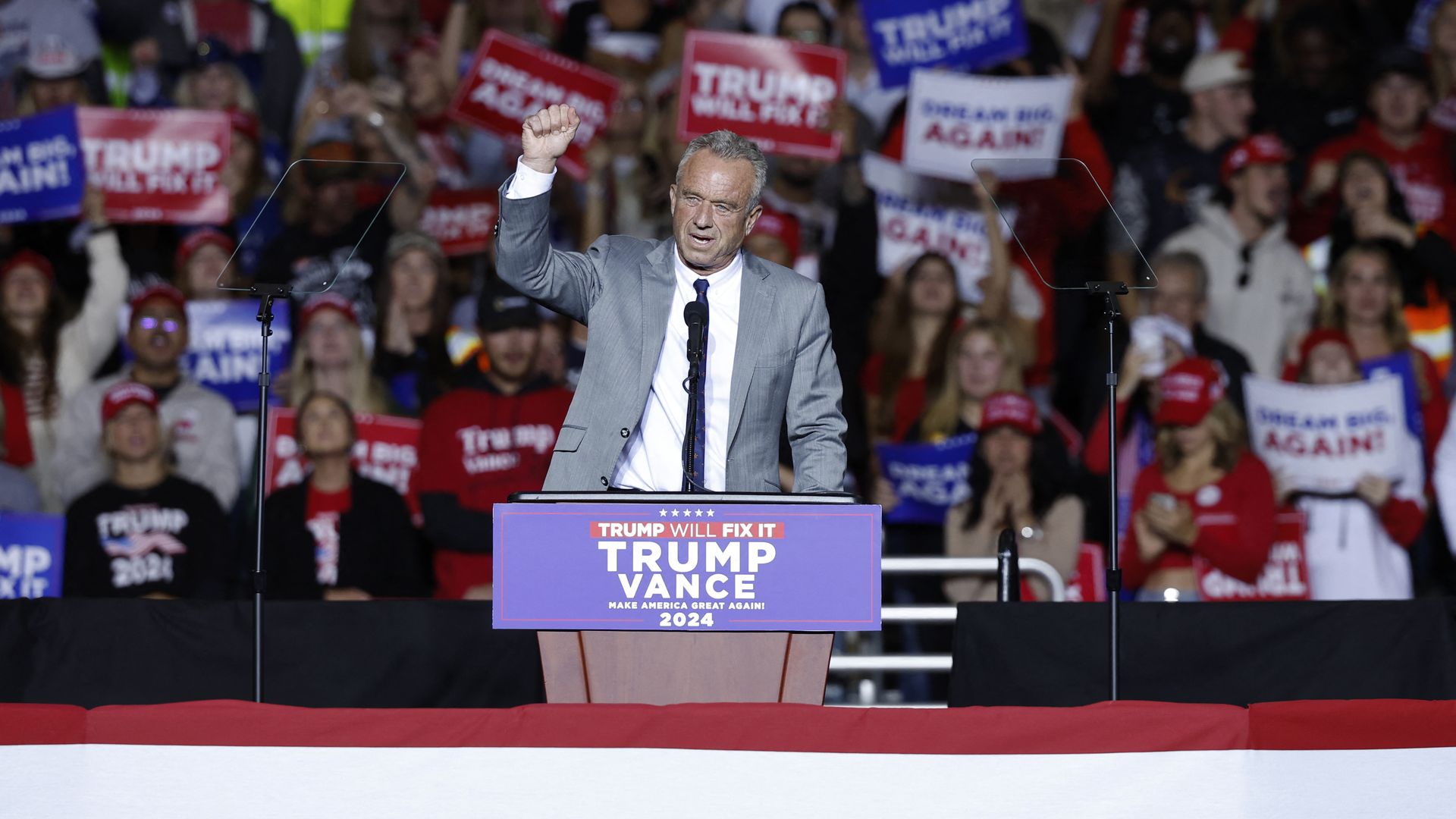
Context: Before being nominated to head HHS, Kennedy built the MAHA movement around concerns about the food supply and drug industry profiteering.
It taps into public frustration with corporate medicine and what supporters claim it is an overriding public health focus on infectious diseases.
But along the way, it became a forum for some conspiracy-tinged ideas about corruption within the FDA, fluoride in drinking water and vaccines.
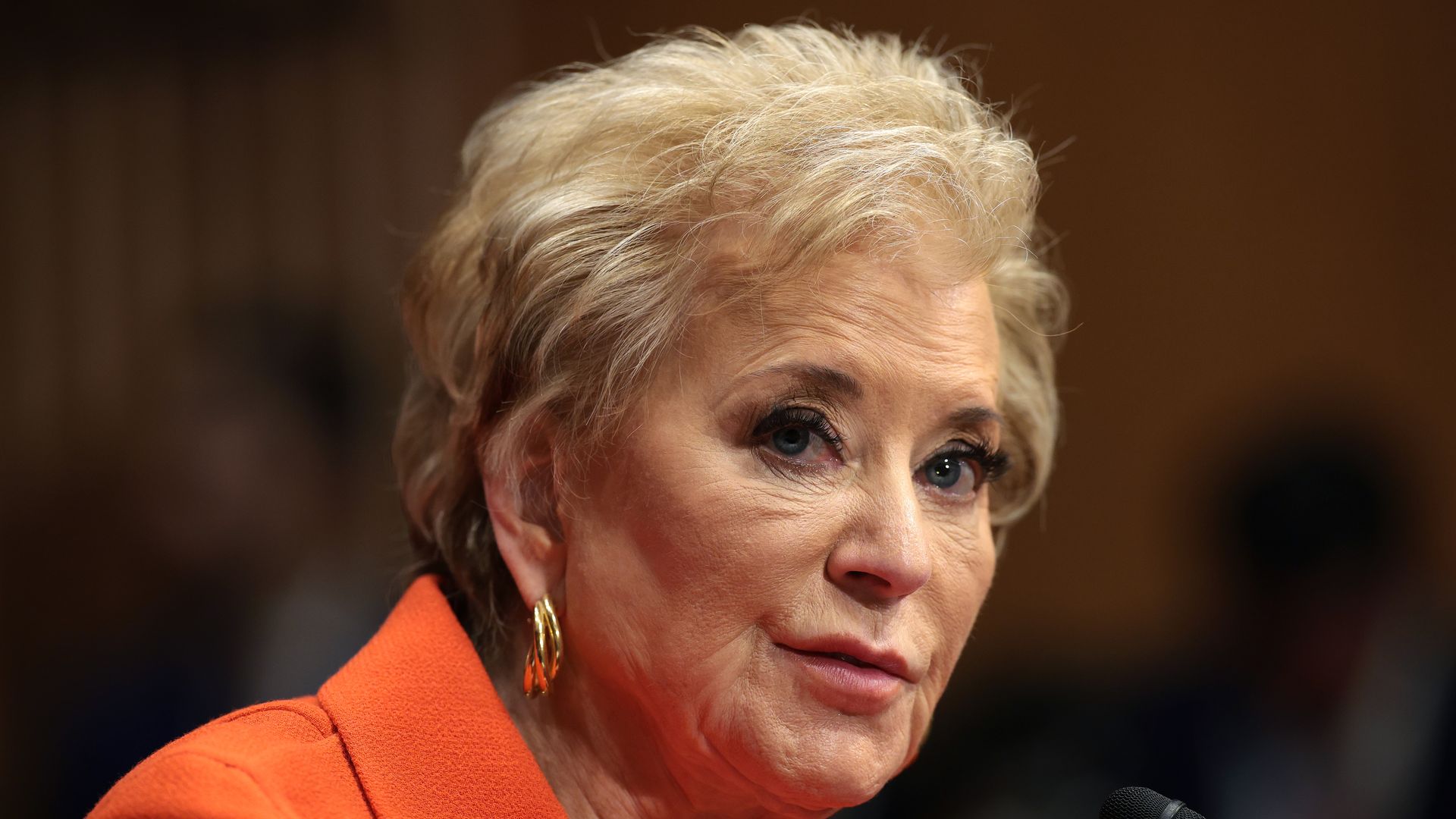
The big picture: But she gave few details on how she would balance Trump's vow to abolish the agency with preserving — and reorganizing — federal education programs.
The Senate confirmed Robert F. Kennedy Jr. to lead the Department of Health and Human Services on Thursday, voting largely along party lines.
Why it matters: The success of Kennedy's nomination — despite bipartisan concerns about his record opposing vaccines and other questions about past stances — demonstrates the degree to which Senate Republicans are willing to fall in line behind President Trump.
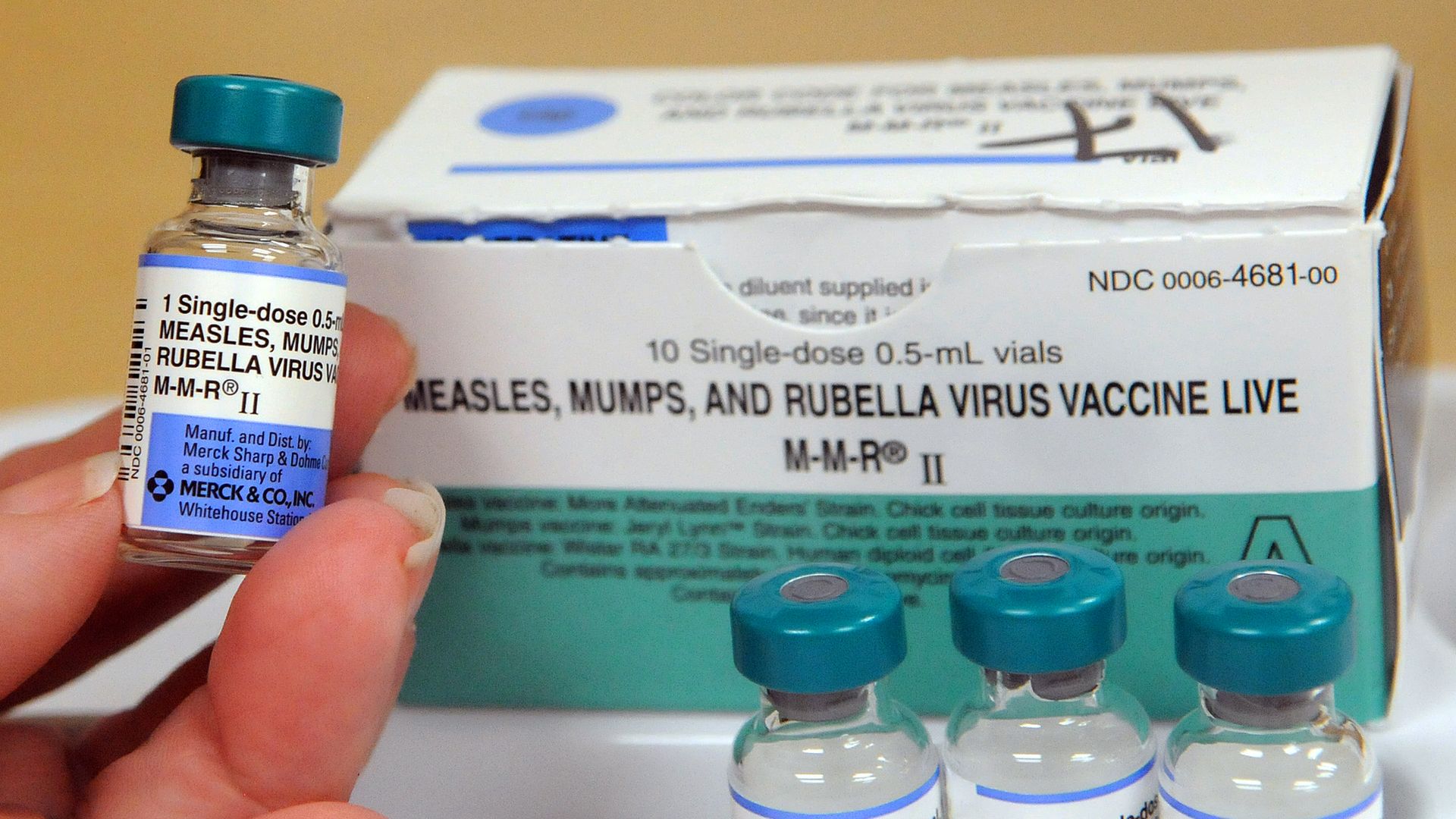
At least two dozen cases of measles have been reported in a single county in Texas over the past two weeks, in the latest sign the disease is rebounding amid falling vaccination rates.
Why it matters: Public health experts say the spread of the highly contagious and potentially life-threatening disease is preventable, noting cases have surged in areas with high vaccination exemption rates.
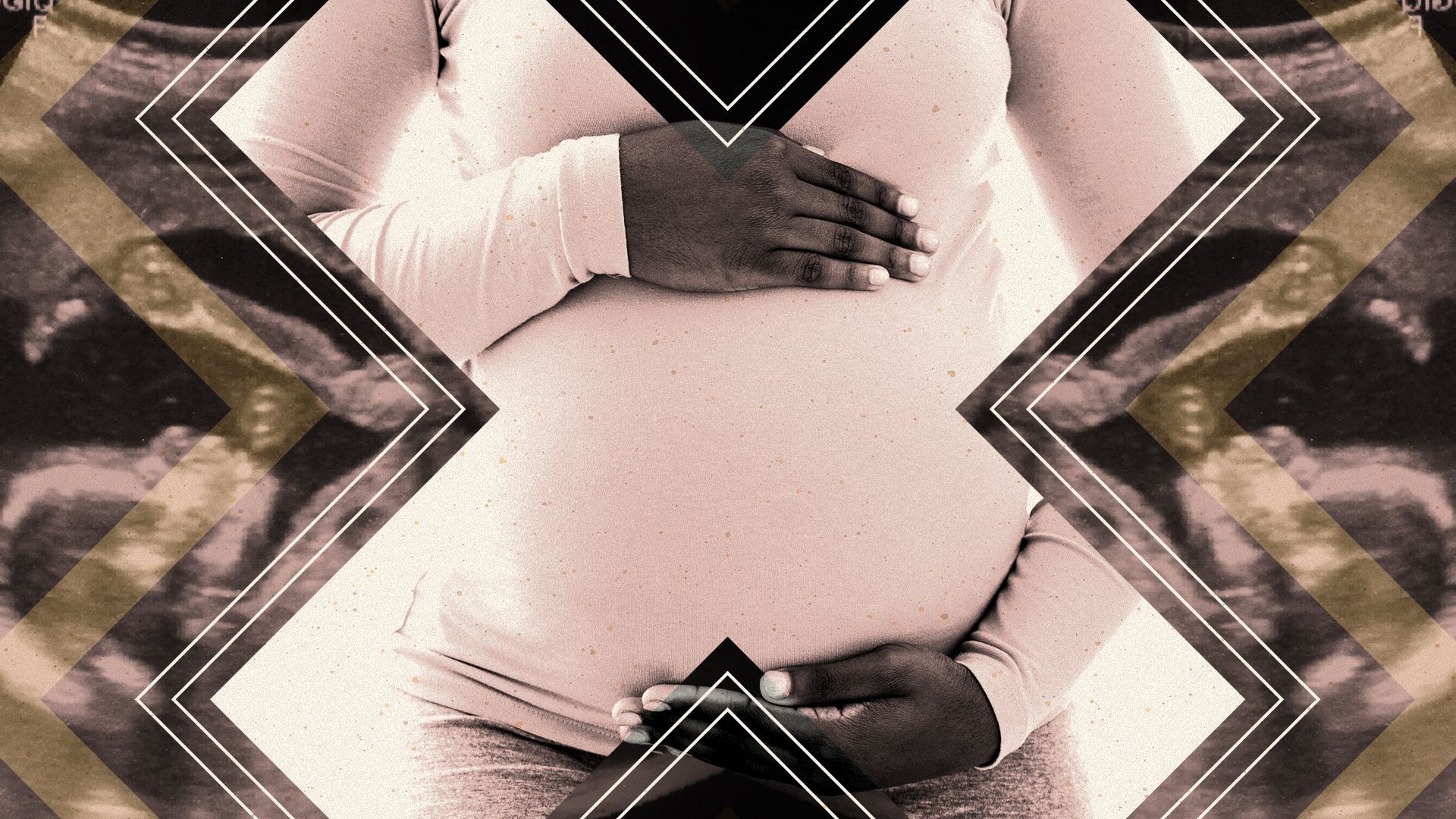
Trump administration attempts to dismantle DEI initiatives are alarming public health researchers, who fear they could thwart efforts to reduce the outsized mortality rate for Black mothers in the U.S.
Why it matters: The pandemic put a spotlight on long-standing inequities in health care, including a pregnancy-related death rate for Black women that is more than three times the rate for white mothers. About 80% of these deaths are preventable.
The Senate paved the way for Robert F. Kennedy Jr. to lead the Department of Health and Human Services on Wednesday, voting 53-47 along party lines to advance his nomination.
Why it matters: Kennedy now has a clear path to confirmation later this week, despite bipartisan concerns about his record as a vaccine skeptic and other questions about past stances.
More than half of U.S. employees have chronic health conditions, and three-quarters of those workers have had to spend time managing their health on the job in the past year, a new Harvard poll found.
Why it matters: As policymakers focus more on chronic disease, employers can improve how they help employees who have chronic health issues like hypertension, heart disease, diabetes and asthma — and there's a business case for doing so.
A federal judge on Tuesday ordered the Trump administration to restore scores of health agency webpages and datasets that went dark to comply with executive orders on diversity, equity and inclusion and gender identity.
The big picture: District Court Judge John Bates granted a request from Doctors for America for a temporary restraining order, saying the physicians' group showed "substantial likelihood of success" on its claims that Health and Human Services, the Centers for Disease Control and Prevention and the Food and Drug Administration acted arbitrarily and capriciously in removing the webpages.