Why it matters: Music lovers may experience cold- and flu-like symptoms, including coughs, irritated throats, sneezing and running noses after attending large outdoor festivals this spring.
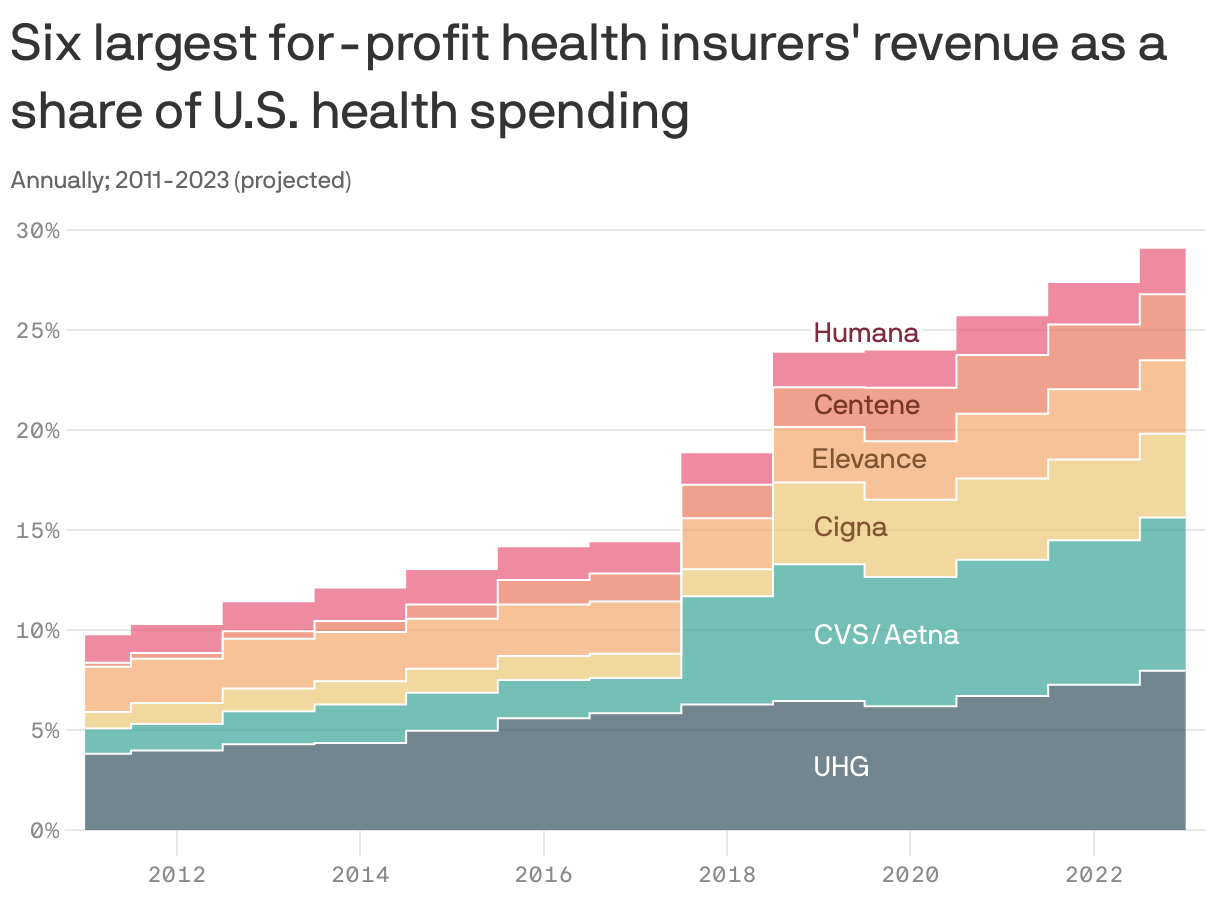
Health insurance companies have swelled in both size and scope over the last decade, with the revenues of six for-profit parent companies making up nearly 30% of total U.S. health spending last year — compared with less than 10% in 2011.
Why it matters: The size of health insurance companies — which are now often part of larger companies that do far more than provide coverage — raises big questions about competition, costs, quality of care and the risks of a system featuring such sprawling players.
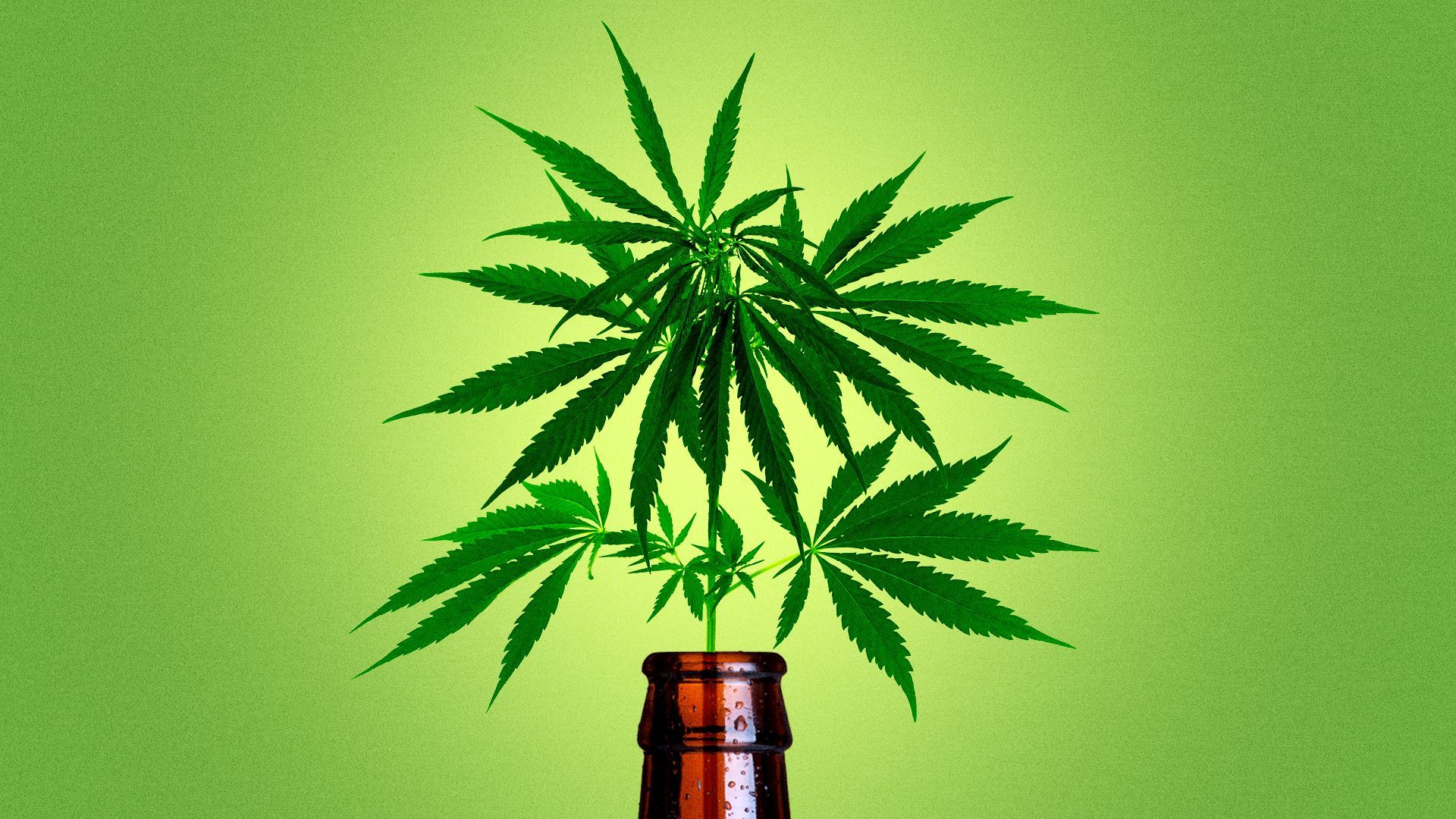
Companies that make cannabis-infused drinks are encouraging people to ditch booze for weed on 4/20 — the longstanding pot holiday.
Why it matters: More people are going "California Sober" — no alcohol or hard drugs, just marijuana, thank you — but the medical community is split over whether this is a good idea.
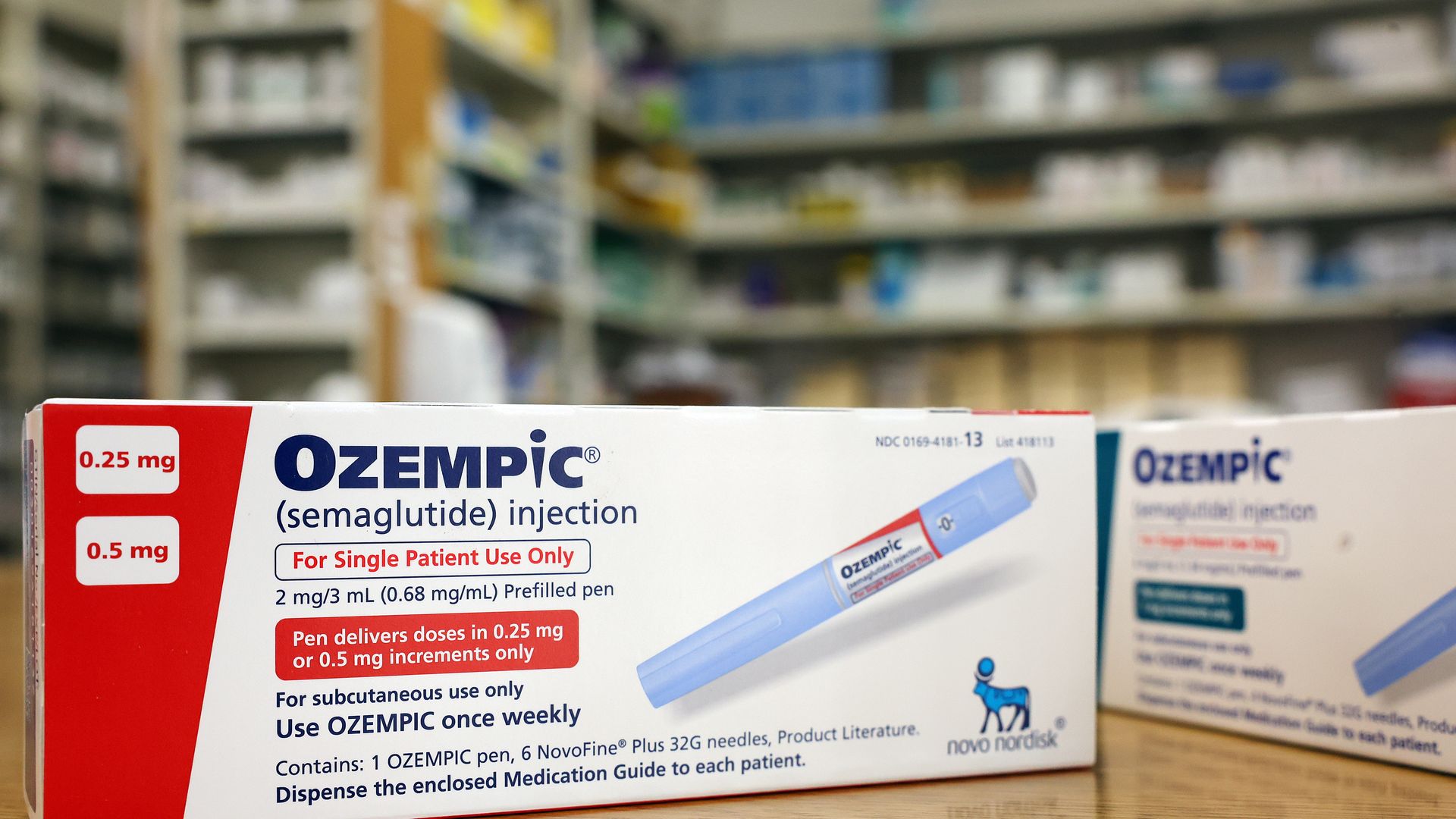
An increasing number of women are reporting unplanned pregnancies — even among those who've struggled with fertility — while taking popular anti-obesity and diabetes drugs like Wegovy and Ozempic.
Why it matters: As reports of the phenomenon have trickled out across social media, doctors are still trying to figure out what effect, if any, the class of drugs known as GLP-1 agonists may have on fertility.
Attorney General Kris Mayes' promise that she won't prosecute doctors for violating the soon-enforceable abortion ban likely isn't enough to persuade doctors to break the law, Arizona abortion providers tell Axios Phoenix.
Why it matters: Even with potential legislative and legal interventions, the 1864 near-total abortion ban will likely be the law of the land for at least a few months in Arizona.
Even states that made progress narrowing racial and ethnic health disparities have considerable gaps on access, outcomes and quality of care, a new Commonwealth Fund report finds.
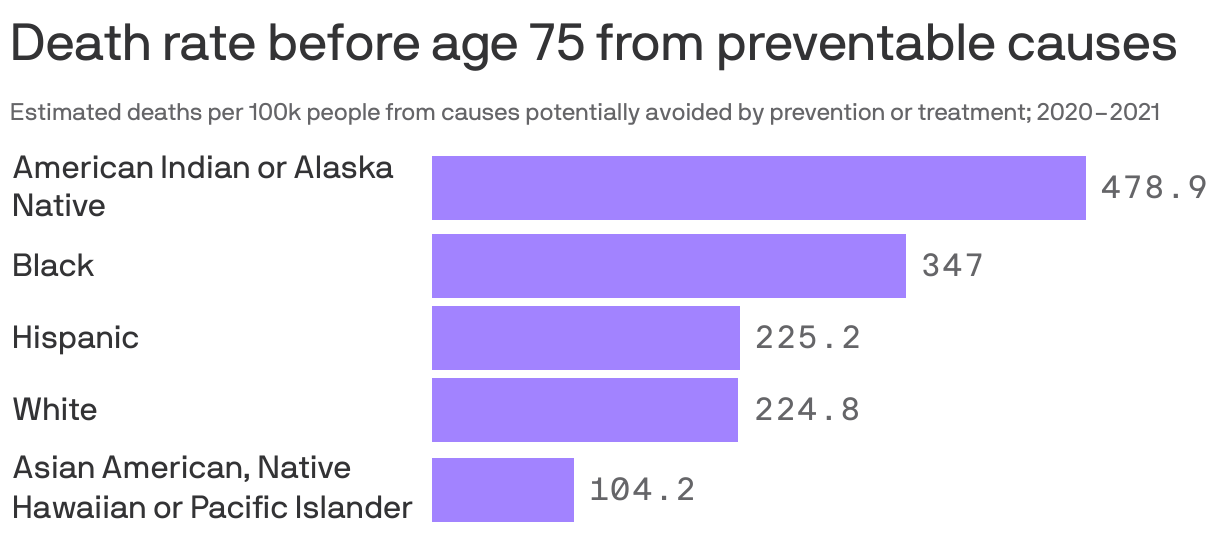
The big picture: Black and Native Americans are much likelier to die early from preventable illnesses than their white and Asian counterparts.
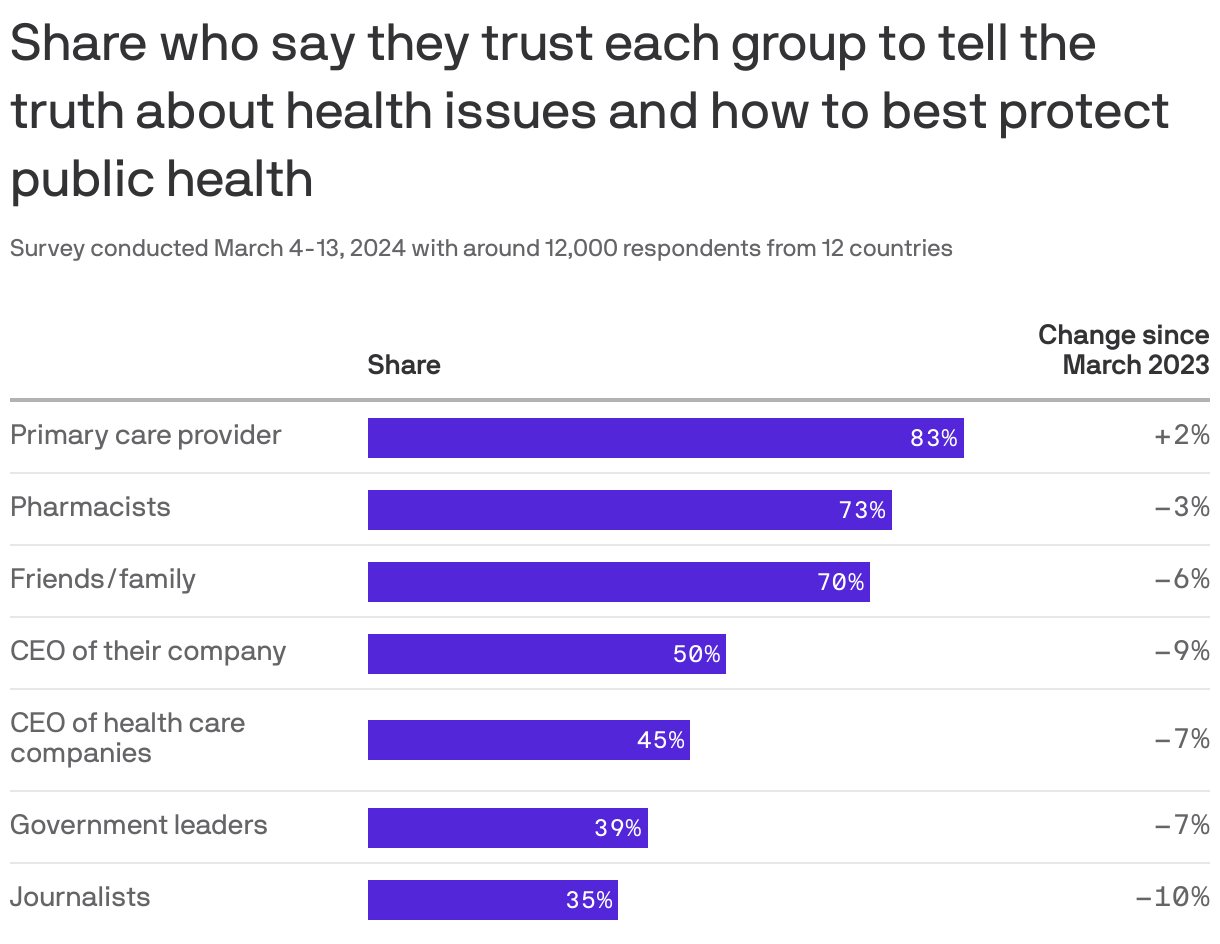
Declining confidence in majorinstitutions is driving more people to trust their own ability to assess health information or turn to friends for guidance, indicates a new global Edelman Trust Barometer survey provided exclusively to Axios.
Why it matters: Lack of trust in public health agencies, nonprofits and the media is emerging as an enduring legacy of the COVID-19 pandemic, and it has huge implications for how we respond to the next big disease threat or even manage our day-to-day health.