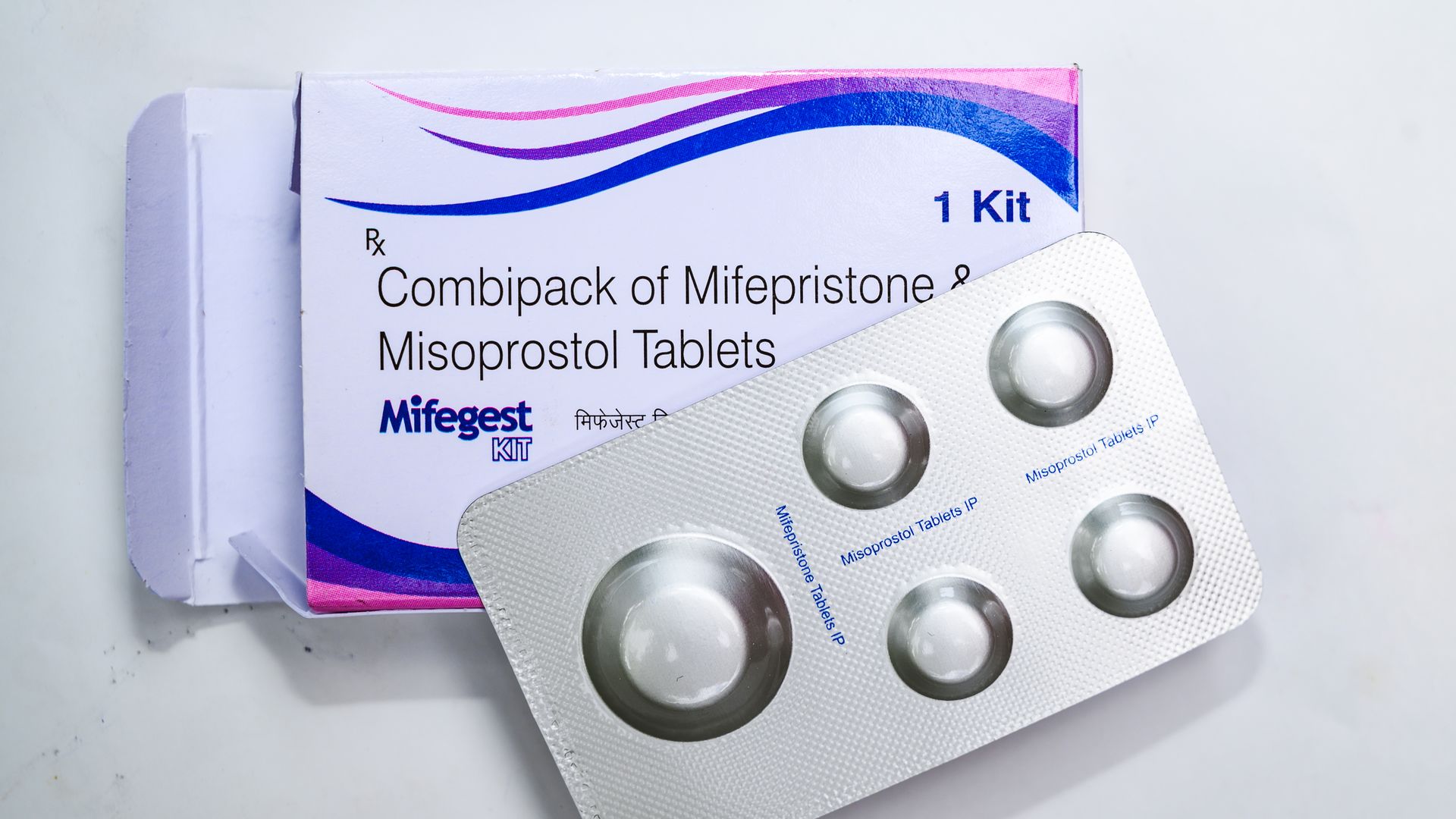
The number of women turning to medication abortion outside of the formal health care system surged in the wake of the Supreme Court's overturning of Roe v. Wade, according to a new study.
Why it matters: The findings offer a fuller picture of the use of abortion pills following the court's decision to end federal abortion protections.
A new monoclonal antibody is available to help protect immunocompromised patients against COVID-19, filling a gap for a group that remains vulnerable to the coronavirus.
Why it matters: It's been more than a year since the FDA pulled the last antibody from the market, Evusheld, because new variants had rendered it ineffective.
Eliminating the federal right to abortion surprisingly hasn't reversed a yearslong rise in the number of legal abortions in the U.S. — but a case the Supreme Court hears on Tuesday just might.
Why it matters: The justices will consider rolling back federal policies that made it easier to access a key abortion drug that's grown in prominence as states enacted near or total abortion bans after Roe v. Wade was overturned in 2022.