Patients taking some new diabetes and weight-loss drugs are less likely to be diagnosed with depression and anxiety after starting the medication, according to a study of over 4 million patient records.
Why it matters: It adds to evidence that the class of drugs known as GLP-1 agonists do not increase risk of depression following anecdotal reports of increased suicidal thoughts in patients taking them.
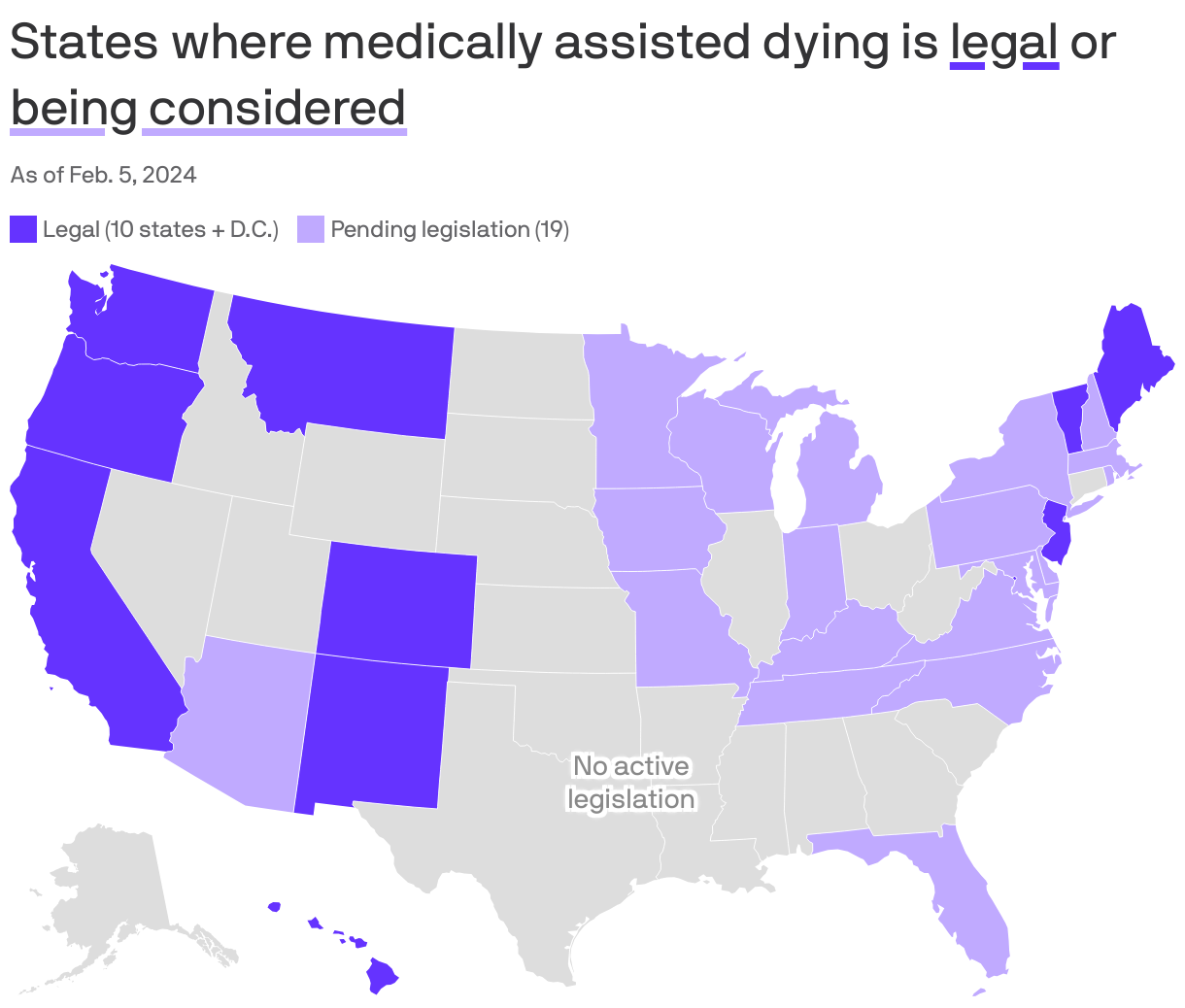
A push to let physicians prescribe life-ending drugs to terminally ill patients is getting major attention in statehouses this year, with lawmakers in 19 states considering bills to allow the practice.
The big picture: Despite continuing skepticism from the medical establishment, the controversial policy is gaining new momentum because of personal anecdotes, experience from states that were among the first to allow it, and changing attitudes partly driven by the pandemic's devastation.
Money can't buy happiness, the old adage says. But maybe combining it with marriage can help.
Why it matters: Marital status is a stronger predictor of American adult wellbeing than education, race, age and gender, according to newly released data from the Institute for Family Studies and Gallup.
Black women in the U.S. are, on average, six times more likely to be murdered than white women, researchers wrote Thursday in The Lancet.
Why it matters: The study —which covered more than two decades — is the first to break out homicide trends among women between ages 25 and 44, when they are statistically more likely to be murdered.
Sen. Bernie Sanders (I-Vt.) landed some tough questions on three major pharmaceutical CEOs at a hearing on Thursday but didn't come away with new commitments to lower prices or make other concessions.
Why it matters: Sanders relishes the ability to put public pressure on drug companies over their prices, but the CEOs of Johnson & Johnson, Merck and Bristol Myers Squibb also showed their ability to stay on message.
A divided House of Representatives on Wednesday endorsed banning quality-adjusted life years from being used as a metric for determining a drug's value in federal health programs.
Why it matters: QALYs are viewed as a key tool in comparative effectiveness studies, but have been held up as discriminatory against people with disabilities — and are unevenly applied across federal programs.
CVS Health and Centene executives say newly proposed Medicare Advantage rates for 2025 aren't "sufficient" and hinted they could cut benefits if the federal government finalizes the rates as is.
Why it matters: More than half of Medicare enrollees are in private Medicare Advantage plans. The specter of potential cuts to seniors' health care benefits in an election year could put pressure on the Biden administration.
In an era of rising health costs, it almost sounds too good to be true: A midsized Montana-based company managed to nearly halve its per-person health spending in just five years, without dropping benefits.
Why it matters: Pacific Steel & Recycling's success in wrestling down its health spending provides a case study of how employers can cut costs, but CEO Jeff Millhollin said the effort also demonstrates why it's harder than needed for most companies and workers.