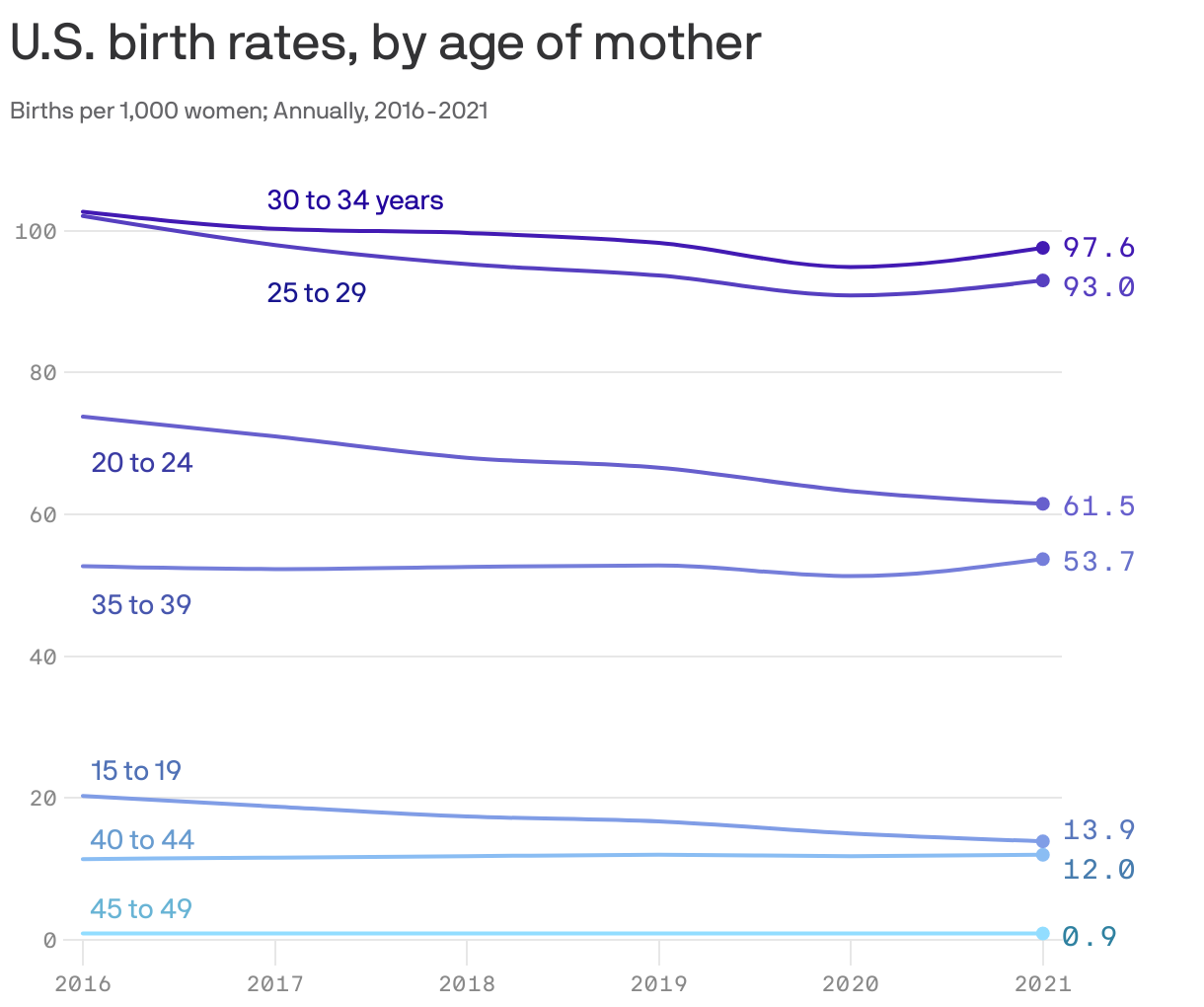
Birth rates increased among women ages 25 and up — especially among those in their mid-to-late-30s — during the second year of the pandemic, according to final data released recently by the CDC's National Center for Health Statistics.
Why it matters: It bucks the trend of declining births almost every year since 2007.
When House Republicans grill Biden administration officials on the COVID-19 response at a Wednesday hearing, some of the sharpest questions may surround how the government oversees research on pathogens that can cause pandemics.
Why it matters: This House Energy and Commerce Committee hearing is part of a series of inquiries planned by the new GOP majority around the pandemic.
President Biden's State of the Union address will include calls for insulin cost caps for privately insured patients and a renewed bid to close the Medicaid coverage gap in Republican-controlled states that haven't accepted the Affordable Care Act's Medicaid expansion.
The big picture: Neither proposal has much of a chance, but the speech gives Biden a chance to draw contrasts with Republicans and highlight policy successes in the Inflation Reduction Act, according to Larry Levitt, executive vice president of health policy at the Kaiser Family Foundation.
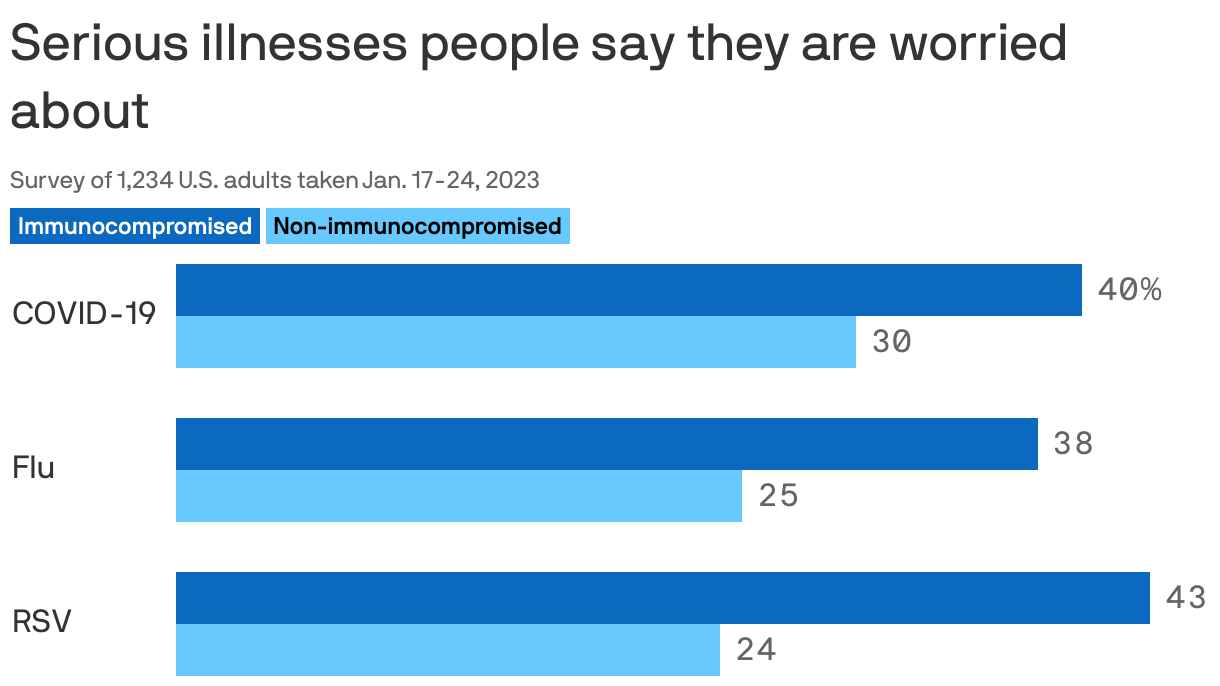
The end of the COVID public health emergency is near, but that's small consolation to the estimated 7 million to 10 million immunocompromised Americans who are soldiering on with a dwindling number of tools to protect them.
The big picture: The immunocompromised — estimated to make up about 3% of Americans — have largely been an afterthought throughout the pandemic, patient advocacy groups say.