Saturday's health stories

New York delays booster-shot mandate for health care workers
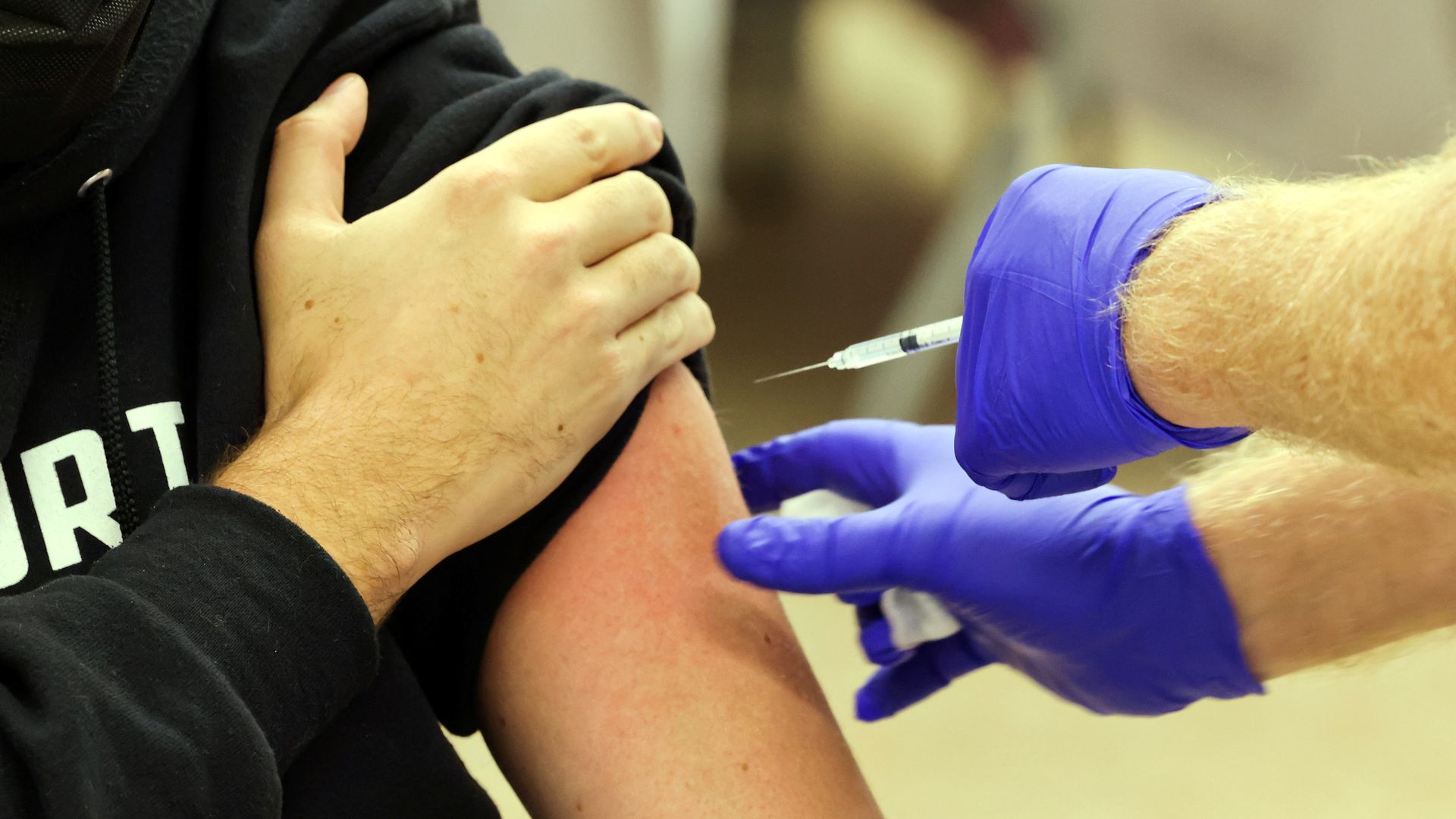
To help mitigate staffing shortages and give workers more time to get boosted, the New York State Department of Health said Friday it will no longer enforce the booster requirement that was set to go into effect on Feb. 21.
Why it matters: Roughly 61% of New York's health care staff have gotten the booster, according to data from the health department, and the original vaccine mandate for health workers remains in place.

Canadian police arrest over 100 people in trucker protests

Ottawa police announced Friday it had arrested over 100 people involved in trucker anti-vaccine mandate protests and has towed 21 vehicles.
The big picture: Protesters began blocking Ottawa's downtown last month in opposition to vaccine mandates for truckers coming in from the U.S. and to other pandemic restrictions. Demonstrations have since spread to the rest of the country.

The Geek Squad, but make it for home care
The tell was a curious look on Current Health CEO Christopher McCann's face. That was all his colleague Adam Wolfberg needed to know the meeting with Best Buy was more than a casual get-together, Wolfberg, Current's chief medical officer, tells Axios.
Why it matters: As health care moves home, tech and retail giants alike are angling for a slice of the care delivery pie.
- "There’s a very natural strategy we’ve seen a number of big organizations take moving into health care, whether it’s Walmart, Dollar General, CVS or Amazon," says Wolfberg. "They’ve got this incredible footprint and they're saying, 'Let's use it to deliver care.'"
Flashback: Last fall, Best Buy acquired McCann's remote patient monitoring (RPM) company for $400 million.
- Before the deal announcement, Best Buy had been piloting its health care services in the homes of ~1 million seniors, CEO Corie Barry said during an investor conference in September 2019.
- The pilot involved having the Geek Squad place sensors throughout seniors’ homes to measure their sleeping and eating habits, and having Great Call, the medical device company Best Buy acquired in 2018, analyze the data.
Details: With Best Buy's customer-facing Geek Squad and its Lively-branded fall-detecting wearables, the electronics giant was already well-suited to enter the health care sector, Wolfberg tells Axios.
- So when Current's McCann came along with a suite of products for high-risk hospital patients seeking to have their care delivered at home, it was a natural fit, he says.
- "For [Best Buy] I think it was, 'Let’s start with low-acuity conditions and move up the spectrum into higher-acuity ones," says Wolfberg. "I think that’s the vision for Current Health: Extending that work into chronic disease, post-hospital care and to our most acute, hospital-at-home care."
- Eventually, the united companies will focus on shoring up Best Buy's strengths in customer support and distribution to advance Current’s mission of enabling more home-based forms of care, Wolfberg adds.
Between the lines: Big Tech isn't the only giant external industry eyeing its role in health care.
- 202o and 2021 saw retail and electronics giants including Best Buy and Walmart transform existing assets — think mobile workers and foot traffic — into health care tools.
What's next: Current Health is expanding its contracts beyond those focused on remote patient monitoring (RPM) devices into hypertension management, says Wolfberg.
- His research team is focused on measuring chronic care management's impact on ER visits and hospital admissions, he says.
- "So less hospital-at-home and more routine care of chronic conditions," says Wolfberg. "We’re planning to move down the spectrum into low-acuity deployments."
Erin Brodwin co-authors the Axios Pro Health Tech deals newsletter. Start your free trial at AxiosPro.com.

Hospitals on high alert for cyberattacks
Federal officials issued alerts this week about the increased potential for cyber attacks against critical U.S. infrastructure targets as tensions escalate between Russia and Ukraine — and that includes health care.
Why it matters: But as health care continues to grapple with the strain of the pandemic, it could be particularly vulnerable to attacks, experts say.

America's rapid — yet unequal — pandemic off-ramp
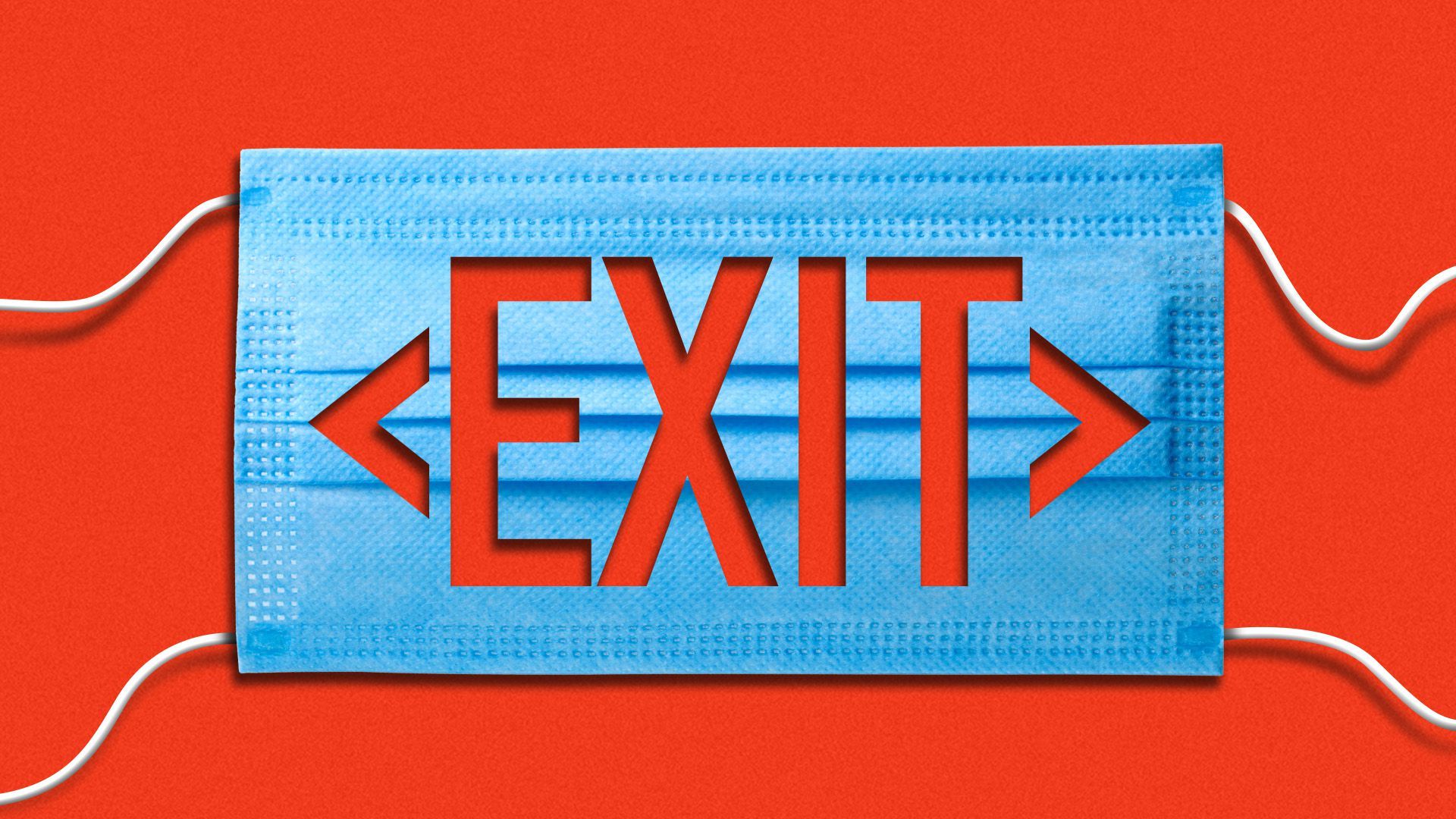
America is accelerating toward a return to pre-pandemic life, though millions of people aren't yet comfortable abandoning pandemic precautions — or they feel downright threatened by the rapid reversal.
Why it matters: For the majority of Americans — particularly vaccinated ones — the virus no longer poses a severe threat to their health, at least for now. But that isn't uniformly true.

Travel nurse firm cashes in on pandemic's staff shortages


AMN Healthcare, one of the largest health care staffing firms, reported record travel nurse revenue and profits last year, especially in the fourth quarter.
Why it matters: The Omicron variant of the coronavirus battered hospital staffs, especially among nurses, and pushed hospitals to pay up for whatever help they could get — and those same forces benefited companies who place traveling nurses.

California first state in U.S. to outline COVID endemic phase plan

California Gov. Gavin Newsom (D) on Thursday announced plans to tackle the "next phase" of the COVID-19 pandemic, as cases in the state decline.
Why it matters: California is the first U.S. state to formally move toward an "endemic" approach to the coronavirus, under a strategy that focuses on a swift response to outbreaks and a shift away from pandemic mandates and business disruptions, per AP.