In hopes of curbing the measles outbreak — which has infected 186 people in Rockland County, New York, — local officials have issued strict guidelines prohibiting anybody with measles from being in a public space for up to 21 days.
“It is unacceptable to sit back and do nothing as more of our residents fall ill to this deadly disease and court decisions aside, we will never do that. In 2017, measles killed 110,000 people worldwide, mostly children under the age of 5. And while we have thankfully not seen a death here in Rockland, we have seen multiple hospitalizations, including an infant and even a premature birth caused by measles.”
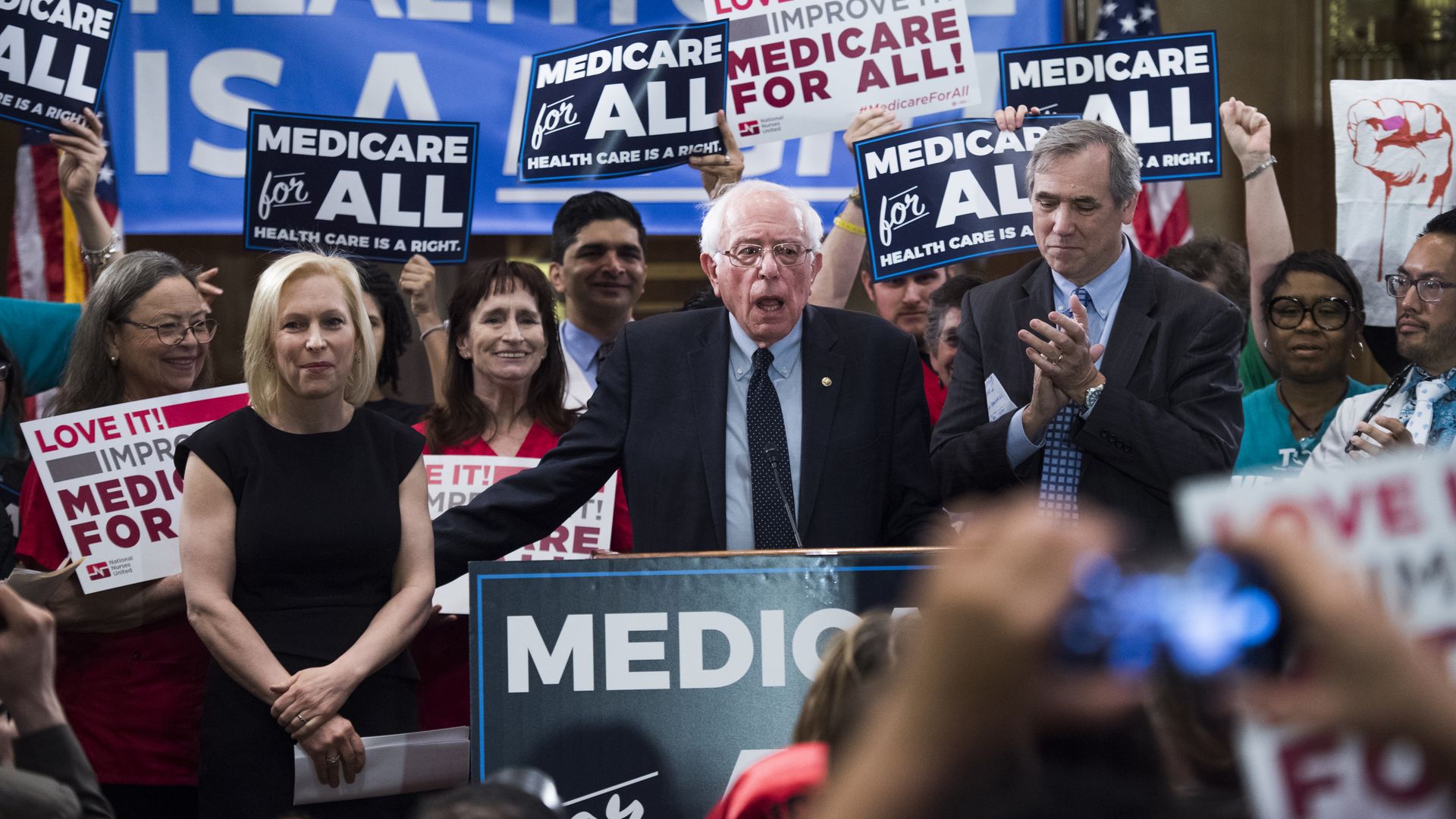
UnitedHealth Group CEO Dave Wichmann said today on an earnings call that Democrats' "Medicare for All" proposals would result in the "wholesale disruption of American health care" and "would surely jeopardize the relationship people have with their doctors."
Between the lines: Wichmann felt the need to address Medicare for All because the threat of moving to a single-payer system has crushed industry stock prices recently. But his comments also overshadowed the fact that UnitedHealth, the largest health insurance and services conglomerate in the country, beat Wall Street's expectations with $3.5 billion of profit in the first quarter.
The Department of Homeland Security has considered designating fentanyl a weapon of mass destruction in certain situations, Task & Purpose scooped yesterday.
What they're saying: "Fentanyl's high toxicity and increasing availability are attractive to threat actors seeking nonconventional materials for a chemical weapons attack," James McDonnell, a senior DHS official, wrote in a memo obtained by Task & Purpose.
Millions of Americans lose their health insurance plans every month, by leaving the job through which they got that coverage.
Why it matters: Critics and skeptics of "Medicare for All" worry about eliminating people's existing coverage because most people are relatively satisfied with their employer-based plans. But millions of workers and their families already switch or lose their insurance from their jobs.
Measles cases in the U.S. jumped last week, with 90 new confirmed cases, the Centers for Disease Control and Prevention announced Monday. The global statistics are also grim, with a 300% increase in preliminary data for the first 3 months of this year compared with last year.
Why it matters: The extremely contagious virus, for which there is a safe and effective vaccine, shows no signs of slowing despite efforts by public health authorities to combat the spread of misinformation with strong measures. International health officials are becoming increasingly concerned about simultaneous, growing outbreaks in multiple countries.
There has been appropriate handwringing since 2010 about the affordability of Affordable Care Act plans in the marketplaces. But new data show that health insurance is decidedly less affordable for lower income people who get coverage at work than for their counterparts with similar incomes in the marketplaces.
Why it matters: It’s another example of how, when we focus so much on the ACA markets, we lose sight of problems in the employer-based health system where far more people get their coverage. For lower-wage workers, their coverage is decidedly worse than ACA coverage is.
Medicare for All could end up costing employers less than the current employer-sponsored health insurance system does, depending on how it's structured.
Yes, but: That certainly doesn't mean employers are on board, partially because other concerns — like access to health care and the competitive advantage that generous benefits can create — may outweigh cost and convenience.