Think you’re getting stuck with bigger bills for your routine medical costs, like copayments and deductibles? You might want to look at this chart, based on research from the Medicare Payment Advisory Commission. It shows that, back in 1976, our disco-dancing ancestors paid a way bigger share of own their health care costs than we do today.
Between the lines: If you’re wondering how that can be true, we’ve got some thoughts from Matthew Fiedler of the Brookings Institution, and the MedPAC report has some clues too. The basic answer is that health coverage has gotten more comprehensive than it was 40 years ago.
In announcing a new $165 million cash injection, the co-founders of Oscar Health Insurance said the startup had made an "underwriting profit" in 2017.
Reality check: There's a lot of wiggle room in "underwriting profit," based on Oscar's own financial data. Oscar's core insurance functions are still in the red — which will have to turn around if the company also continues to spend more money on its health technology.
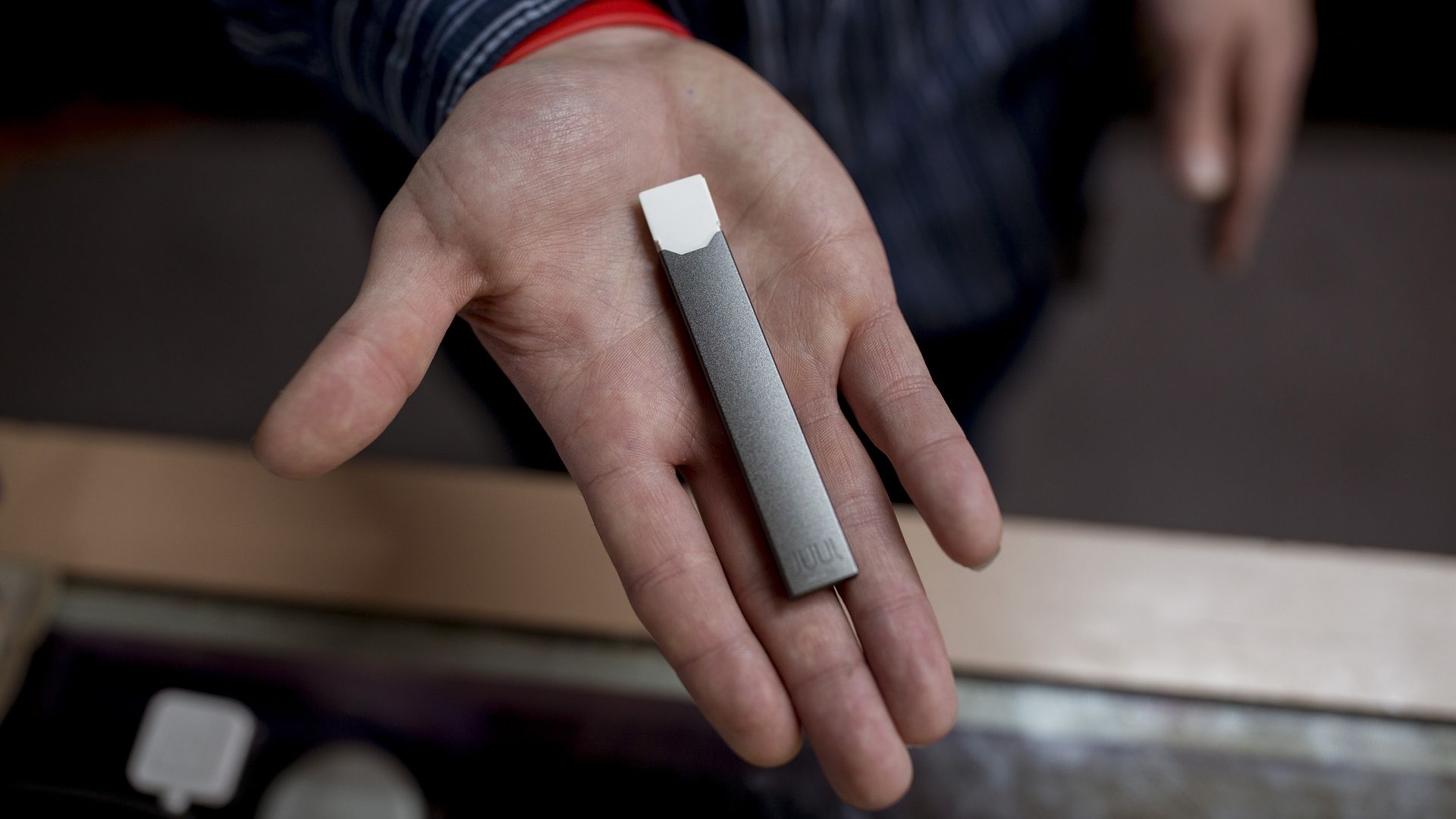
A group of public health organizations and doctors filed a lawsuit against the Food and Drug Administration Tuesday for delaying its review of e-cigarettes — a growing concern amongst parents and pediatricians due to increased reports of adolescents and teenagers picking up "vaping" or "juuling" (when using a popular brand, Juul).
Why it matters:
"Juul is an e-cigarette that looks like a USB flash drive, charges on your computer, and is sold in sweet flavors...Each pod contains as much nicotine as a pack of cigarettes. There are widespread reports it's being used in high schools and junior high schools...It's exactly the kind of product the FDA needs to be reviewing now and taking action to protect our kids."
— Vince Willmore, spokesperson for Campaign for Tobacco-Free Kids (CTFK), tells Axios