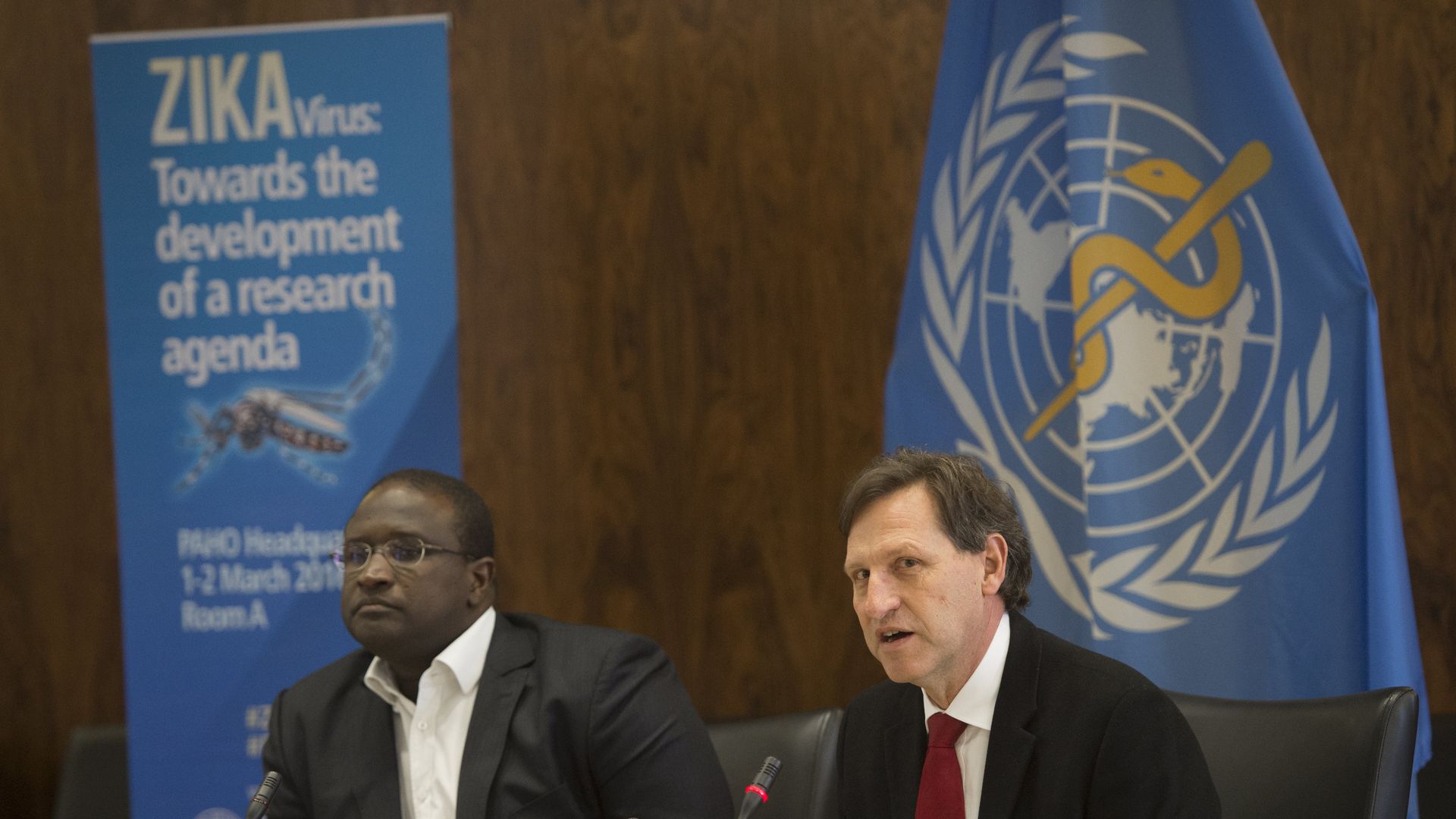
The Centers for Disease Control and Prevention is cutting its epidemic prevention programs in 39 out of 49 countries due to a lack of funding, reports the WashPost.
Why it matters: The CDC received a $600 million grant from Congress in 2014 to help fight the Ebola outbreak in West Africa. Most of the organization's epidemic funding comes from that one-time package, and the Trump administration is not expected to renew the budget when resources run out in September 2019.
House and Senate Republicans are increasingly open to the idea of a program that would pump billions of dollars into insurance markets to help stabilize the Affordable Care Act's exchanges. But they'll need to reconcile big differences over how much to spend and how much to leave up to states.
Our thought bubble: Generally, experts are saying the more reinsurance money, the better — if Congress is serious about bringing down premiums in the individual market. But the House bill includes enough state flexibility that this money could end up being used inefficiently, some experts warn.
It's only been two weeks since a consortium of hospital systems said they are forming their own not-for-profit drug company to make generic drugs that are in short supply or overpriced. Another 100 hospitals have already joined the initiative since its launch, Intermountain Healthcare CEO Marc Harrison said in an interview at NEJM Catalyst.
Big picture: Harrison believes up to 1,000 hospitals, or about 20% of all hospitals in the country, will sign on. High drug prices and shortages have enraged the public, and the growing interest indicates hospitals see this as a way to offset some bad actors.
The search is on for a new director for the Centers for Disease Control and Prevention, following Brenda Fitzgerald’s resignation amid a growing uproar over financial conflicts of interest.