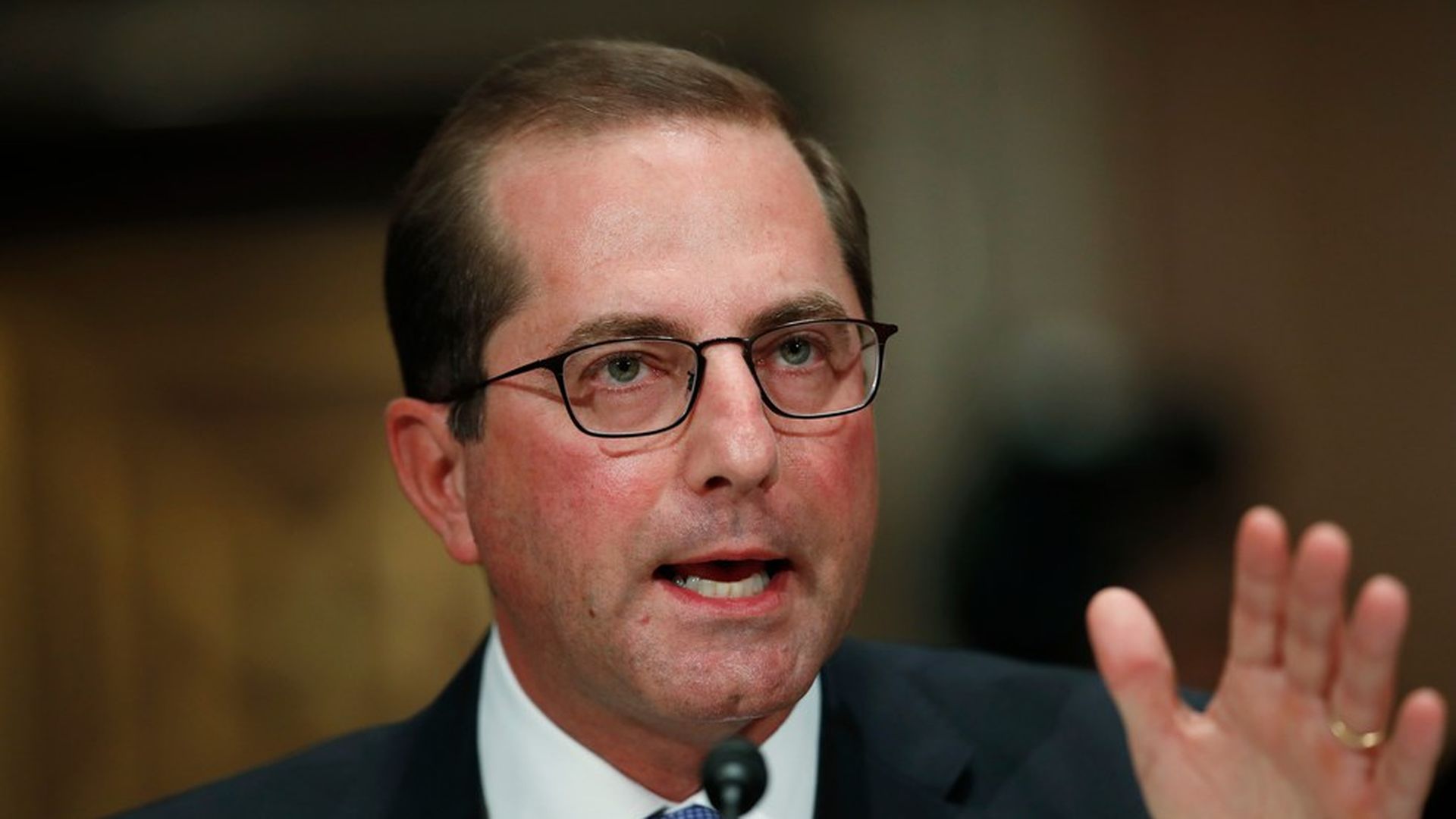
Alex Azar, President Trump's nominee for Health and Human Services secretary, came out of the gate Wednesday with a statement that was obvious but needed to try to win over critics of his drug industry experience: "Drug prices are too high." Here's what he told the Senate HELP Committee during his hearing.
It's not over yet, but Republicans' tax plan had a good day yesterday — and that means the Affordable Care Act's individual mandate is, yet again, in serious jeopardy.
The latest: All 12 Republicans on the Senate Budget Committee voted for the tax overhaul, including once-wavering budget hawks Bob Corker and Ron Johnson.
The Affordable Care Act used a carrot-and-stick approach to get healthy people to sign up for coverage. The stick is the individual mandate and the penalty for going uninsured; the carrot is a system of subsidies to help people afford their premiums. Under Republicans' watch, the stick is getting a lot weaker while the carrot is looking more and more delicious.
What's happening: We're ending up in a place where the poorest consumers can get even cheaper coverage than the ACA intended, especially if they choose less comprehensive care, while wealthier consumers increasingly don't have much incentive to get covered at all. Those trends will only grow more pronounced if Republicans successfully repeal the individual mandate in their tax bill, leaving the law with only its carrot, and no stick.
Getting rid of the ACA's individual mandate would cause premiums to spike across the country, but would have an outsized impact in a handful of largely rural, largely conservative states, including in Alaska, Iowa, Missouri, Nebraska, Nevada and Wyoming, according to a Los Angeles Times analysis of data from the Kaiser Family Foundation.
Reality check: The effects here are no different from the effects of "skinny repeal" — the last-ditch repeal-and-replace effort that GOP senators insisted they would only vote for if they had assurances it would never become law.