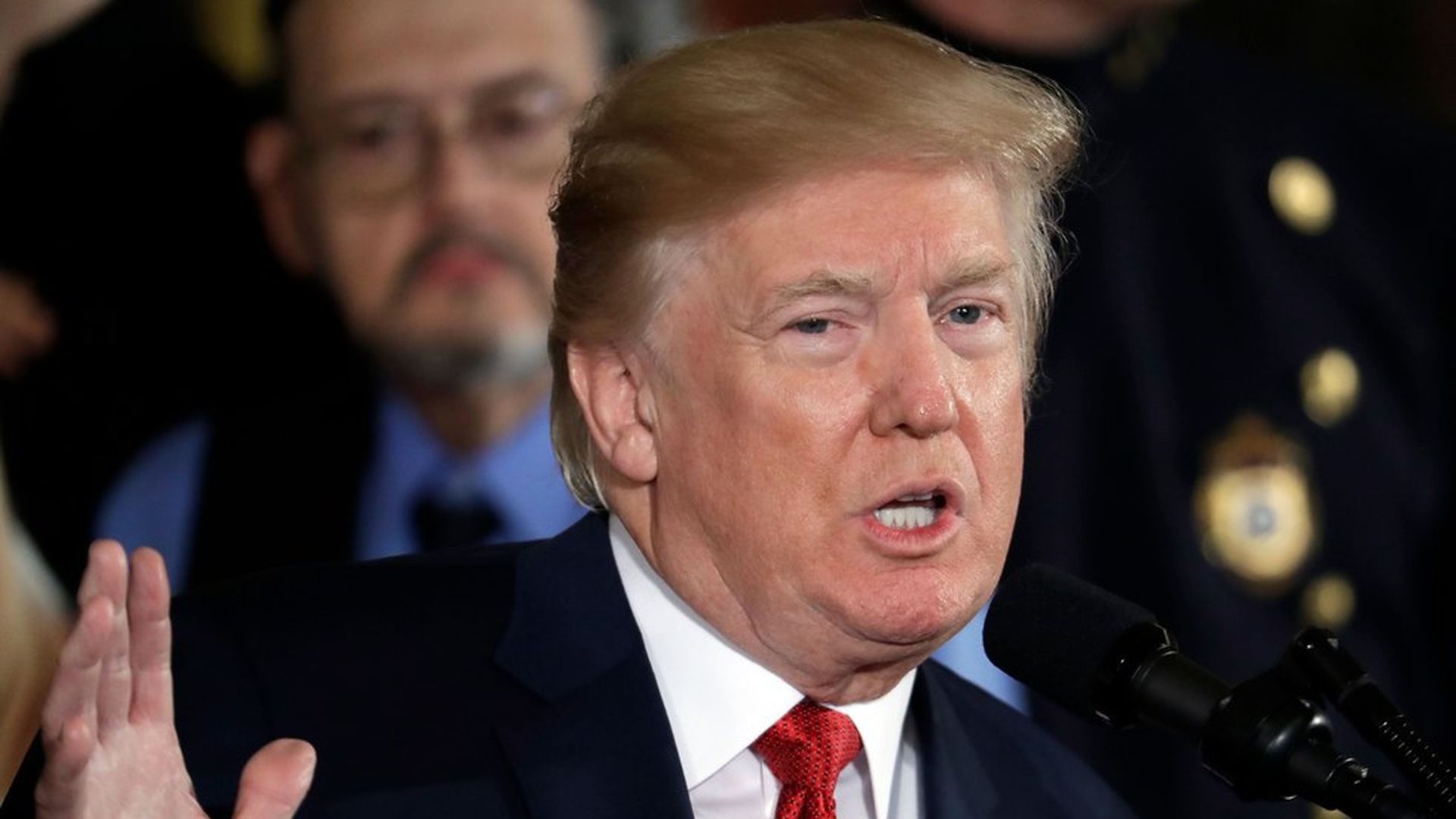
President Trump's opioid commission delivered more than 50 specific ideas to help combat the epidemic, involving more than a dozen agencies. But no one's in charge of implementing that overall plan — which means no one's accountable for its progress.
Be smart: Policy-specific "czars" can be a bit of a gimmick. But some experts say there's a strong case for giving one person the authority to spearhead an opioid response that will need to be far-reaching and multifaceted to be successful.
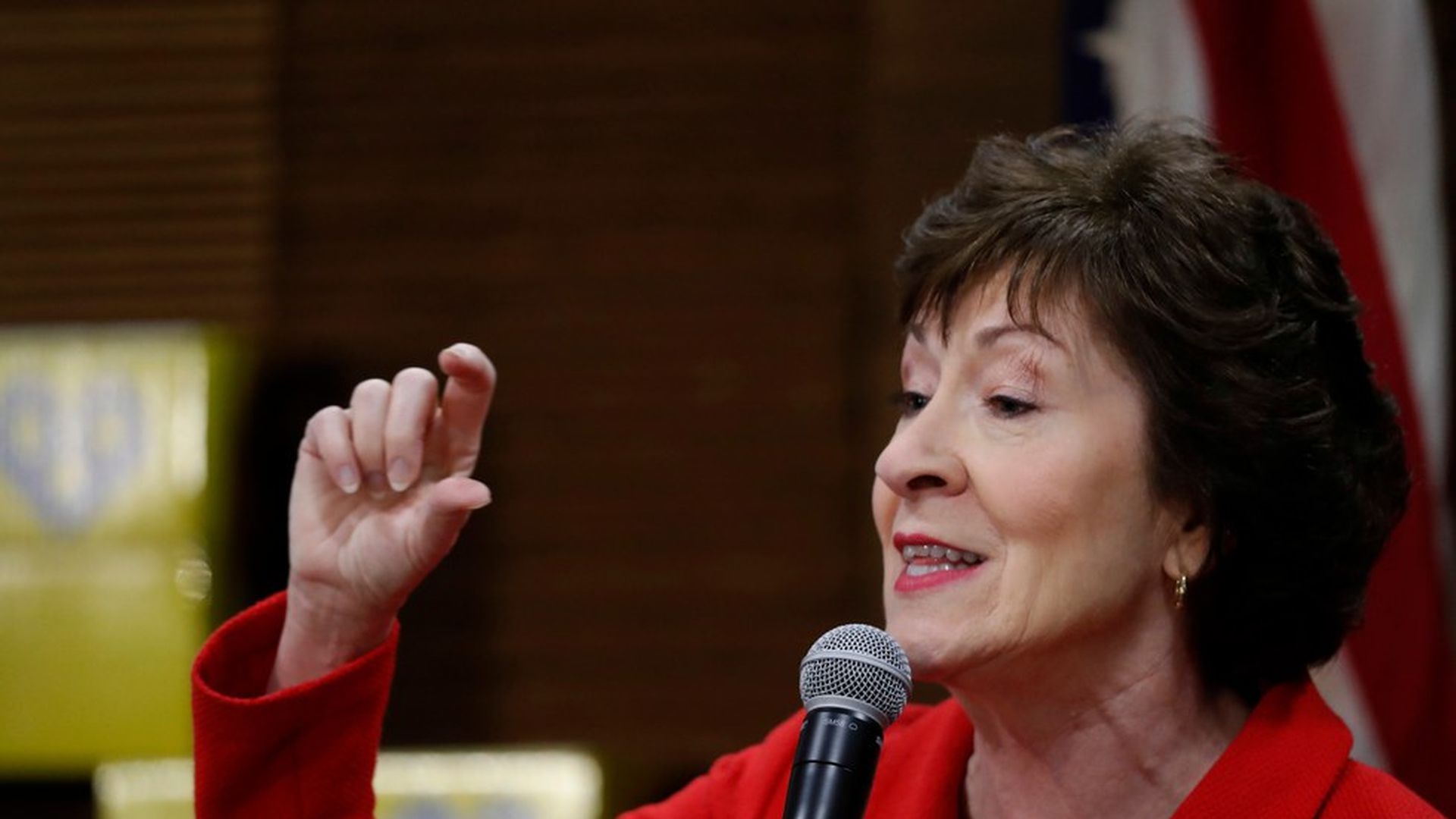
Sen. Susan Collins has suggested she'd vote for a tax bill repealing the Affordable Care Act's individual mandate only if Congress also passes separate legislation to establishing a new reinsurance fund.
Why this matters: Collins may be the key to passing the Senate's tax reform bill. But it's hard to see the Republican-controlled Congress passing a reinsurance bill — and though experts say such a measure would help offset the effects of repealing the mandate, many say it wouldn't go far enough.
Medicaid pays for more emergency room visits than any other insurance program, according to recent data from the federal Agency for Healthcare Research and Quality. The health insurance program for the poor covered about one-third of all ER visits in 2014 — roughly 44 million of them, up from 26.5 million in 2006.
The big picture: Medicaid has been paying for more ER visits over time largely because the Affordable Care Act expanded the program. People in low-paying jobs that don't offer health benefits also rely on Medicaid coverage.