Saturday's health stories

Beautiful broken tulips could cause the flower's extinction

The New York Times' Joanna Klein explored how broken tulips could soon lead to the extinction of all tulips.
What's a broken tulip?: Flowers infected by a virus that breaks down pigments in the cells of their petals, resulting in intricate, multi-colored patterns such as stripes and flame-like designs.
- The virus kills tulips by weakening their bulbs and stunting their growth, until they have no strength left to bloom. This causes the tulips to produce fewer bulbs over time, until eventually they cease to exist.
- Planting broken tulips can spread the virus to other unbroken tulips — or lilies, which are also prone to the virus.
- The threat of extinction is part of the reason broken tulips are now illegal in the Netherlands, NYT notes, which is renowned for its in annual tulip festival called Keukenhof.

Democratic Republic of Congo's first Ebola outbreak since 2014

The World Health Organization (WHO) confirmed Friday there is a new Ebola outbreak in the Democratic Republic of the Congo. One person has tested positive for Ebola (it's lab-confirmed), there are nine "suspected" of being infected, and three of them have died. The group of people have been exhibiting symptoms since April 22. It wasn't clear whether the confirmed case was one of the nine, per The Washington Post.
Why it matters: As TIME's cover story put it: "An infection in all but the most remote corner of the world can make its way to a major city in a day or less." Plus, recall the 2014-2015 Ebola outbreak killed 11,300 worldwide and infected 28,600 people.
- Guinea, Sierra Leone, and Liberia have all been Ebola-free since June of last year.

Aetna CEO encourages single-payer debate
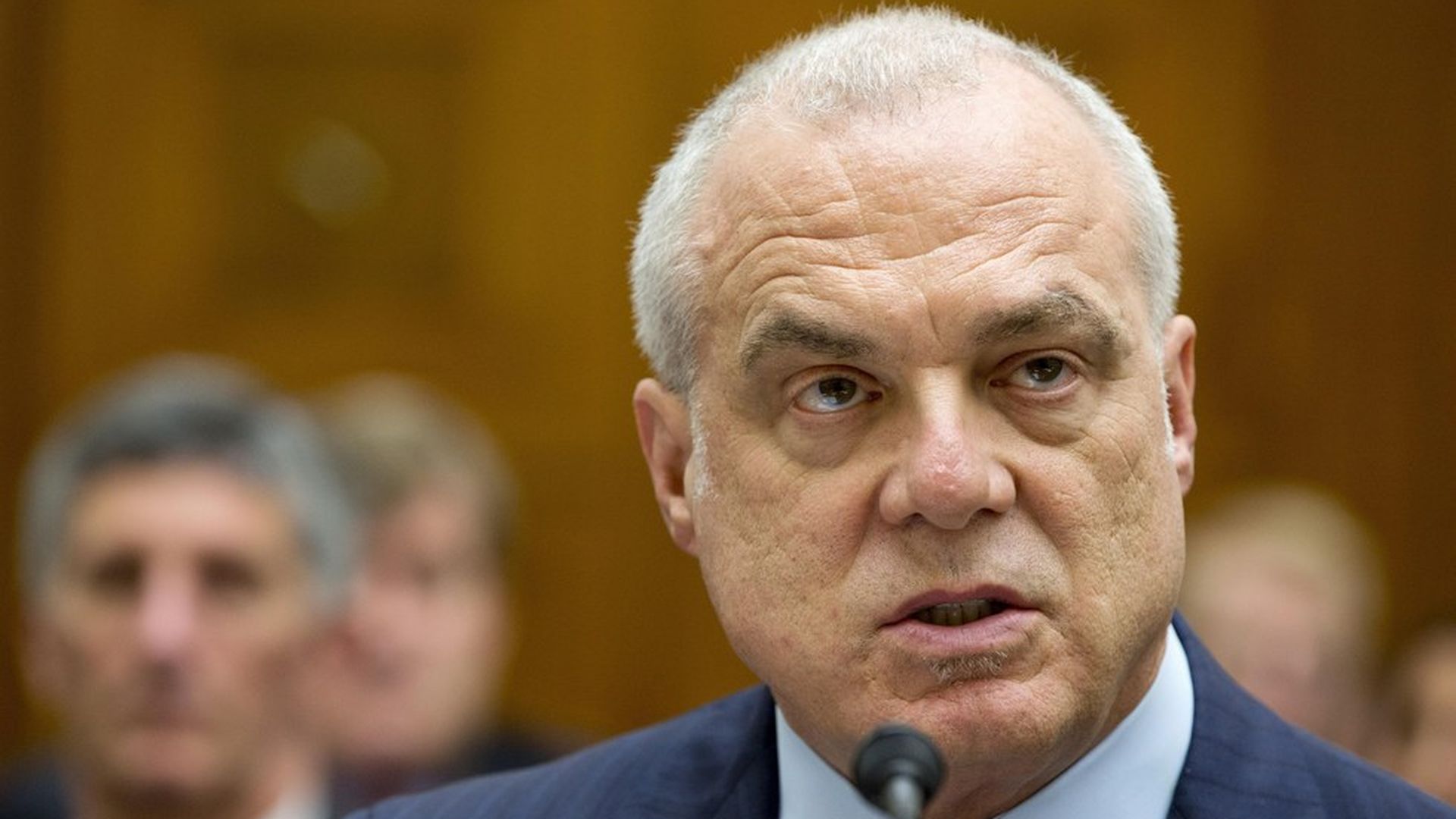
Vox obtained video of an Aetna company meeting, where CEO Mark Bertolini said this when asked if the Republican health care bill would lead to a single-payer system:
"Single-payer, I think we should have that debate as a nation." — Aetna CEO Mark Bertolini
What this means: Bertolini certainly wasn't advocating for a traditional single-payer system, in which everyone has health coverage like Medicare, the system is funded through taxes, and the federal government operates as the sole financing agent. Private health insurers would basically be eliminated in that scenario, so Bertolini isn't looking to put himself out of a job.
However, the Vox video makes it clear that Bertolini is willing to debate a system where taxpayers fund most if not everything, and then private insurers run the operations — kind of like Medicare Advantage, a major (and profitable) program for Aetna. In fact, last year, Bertolini said Medicare Advantage was "the solution to entitlement reform around health benefits" at a Wall Street conference.
Health care industry finds a more receptive Senate

The Trump administration and House Republicans mostly ignored hospitals, doctors, some health insurers and other health care industry players in the push to pass the American Health Care Act. But now that the more moderate Senate is handling the potential Affordable Care Act repeal effort, some health care groups are finding a seat back at the table.
That's good news for the groups who were infuriated by the bill's Medicaid cuts, essential benefits waivers and projected loss of insured people. They're putting special focus on steering the Senate away from the House Medicaid cuts and toward softer approaches to cutting costs — especially Medicaid managed care.