Tuesday's health stories

UnitedHealth's profit surges after Obamacare retreat
UnitedHealth Group's revenue jumped 9% annually to $48.7 billion in the first quarter of 2017, even though it withdrew from nearly all of the Obamacare marketplaces, and its profit soared 35% to almost $2.2 billion. Most of the growth at the health care conglomerate is coming from taxpayer-funded insurance programs (Medicare Advantage and Medicaid) as well as from its services arm, Optum.
UnitedHealth also really wants tax reform: Specifically, the company wants permanent repeal of Obamacare's health insurance tax, which Congress suspended for 2017. UnitedHealth CEO Stephen Hemsley said on an earnings call Tuesday that Congress needed to act before the tax "further worsens consumers' premiums, state budgets and seniors' benefits." Repealing the tax would lower consumers' health care premiums, but it's also one of the easiest ways for insurance companies to juice earnings per share, which funnels money back to shareholders and top executives.
Hospital stocks tumble following HCA's lackluster preview

So much for that upbeat Medicare payment proposal from last week. Stocks of hospital operators plunged Monday morning after HCA — a bellwether company and the country's largest for-profit hospital chain by revenue — previewed first-quarter results below analysts' expectations. HCA's stock tumbled 3% in early morning trading, and its competitors took a bigger beating: Tenet Healthcare dropped 8%, Community Health Systems fell 7.5% and Quorum Health was down 5.5%.
What HCA expects: Adjusted earnings before interest, tax, depreciation and amortization (a juiced-up form of profitability) are expected to stay the same year over year in the first quarter at $2 billion. That's still a hefty profit margin, but it was 6% below what Wall Street projected. HCA said it was "affected by changes in payer mix" — industry jargon that means the company is treating fewer patients with higher-paying commercial insurance and more patients with lower-paying government insurance. It's possible the tepid Obamacare enrollment for this year contributed to that.

Tricking bacteria into killing themselves
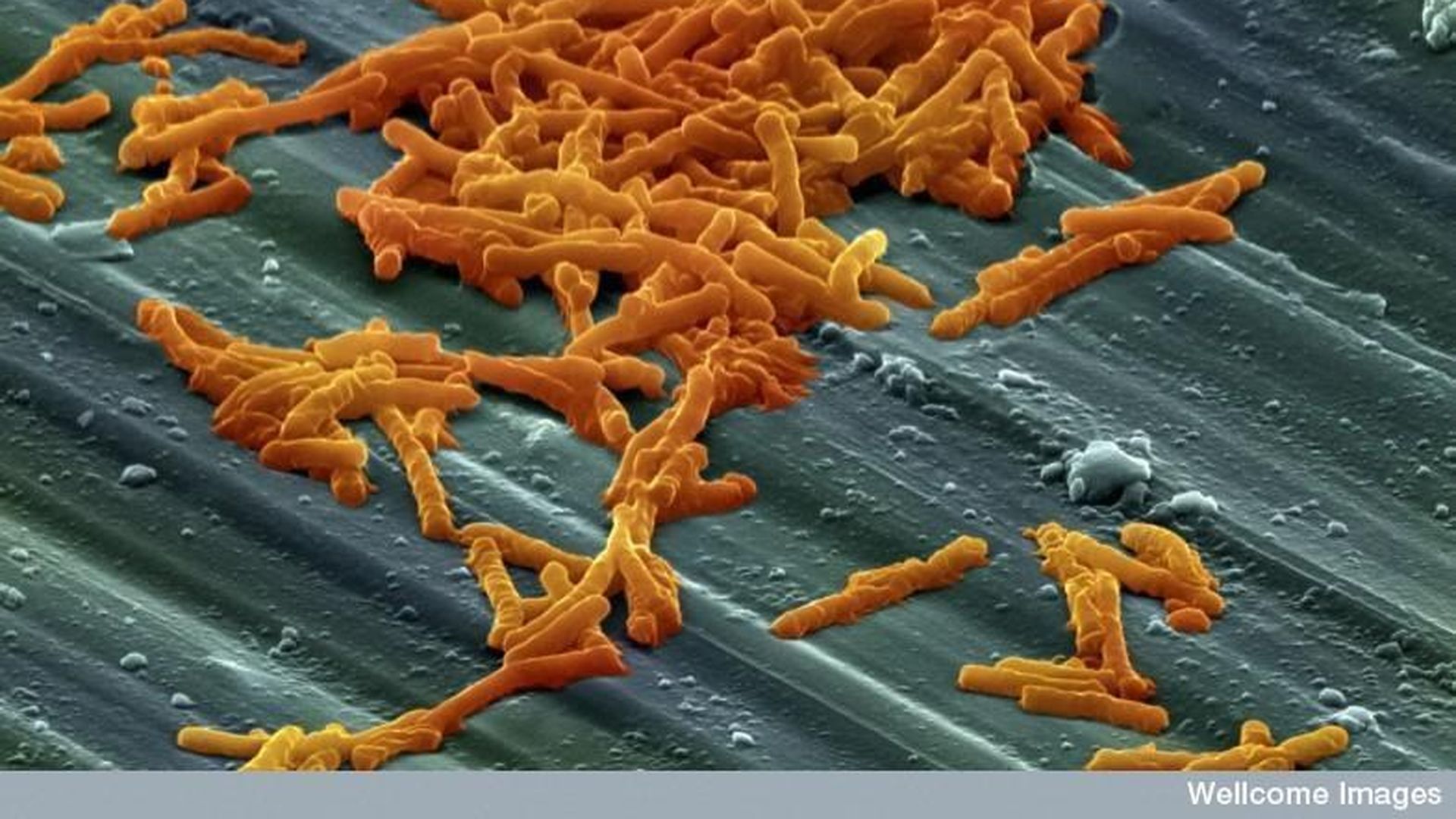
The CRISPR gene-editing technology could be used to target specific bacteria that cause fatal, drug-resistant infections in humans, according to MIT Technology Review.
Problem to be solved: Antibiotic-resistant bacteria are a danger to patients and lead to increased health care costs, according to the WHO. And more than 70% of the bacteria that cause infections in hospitals are resistant to at least one of the antibiotics usually used to treat them, per the FDA.
Eligo Biosciences in Paris and Locus Biosciences in North Carolina have started working on developing CRISPR-based antibiotics commercially.

A brief history of Trump's Obamacare negotiating strategies

President Trump has tried a lot of different strategies to get Congress to repeal and replace Obamacare — everything from letting Congress write the bill to taking over the negotiations, walking away, walking back, scolding the Freedom Caucus, threatening to cut a deal with Democrats instead, and threatening not to pay insurers unless Democrats cut a deal.
Why it matters: The one thing the strategies have in common — at least for now — is that they haven't worked.