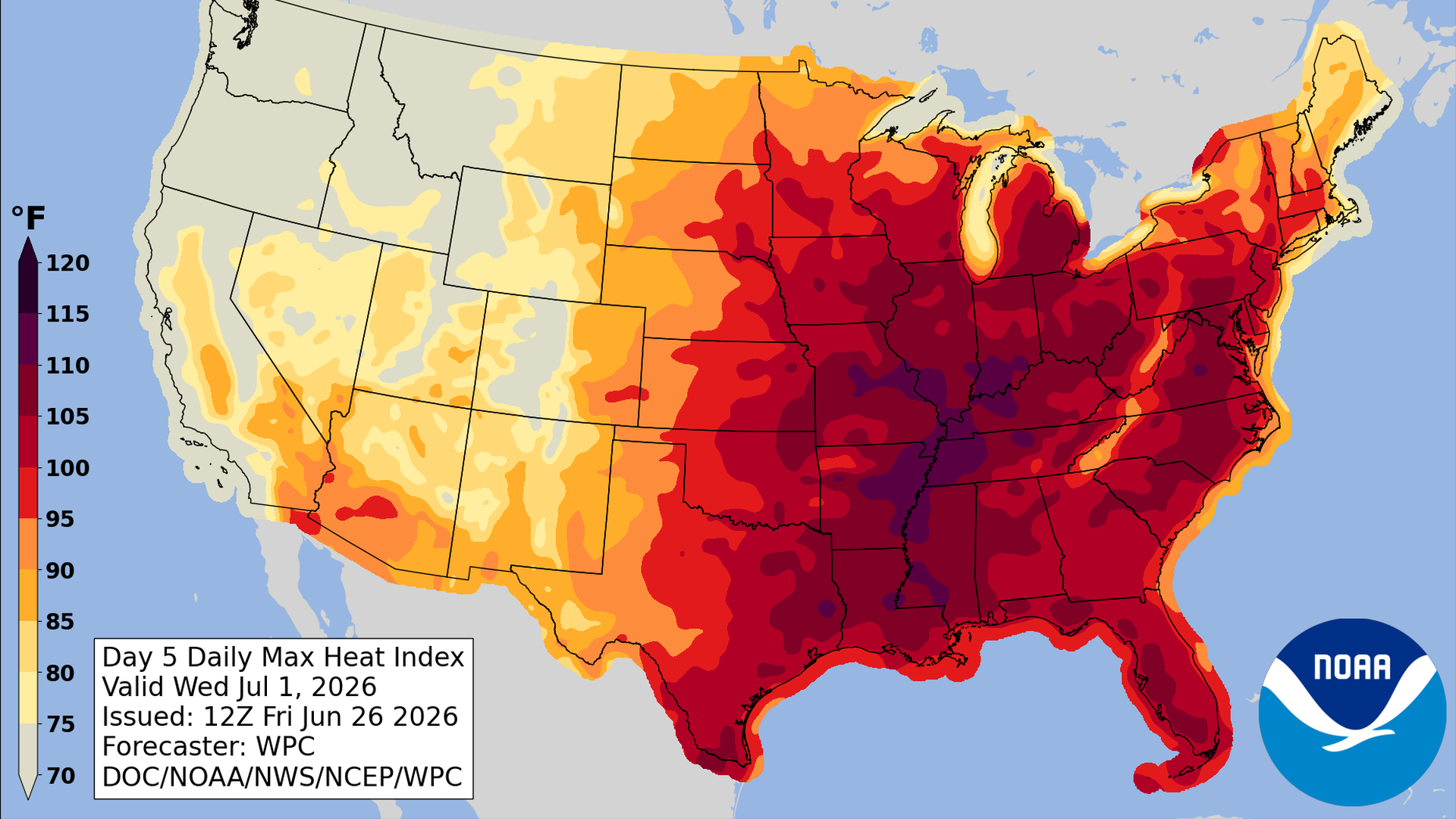
A "heat dome" is forecast to bring dangerously high temperatures to much of the eastern half of the U.S. next week.
The extreme heat could last through July 4 celebrations.
Driving the news: "Widespread temperatures into the 90s to low 100s, combined with high humidity, will result in heat indices approaching or exceeding 105-110 in many places," NOAA forecasters write.
"Overnight lows will also be quite warm, with some record high minimums possible, bringing little to no relief from the heat in the nighttime hours."
Zoom in: Cities from Minneapolis and Chicago to Nashville and Atlanta will be under extreme heat risk next week, NOAA says.
Such conditions affect"anyone without cooling/hydration as well as health systems, industries, and infrastructure."
🥵 Meanwhile: The heat wave baking Europe this week wouldn't be possible without climate change, a World Weather Attribution rapid study found.
For the first time, Uber drivers see charging access as a greater barrier to going electric than vehicle costs, a 13-country survey shows.
Why it matters: Public and residential infrastructure are persistent hurdles for the ride-hailing giant, which is behind on its electric vehicle targets.
But its annual survey has bright spots, with drivers' concerns about EV prices consistently dropping.
New data underscores just how dominant Amazon, Google and Microsoft are when it comes to data centers in North America.
Why it matters: The data gives us a sharper understanding of the dominance by the top operators — including the three that have launched efforts to justify their water use.
New June temperature records were set in the U.K. and France this week as a deadly heat wave grips much of Europe.
Why it matters: A new World Weather Attribution analysis found human-caused climate change made this week's extreme heat "virtually impossible" 50 years ago.