Fewer solar projects are being delayed now compared to this time last year, the U.S. Energy Information Administration reported this week.
Why it matters: Conventional wisdom pointing to politics, permitting and local battles suggests solar is facing increasing opposition, but short-term trends suggest that may be changing.
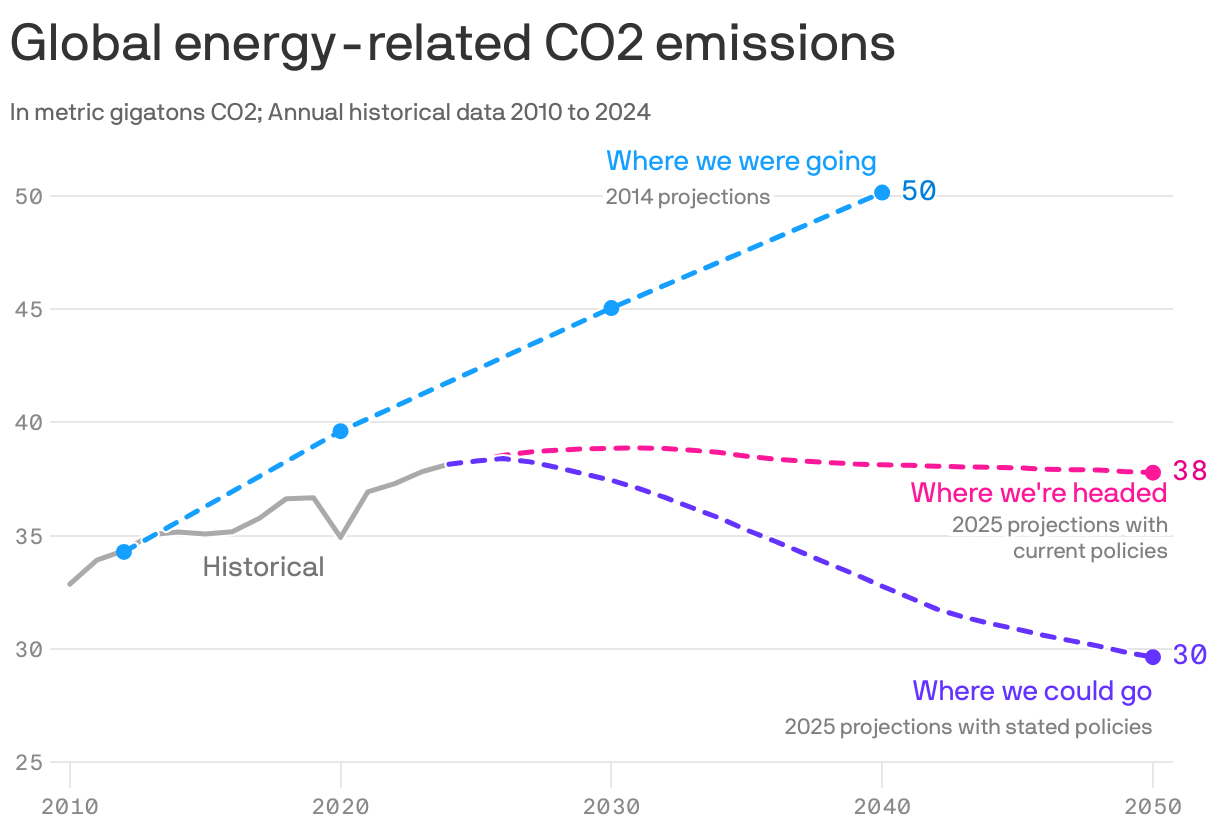
Global efforts to address climate change are — still — going far better today than they were a decade ago, even with recent politics pushing the problem to the back burner.
Why it matters: We humans usually operate on daily, monthly and yearly time frames. So it can be easy to miss the energy transition unfolding over decades and centuries.
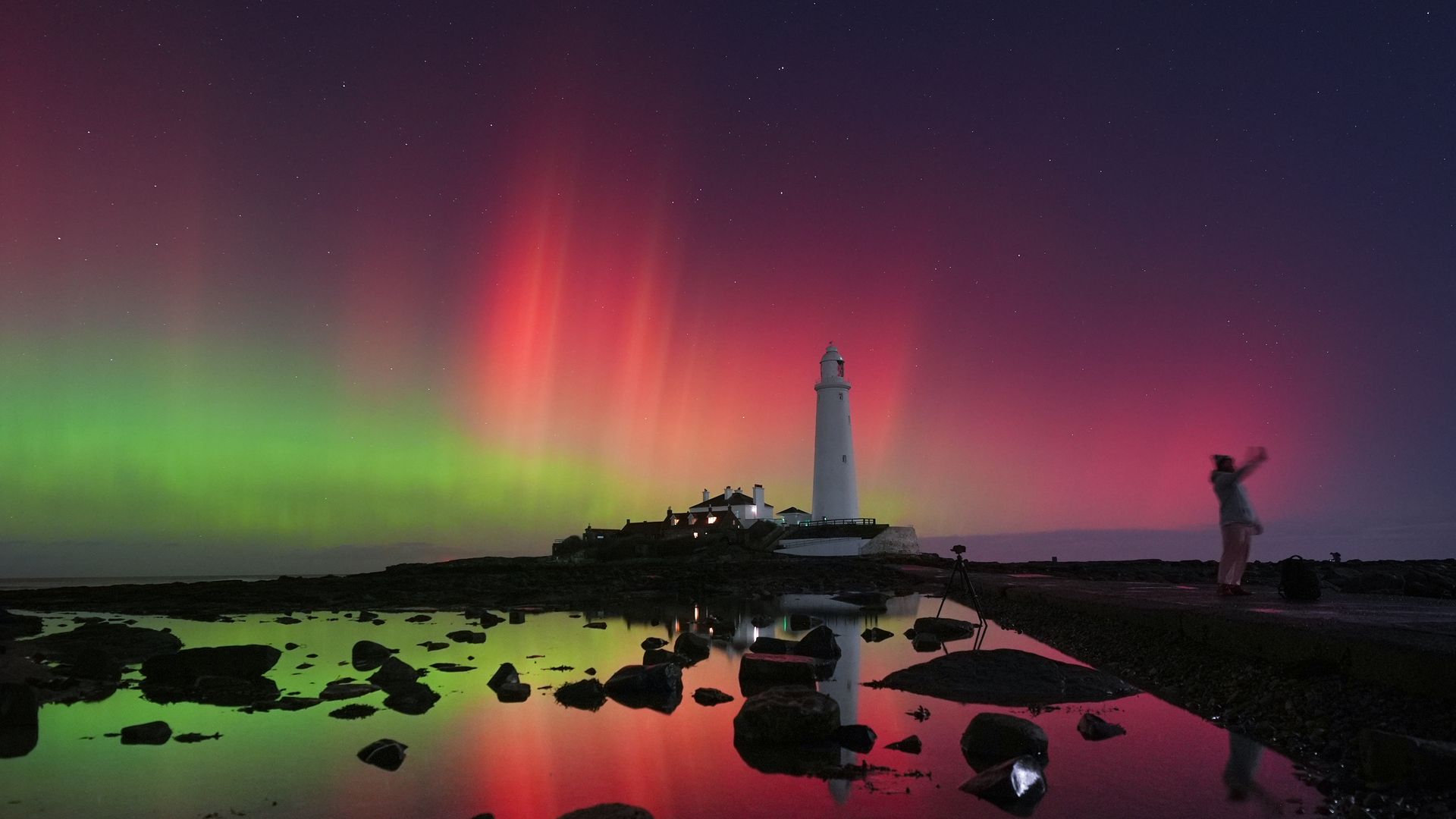
The Northern Lights have been illuminating skies across the U.S. this week, and some lucky spectators may get another chance to see the aurora borealis into Thursday.
The big picture: Intense G4 geomagnetic conditions, the second-highest on the National Oceanic and Atmospheric Administration's five-step scale, produced magnetic conditions that were "eight times stronger than what's normal" on Tuesday night, NOAA's Space Weather Prediction Center forecaster Shawn Dahl said in a video on X.
Global oil and gas demand is projected to keep rising through 2050 under nations' current policies despite growth in renewables and electric cars, the International Energy Agency said.
Why it matters:IEA's latest World Energy Outlook — released early Wednesday — could influence policymakers, C-suites, investors, academics and anyone else trying to understand where the energy mix might head.
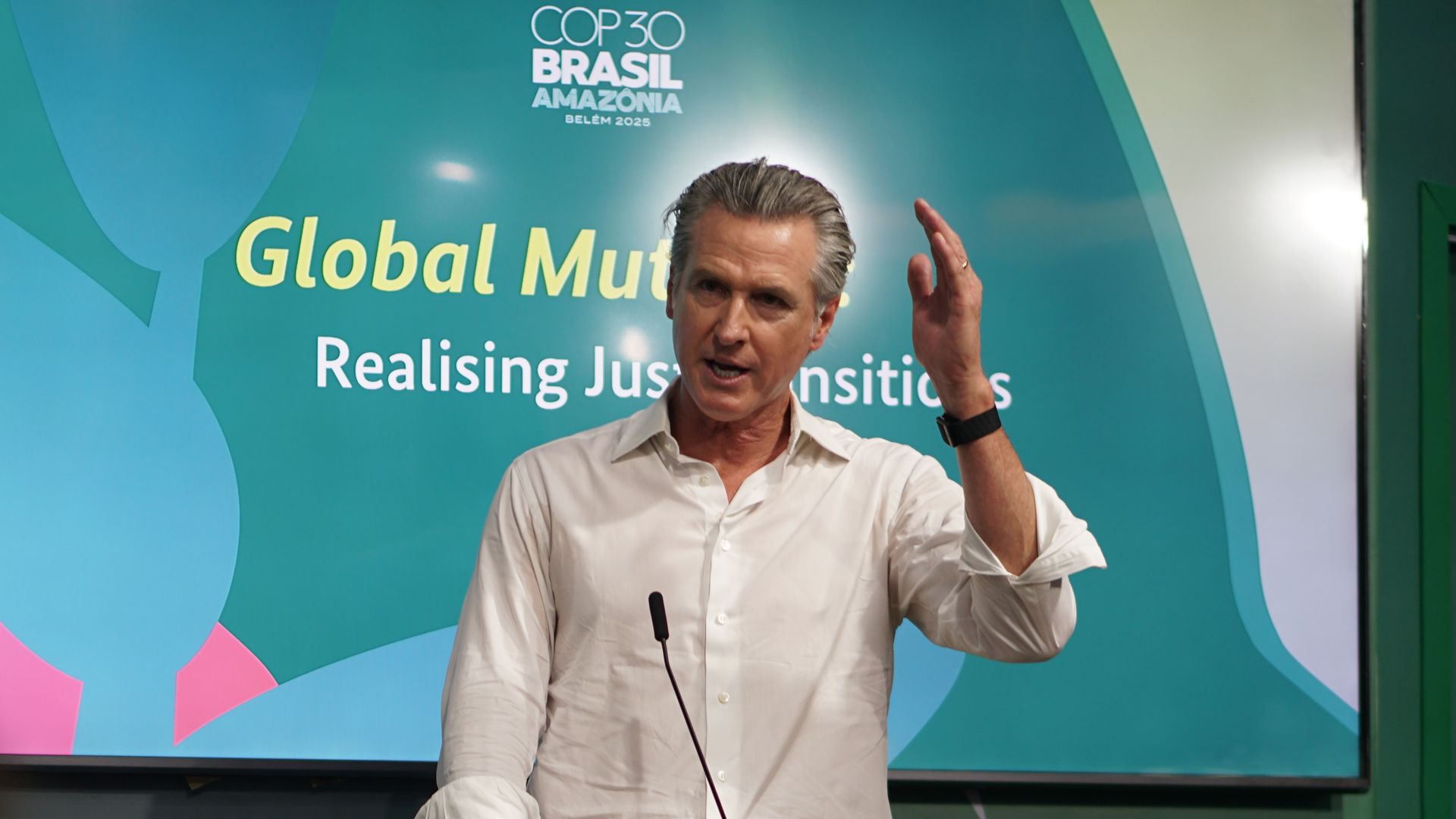
California Gov. Gavin Newsom (D) criticized President Trump at COP30 on Tuesday for being absent from the UN summit in Belém, Brazil, and called his rejection of climate policy an "abomination."
The big picture: Newsom, who's expected to run for president in 2028, said during a ministerial meeting that he's "very mindful that the Trump administration has abandoned any sense of duty, responsibility or leadership as it relates to the issues that bring us all here together" at COP30.