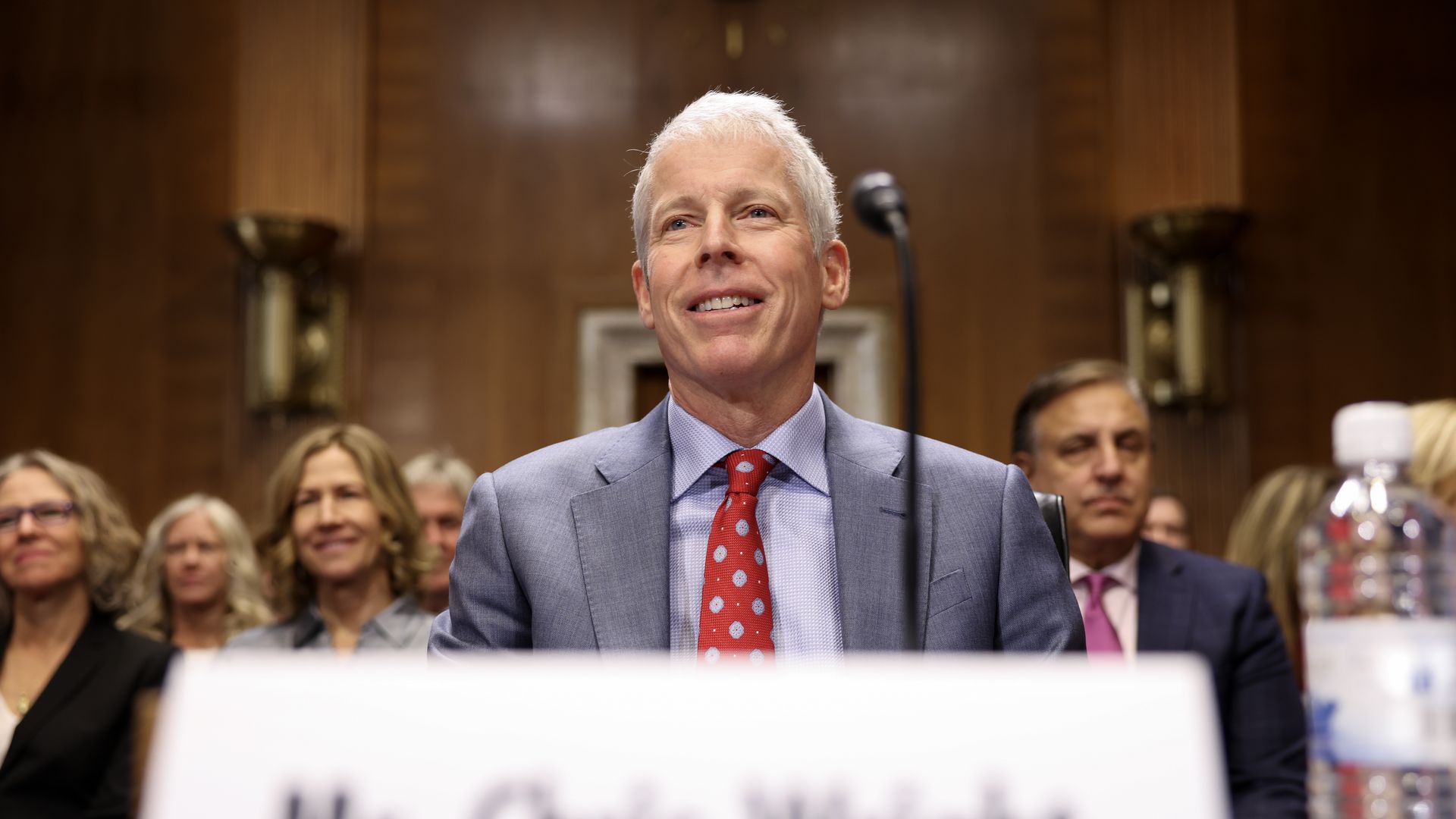
The White House is nominating meteorologist Neil Jacobs to lead NOAA after he led the agency on an acting basis during President Trump's first term.
Why it matters: The Commerce Department agency is one of the globe's top climate science agencies, funding research and keeping track of global temperatures in near real-time.
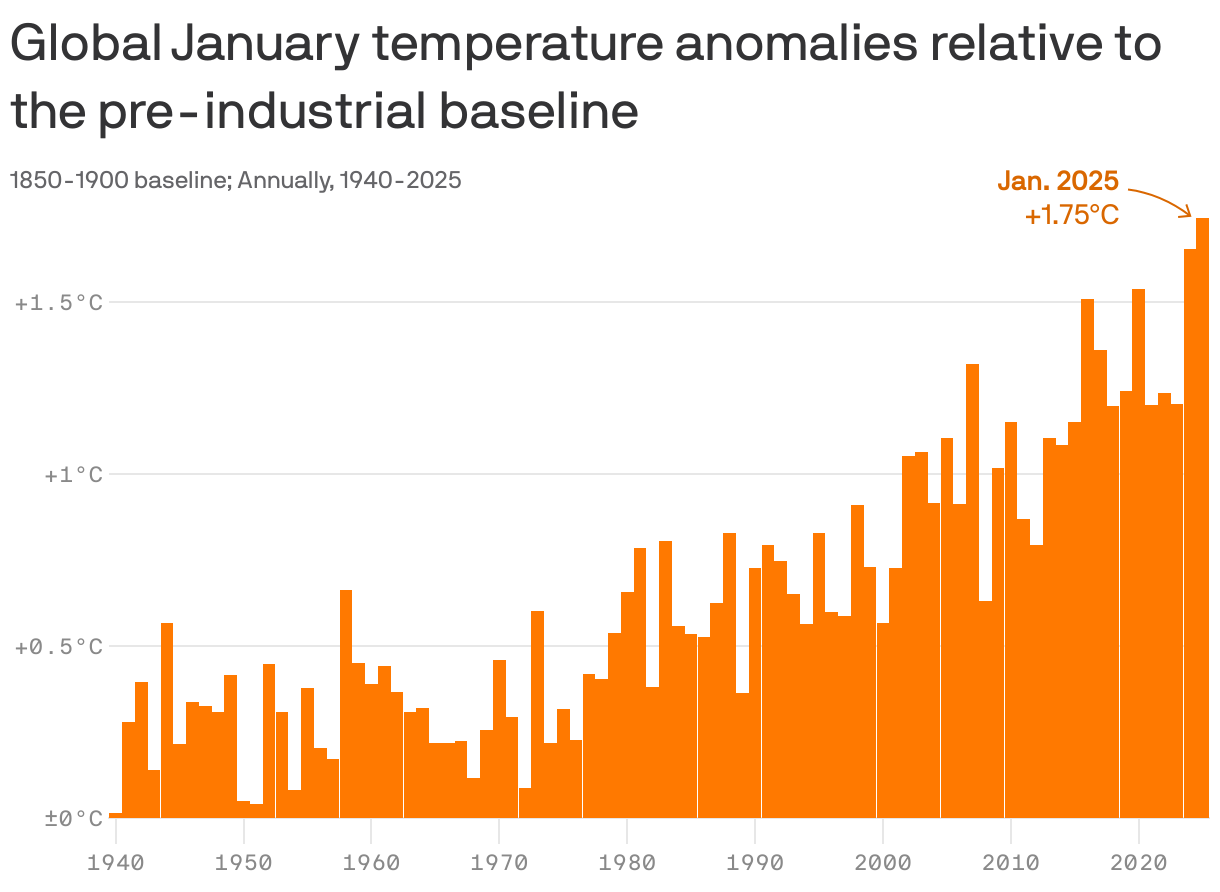
Data: Copernicus ERA5; Note: January 2025 data is preliminary; Chart: Erin Davis/Axios Visuals
The planet just had its hottest January on record by a considerable margin, in a surprise finding (seriously) to climate scientists.
Why it matters: A La Niña event is ongoing in the tropical Pacific Ocean, which would typically be expected to cool the globe slightly. Yet that doesn't appear to be the case — at least not yet.
China's government announced tariffs on U.S. imports including coal and liquefied natural gas in retaliation for Trump administration measures targeting its products.
The big picture: China's finance ministry announced the measures in response to 10% tariffs on Chinese products imposed by President Trump's administration, which took effect Tuesday.
The Senate confirmed fracking CEO Chris Wright as Energy secretary in a bipartisan vote Monday evening.
Why it matters: Wright will immediately have to smooth out President Trump's efforts to slow down — or halt entirely — climate change-related spending.
The axing of the US Agency for International Development (USAID), which Elon Musk has vowed to "kill" with President Trump's support, could destabilize regions where human-caused climate change is hitting particularly hard.
Why it matters: By ending humanitarian assistance and proactive climate resilience and adaptation programs, the U.S. military could get pulled into responding to more future crises.
Oil and gas futures opened higheras theoretical tensions in President Trump's energy policy just got very real, very fast.
Why it matters: New tariffs on Canada and Mexico could raise gasoline and home heating costs in places — even though 10% Canadian energy tariffs are lower than the 25% applied to other goods.
A novel new report combining several strands of research finds that human-driven climate change could result in $1.47 trillion in net property value losses from rising insurance costs and shifting consumer demand.
Why it matters: Insurance costs are increasing faster than mortgage payments. That's squeezing homeowners and leading to climate change-driven migration away from high-risk areas in the Sun Belt and the West.