January surprises with a global temperature record

Add Axios as your preferred source to
see more of our stories on Google.
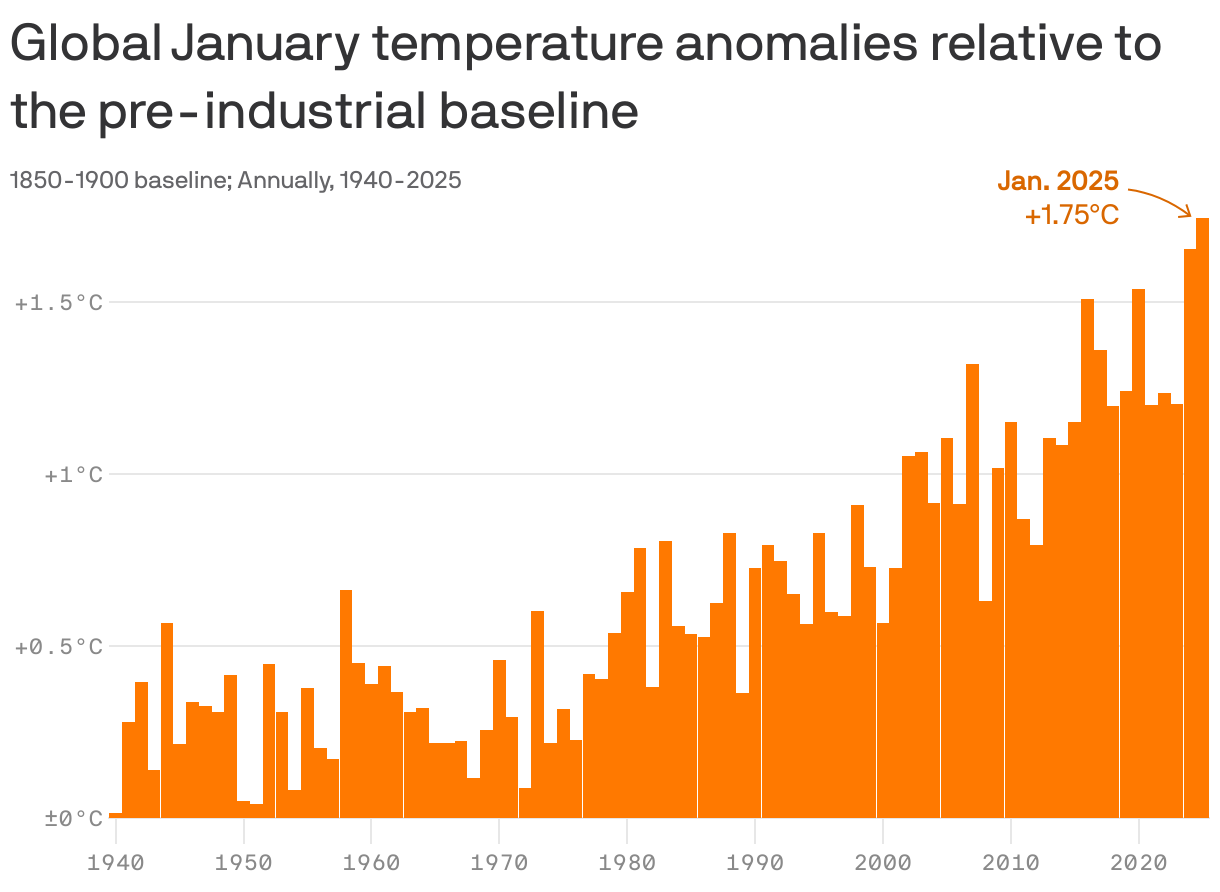
The planet just had its hottest January on record by a considerable margin, in a surprise finding (seriously) to climate scientists.
Why it matters: A La Niña event is ongoing in the tropical Pacific Ocean, which would typically be expected to cool the globe slightly. Yet that doesn't appear to be the case — at least not yet.
Zoom in: That the opposite is occurring suggests either a fluke or — combined with the record hot conditions in 2023 and again last year — something more mysterious.
- Climate scientists are still investigating multiple factors that may be causing the climate to warm at a faster rate than in other recent years, from changes in marine shipping fuels to the massive eruption of an undersea volcano.
- So far, there's been no way to explain the 2023 and 2024 records, but the expectation is that this year will be a top 5 hottest year — just not first place.
Yes, but: February appears poised for unusually cold temperatures across much of the Northern Hemisphere, which should lower global temperatures somewhat, according to climate scientist Zeke Hausfather, writing on Substack.
What they're saying: "An unexpected record to start things off may presage higher temperatures this year than many of us thought," Hausfather wrote.
