Friday's energy & climate stories


Kerry self-isolating with COVID as fragile COP27 climate talks enter overtime

U.S. climate envoy John Kerry has tested positive for COVID-19 and is self-isolating, his spokesperson said Friday, as the UN climate talks entered overtime at the COP27 summit in Sharm el-Sheikh, Egypt.
The big picture: Major issues remain in the negotiations, which were supposed to wrap up Friday. Kerry's positive COVID test significantly limits the normally hands-on diplomat's ability to maneuver in the fraught final talks.
Historic snowstorm underway in Buffalo as unusual cold grips the U.S.
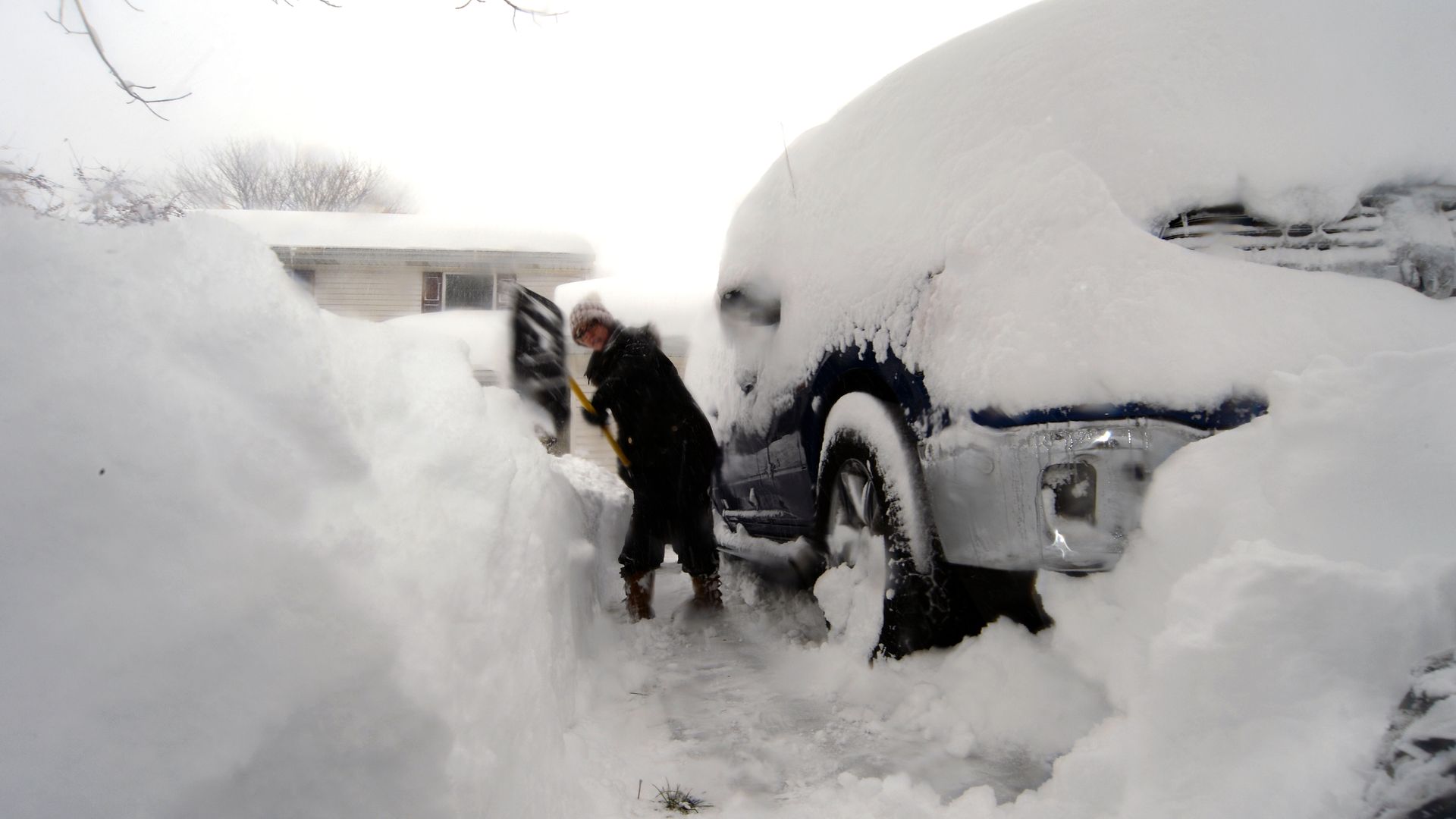
A rare weather pattern is causing pre-Thanksgiving frigid air to dive southward from Canada and across the lower 48 states, setting up a "crippling" lake effect snowstorm in the Buffalo, New York, area.
The big picture: An anomalously strong ridge of high pressure parked over Alaska is causing the jet stream to buckle, opening the refrigerator door from the Arctic.

Indigenous activists "seen, not heard" at COP27

Hundreds of Indigenous peoples from around the world are participating in COP27, a record turnout despite the UN climate summit's poor track record with Indigenous inclusion.
Driving the news: While representation has increased, several Indigenous activists and leaders tell Axios they're being shut out of decision-making dialogues.

Explosive residue found at site of Nord Stream explosions

Swedish investigators said Friday they found explosive residue at the site of mysterious blasts that hit the Nord Stream pipelines and concluded that the leaks were caused by "gross sabotage."
The big picture: Four ruptures were discovered in the Nord Stream 1 and 2 pipelines at the end of September, causing leaks in the exclusive economic zones of Sweden and Denmark that created extensive environmental damage.

House GOP planning support for fossil fuel production
House Republicans are planning bills on permitting reform to boost all kinds of energy production along with legislation specifically to benefit fossil fuels.
Why it matters: The oil-centric proposals are a sharp turn from efforts by Democrats focused on steep emissions cuts and would face opposition in the Senate and from President Biden.
Driving the news: Rep. Bruce Westerman, the top Republican on the House Natural Resources Committee, told reporters on a phone call Thursday one of his priorities is unlocking quicker government approvals for all kinds of energy projects, from oil to solar.
- Westerman said Republicans also want to pass legislation boosting new mining in the United States. This would give companies making batteries and EVs more domestic options for raw materials.
- He also wants to advance legislation related to forest growth – a climate concept similar to what former President Trump trumpeted with his “Trillion Trees Initiative.”
The intrigue: Proposals on permitting reform have had buy-in from moderate Democrats and President Biden, while drawing sharp opposition from progressives because it could ease regulatory pressures on extractive industries.
Flashback: Environmentalists – and Republicans – killed a vote before the midterms on faster permits that Biden promised Sen. Joe Manchin (D) in exchange for passing his signature climate law, the Inflation Reduction Act, Axios’ Ben Geman reported at the time.
Zoom in: Westerman’s office stated in October that Republicans will advance a bill that would force regulators to finish reviews of any kind of construction project on federal lands within one-to-two years.
- Manchin’s deal with Biden included similar deadlines.
The bigger picture: Republicans want these deadlines to expedite an “all-of-the-above” energy and climate strategy that includes more oil and gas drilling.
- Westerman said Republicans also plan to move bills that would singularly benefit fossil fuel production – a negative for the climate and a likely non-starter with Democrats.
- By comparison, faster approvals could actually benefit Biden’s climate agenda. Wind and solar projects are often on public land and impact waters or rare species guarded under environmental laws.
- At the same time, U.S. carmakers are clamoring for more minerals and materials made here after Democrats nudged them to create local supply chains in the Inflation Reduction Act. Many EV materials currently come from China.
The bottom line: Republicans will have trouble passing fossil fuel-friendly bills under Biden but the contours of a potential bipartisan deal are emerging around how the bureaucracy considers approving energy projects.
- Yes, but: In a closely divided Congress any political bloc could stop legislative progress, like frustrated progressives or conservatives animated to squash any bill that Biden could claim as a bipartisan win.
At COP27, oil and gas stay out of crosshairs — for now
The initial draft for a COP27 agreement out this morning omits calls for phasing down all fossil fuels, which means the fraught meeting may not move beyond coal-focused goals from last year's summit.
Why it matters: The 20 pages of preliminary text released by the Egyptian COP president in Sharm el-Sheikh are a blank slate on how to compensate vulnerable nations for climate damages.