Data: Energy Impact Partners; Chart: Kavya Beheraj/Axios
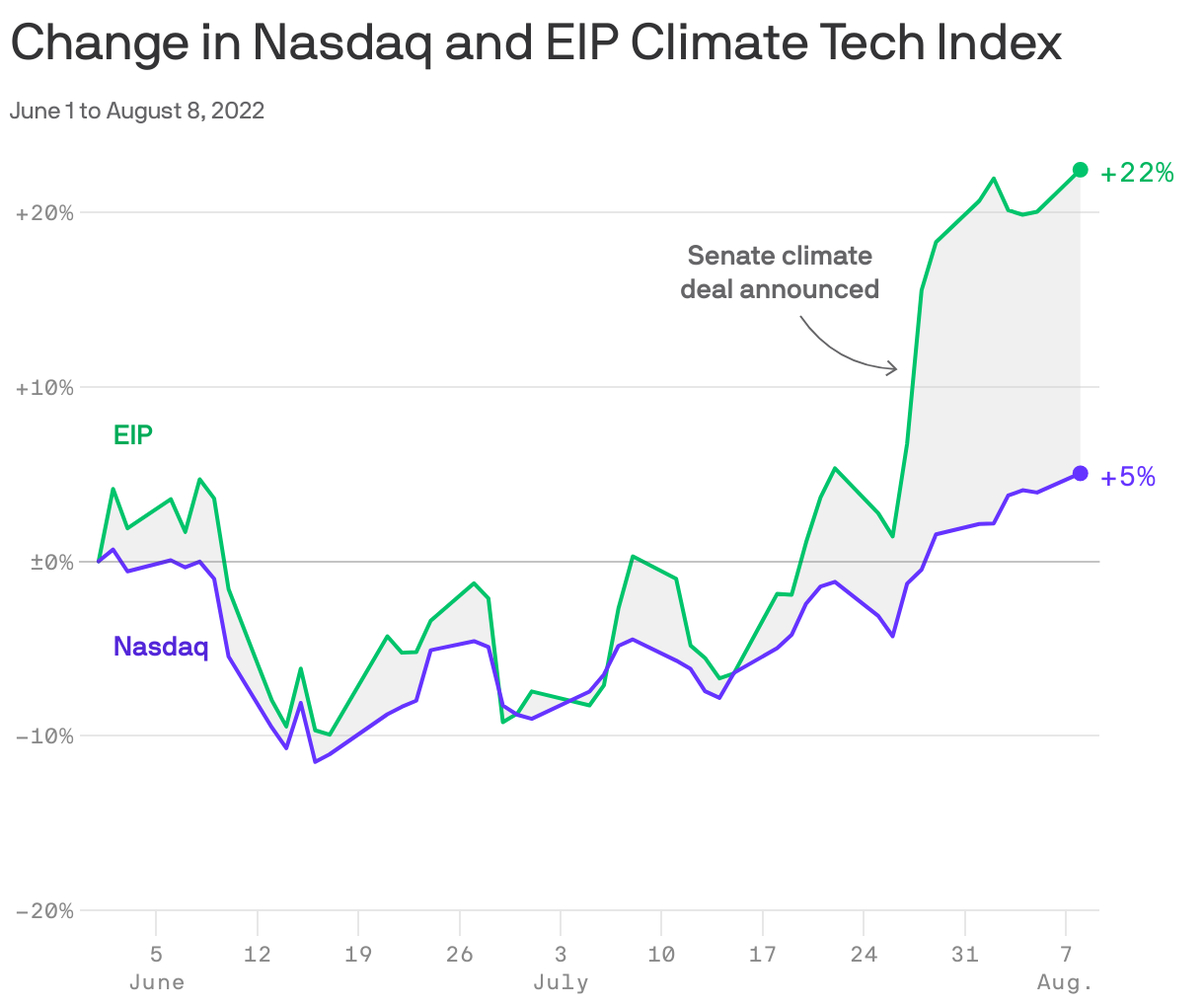
The early verdicts have arrived: Investors are confident the Democrats' climate deal will translate into expanded real-world deployment of low-carbon energy.
Driving the news: The movement of exchange-traded funds and individual companies in several segments of the energy sector tell a similar story.
Data: Rystad Energy; Note: Includes battery-electric vehicles and plug-in hybrid electric vehicles; Chart: Simran Parwani/Axios
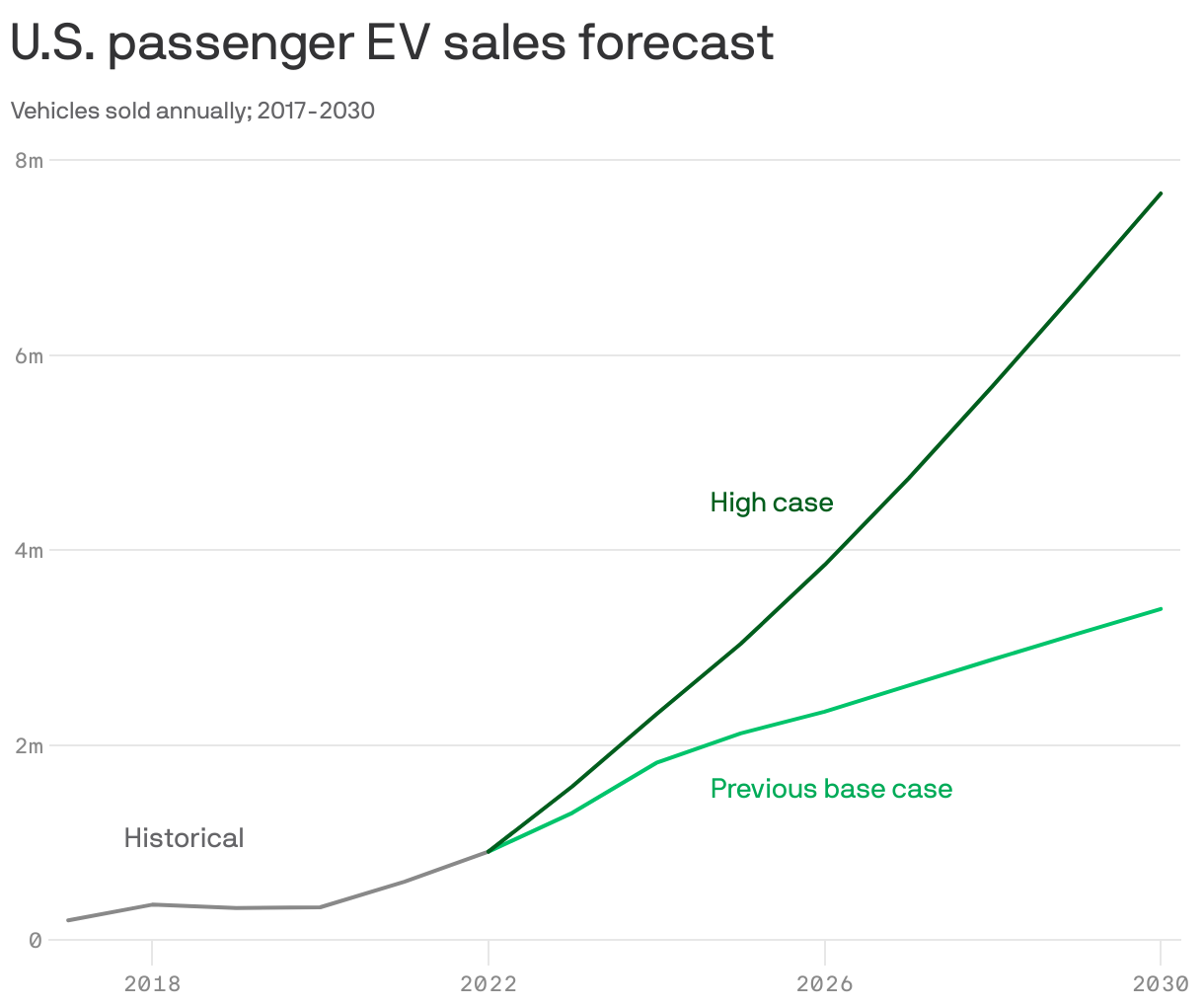
The Capitol Hill energy deal creates headwinds and tailwinds for the growing adoption of electric cars in the U.S. — and analysts are just starting to grapple with the complexities.
Driving the news: The legislation greatly expands EV purchase subsidies but also ties them to strict sourcing requirements for battery materials.
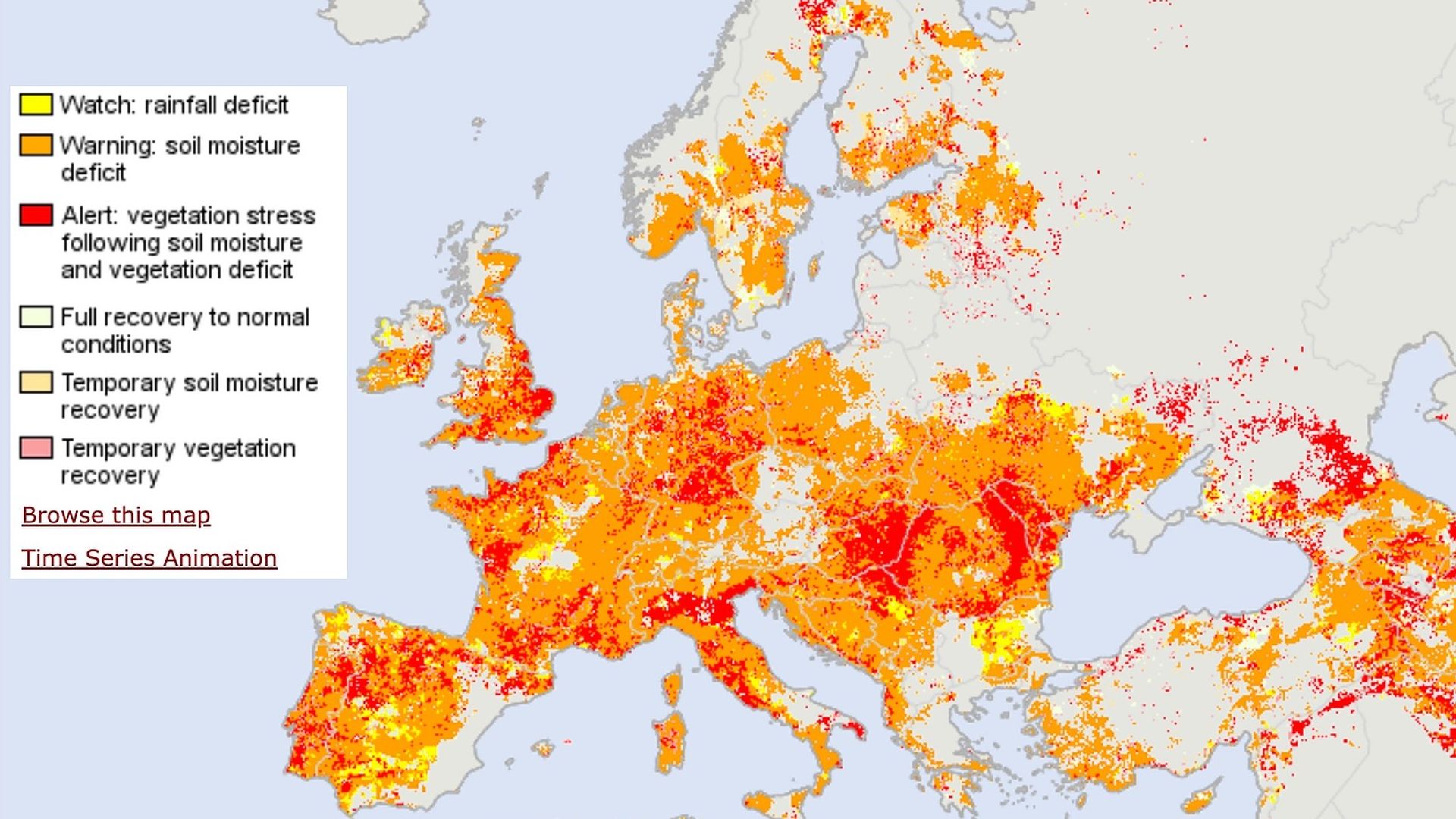
Why it matters: France, Spain, Italy and the Netherlands are facing water shortages and riverbeds are drying out across Europe. Dry conditions are severely affecting energy production, agriculture and river transportation.
Two U.S. House Democrats proposed a measure Tuesday that would make it illegal for airlines to offer flights when they know they don't have enough staff.
Why it matters: After two years of pandemic-related travel frustrations and a summer of canceled flights, the measure is the latest push by lawmakers to regulate the aviation industry.
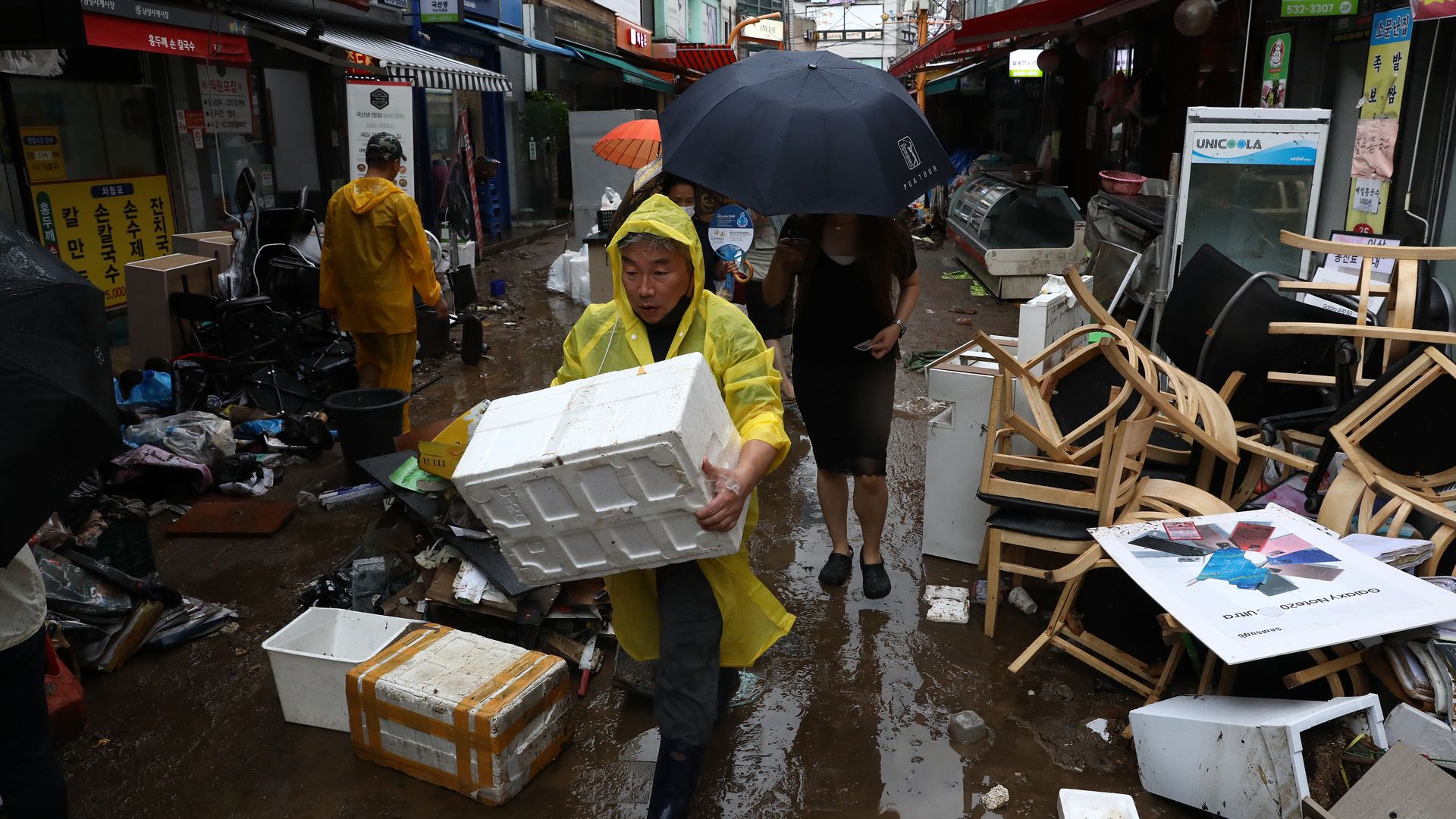
Flooding in Seoul, South Korea, overnight killed at least nine people, including two sisters in their 40s and a 13-year-old girl, the New York Times reports.
Driving the news: It was some of the heaviest rainfall seen in decades and weather officials estimate that nearly 17 inches of rain fell in southern Seoul between Monday and early Tuesday.
Why it matters: The report is the first indication of where July stands in the annals of modern climate records, and it shows that the influence of human-caused global warming is having a profound impact on summer temperatures.
As cities race to amp up their heat mitigation efforts, some are replacing bare-bones cooling centers with full-service "climate resilience hubs" — offering everything from comfy A/C and phone charging to social services and emergency training.
Why it matters: While "resilience hubs" are meant for everyone and all kinds of climate disasters, they're particularly aimed at low-inc0me residents and people of color, who tend to suffer disproportionatelyas temperatures rise.
The low-carbon energy growth envisioned in Democrats' climate bill will come with a big challenge: finding enough trained workers to support it.
Driving the news: The plan — if signed into law — would finance more renewable power, clean energy equipment manufacturing, installation of home heat pumps and efficiency upgrades, electric vehicles, hydrogen development and much more.