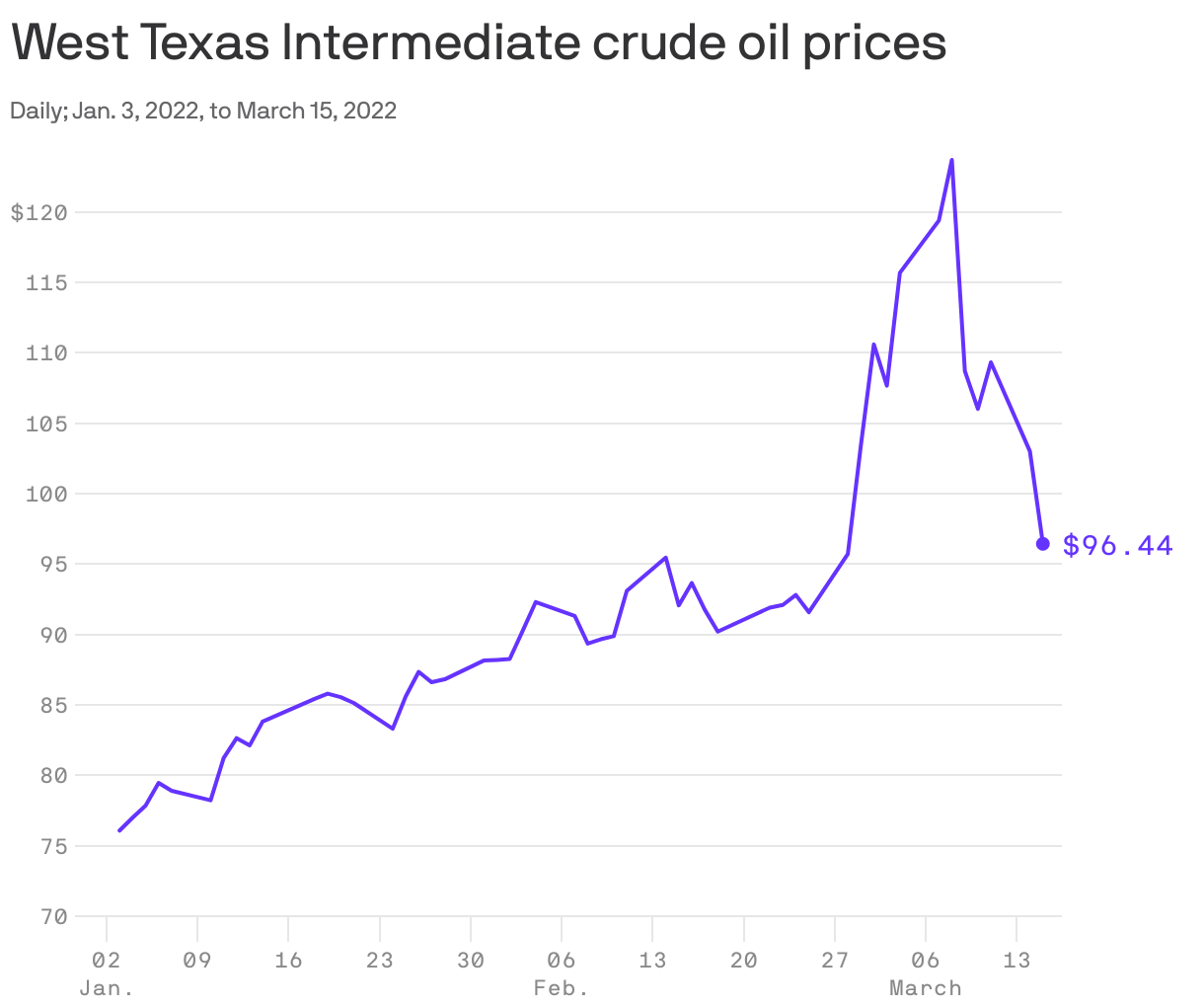
Oil prices remain high and volatile, but have backed off the surge that started with Russia's invasion.
The big picture: Traders are weighing a mix of bulling and bearish forces, including reduced Russian barrels, COVID restrictions in China, and nuclear talks with Iran that could bring more supplies.
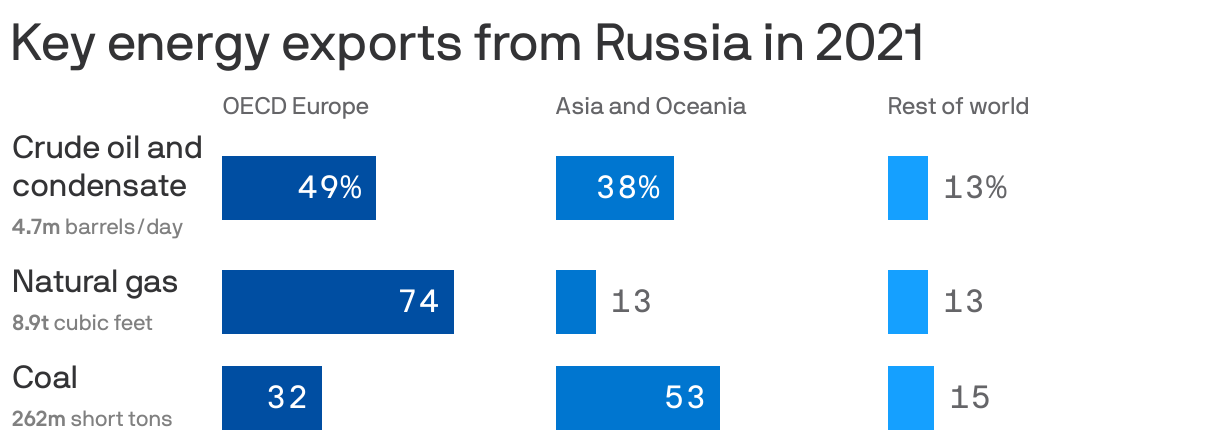
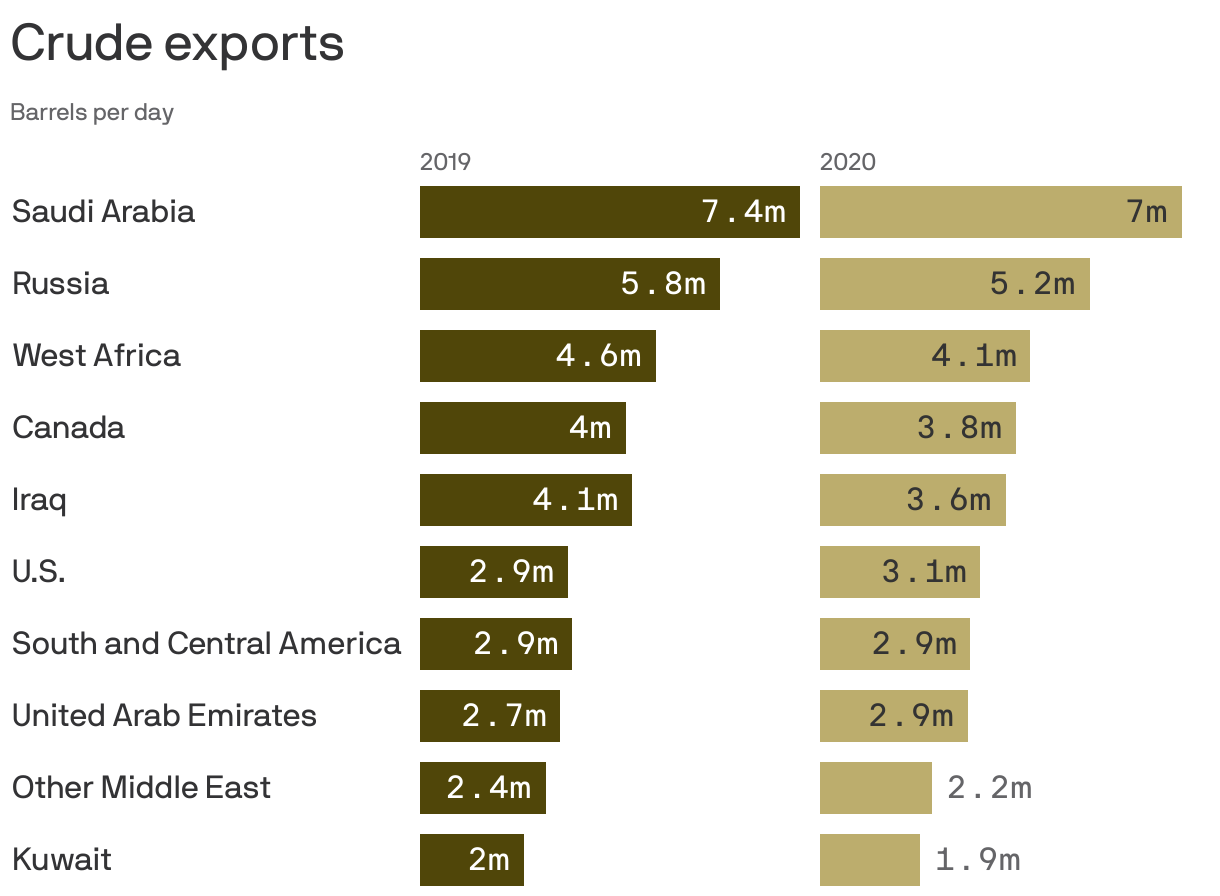
Driving the news: Three million barrels per day of exports could be shut-in as of April, and "losses could increase should restrictions or public condemnation escalate," IEA's monthly oil market report said.
Making significant,near-term methane emissions cuts in tandem with slashing carbon emissions would dramatically improve the odds that Arctic sea ice could survive during the summertime through 2100, a new study finds.
Why it matters: Sea ice loss is already having ramifications throughout the Arctic and beyond, affecting extreme weather events in the U.S. and Europe, altering the way of life for indigenous populations of the Far North and posing threats to iconic species.
The collapse of Sarah Bloom Raskin's bid to be the Federal Reserve's top banking cop shows how deeply oil industry allies in Congress are dug in against weaving climate change into financial oversight.
Crude oil prices have tumbled to their lowest levels since Russia began its invasion of Ukraine, with the U.S. benchmark WTI well under $100 per barrel again.
What they're saying:Via MarketWatch, Swissquote Bank analyst said in a note: “The downside correction in oil prices is sure a relief when it comes to the inflation expectations, but the new lockdown measures [in China] will continue worsening the supply chain crisis and add on the inflation worries."
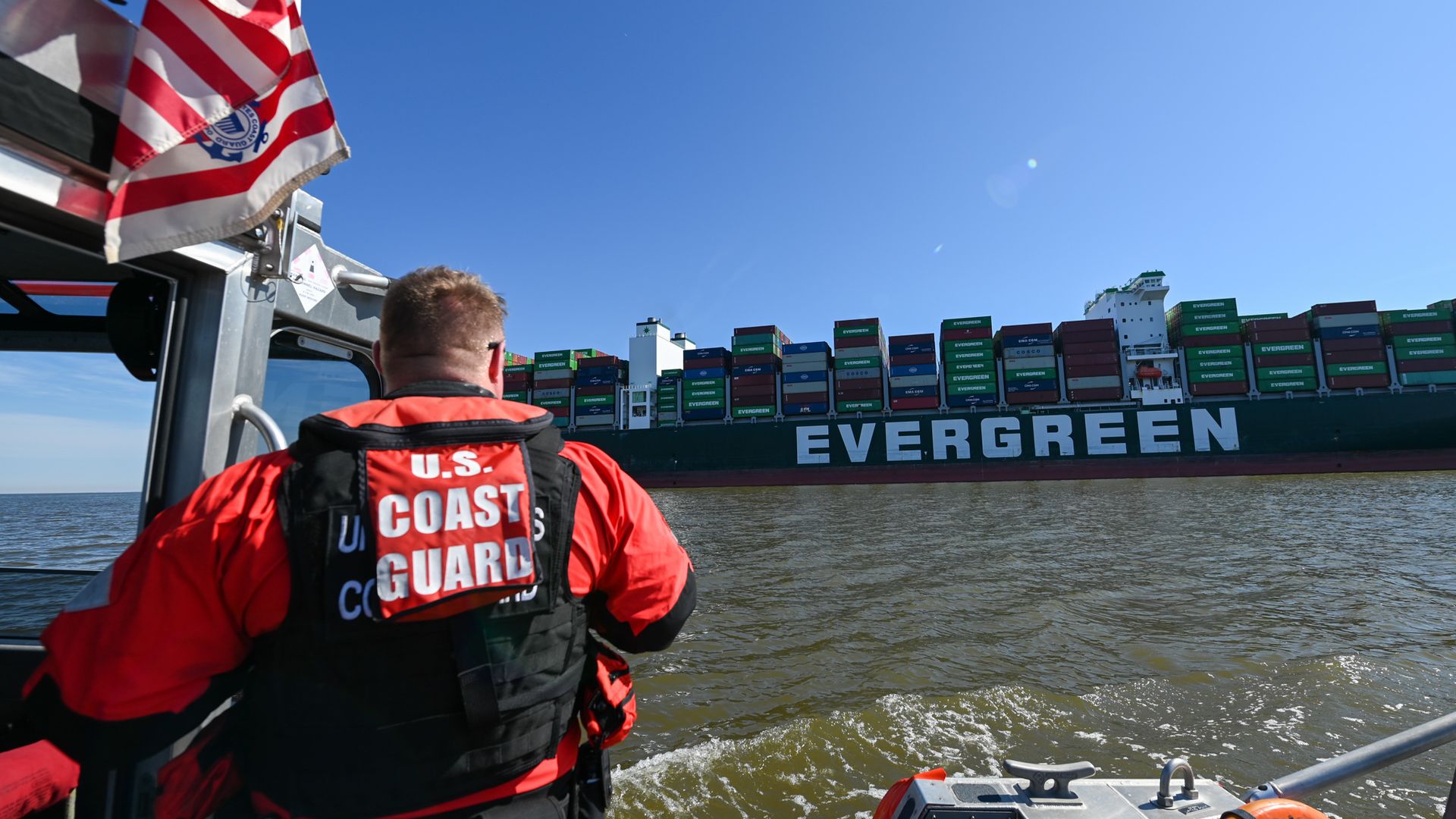
Officials were working to free a container ship owned by Evergreen Marine that ran aground near the U.S. capital over the weekend, per Bloomberg.
Why it matters: The incident comes one year ago to the month after another one of the company's container ships, the "Ever Given," spent a week stuck in the Suez Canal, causing a massive maritime traffic jam that impacted global trade.