SupplyShift, a company founded by two climate scientists that seeks to help companies reduce their supply chain emissions, has raised $10 million.
Driving the news: As more companies make far-reaching emissions reduction goals, they can quickly run out of opportunities to limit direct emissions from their offices, stores and shipping.
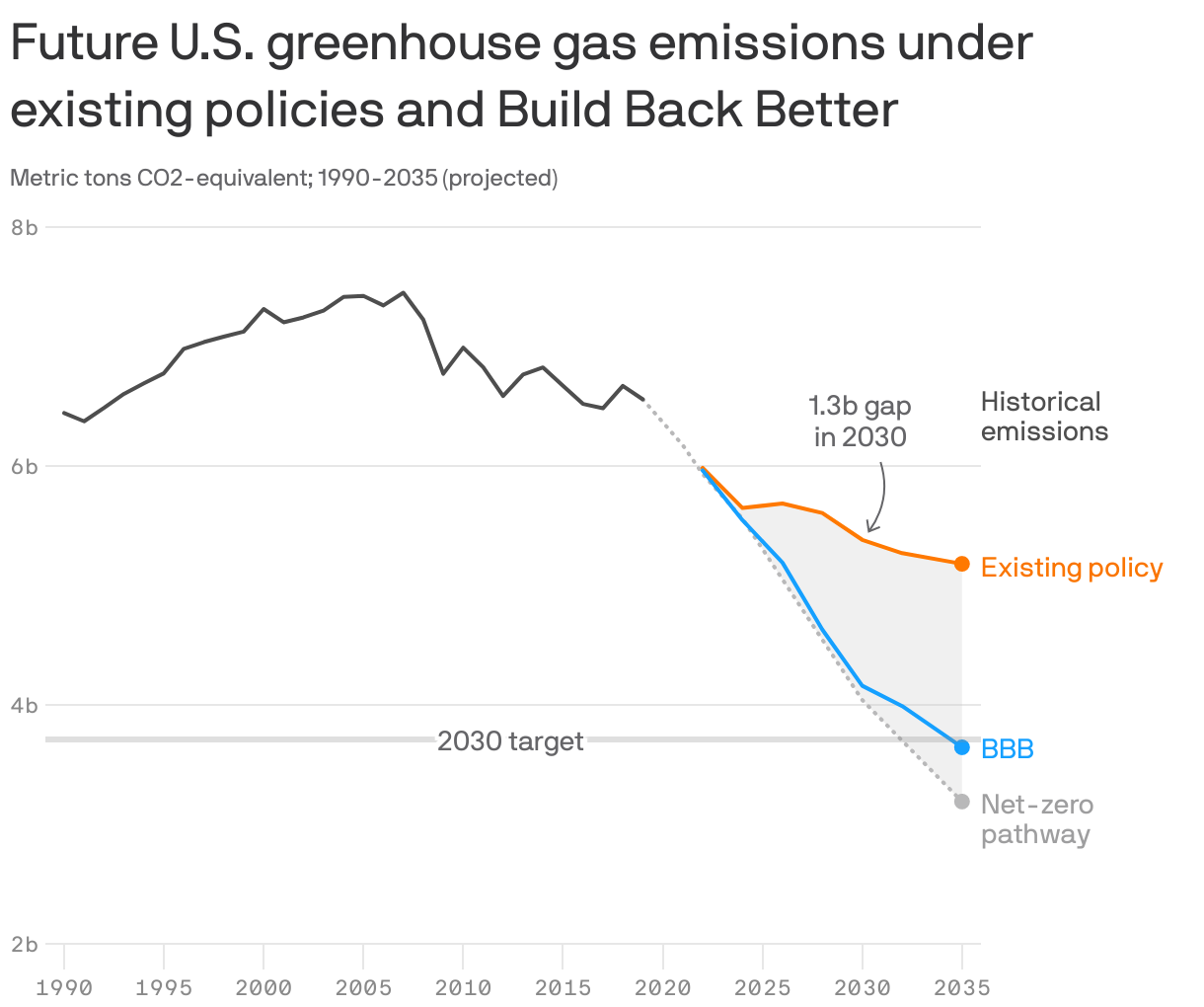
A report from the Princeton-led REPEAT Project examines the scope of Democratic energy legislation in the Build Back Better Act that's on the brink of collapse.
By the numbers: The analysis projects the impact of the more than $300 billion in expanded tax incentives for deploying low-emissions tech, and other climate-related provisions that push the total even higher.
The Energy Departmenttoday will launch a new office aimed at helping to commercialize advanced emissions-cutting technologies.
Driving the news: The Office of Clean Energy Demonstrations is part of the recently signed bipartisan infrastructure law and was in the department's budget request even earlier.
This past fall, surging energy prices were one of the most visible and alarming side effects of the world’s monumental effort to reopen economies all at once.
But just a few months later, a warm start to the winter — and worries that the Omicron variant will cause a slowdown — have cut the price of one of America’s main fuel sources nearly in half from its peak.
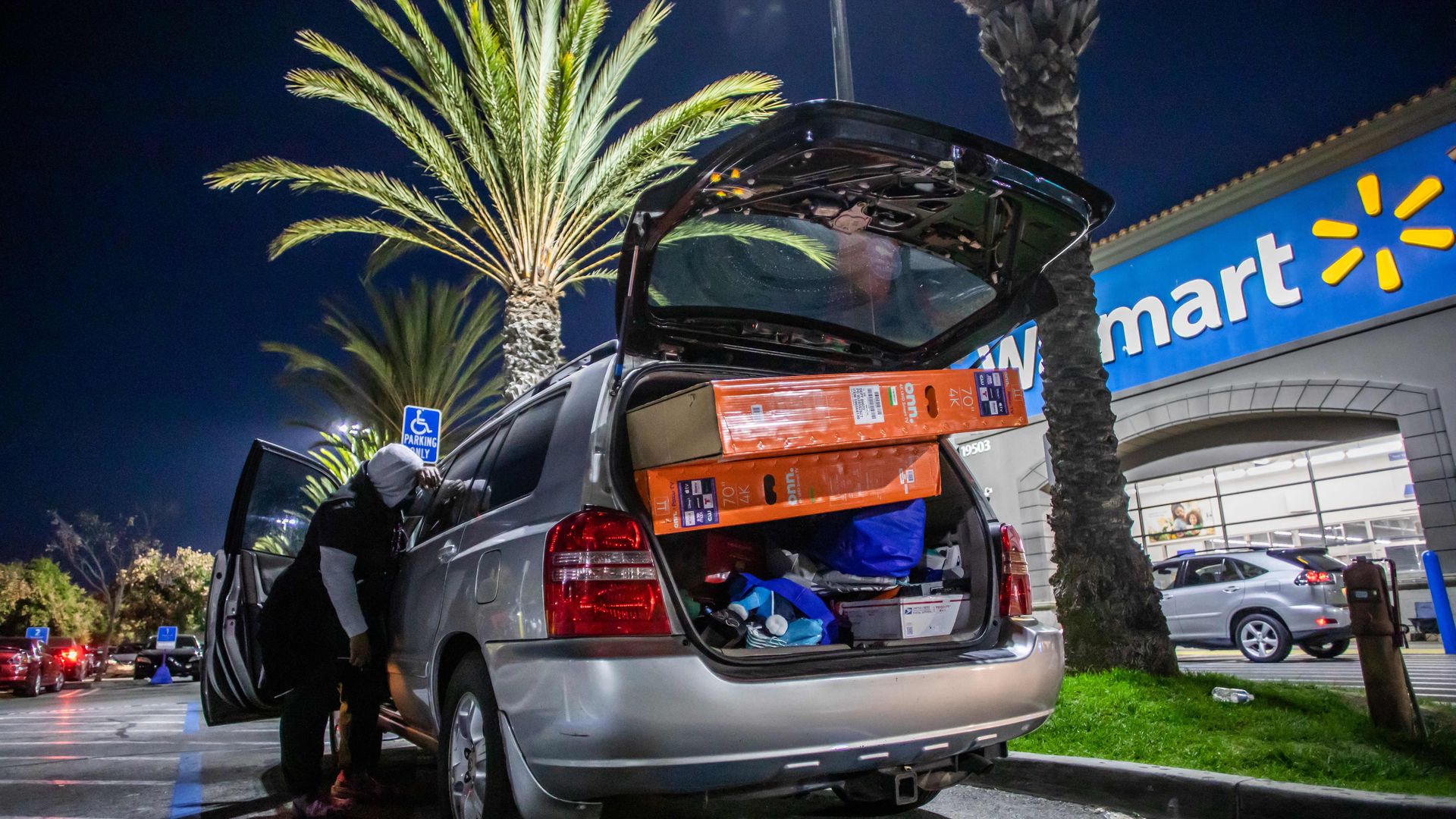
California officials filed a lawsuit against Walmart on Monday, alleging the retail giant illegally dumped hazardous waste in state landfills. Walmart said it will fight the lawsuit, which it called "unjustified," per AP.
Why it matters: The suit alleges Walmart unlawfully disposed of about 159,600 pounds in items each year over the past six years in landfills not equipped to handle toxic waste in violation of state environmental laws and regulations.
Heavy rain and snow are forecasted this week to hit the West Coast, where states are enduring a heavy drought, the Washington Post reports.
Why it matters: California Gov. Gavin Newsom has said that the state is facing "its worst drought since the late 1800s." While the precipitation will help address it, it will not be enough to entirely fix it.
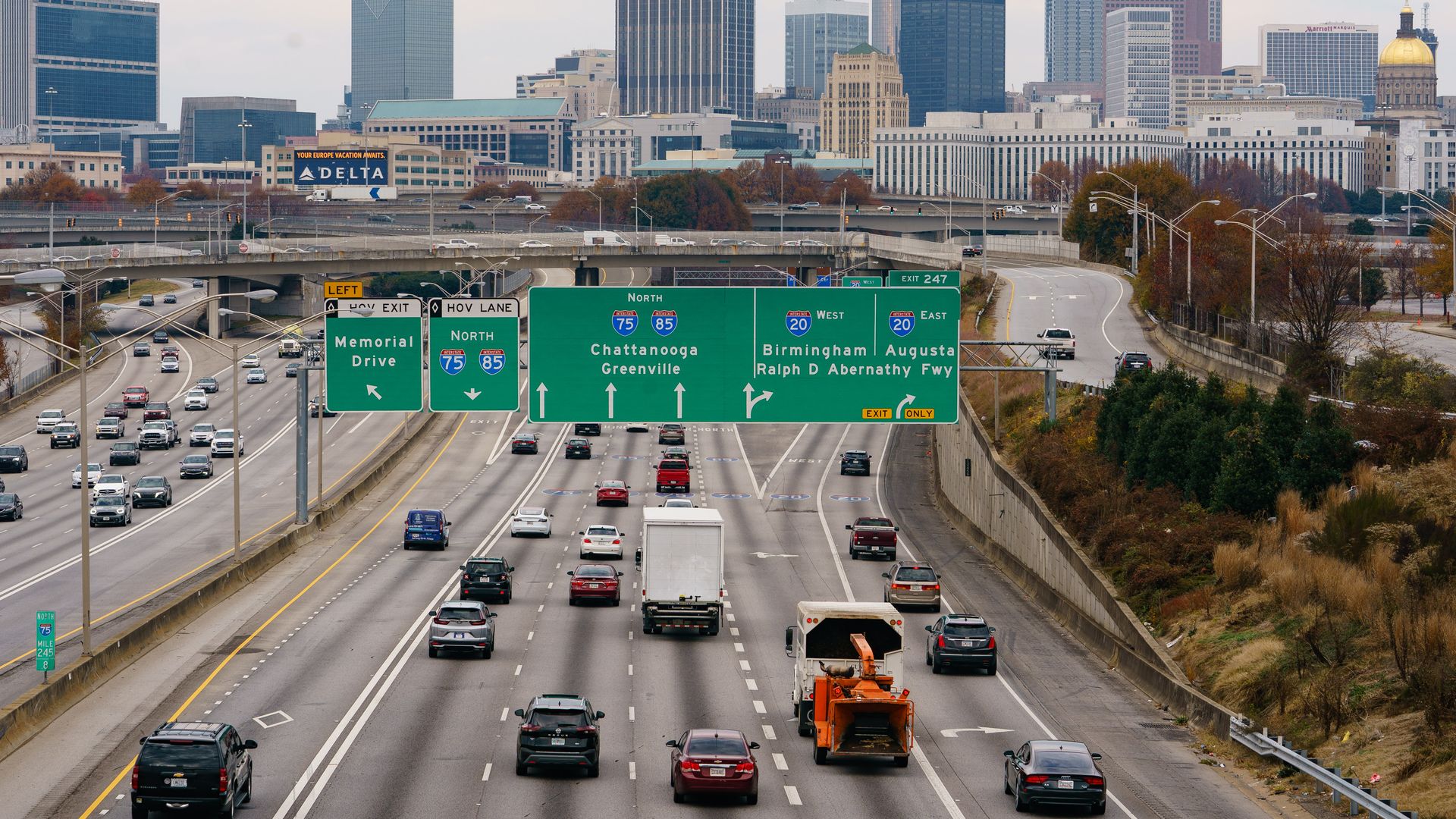
The Environmental Protection Agency said Monday it will tighten pollution standards for cars and light trucks in an attempt to reduce carbon dioxide emissions from automobiles.
Why it matters: Transportation overall is the largest source of U.S. greenhouse gas emissions, so tougher standards for passenger vehicles are a major part of efforts to curb CO2 output.
Sen. Joe Manchin's (D-W.Va.) declaration Sunday that he opposes President Biden's signature climate and social policy legislation makes the administration's task of meeting its climate goals far more difficult.
Why it matters: The setback to slashing emissions comes as scientists say time is running out to avoid far worse impacts from global warming.
Post-COVID revival of businesses conferences could bring substantial carbon emissions, but planners can curb the impact while still enabling lots of in-person interaction, new analysis shows.
Driving the news: The paper in Nature Communications attempts a holistic look at the resource footprint of conferences, looking at travel and food demands for big in-person events, but also energy needed for remote communications, to name a few big categories.
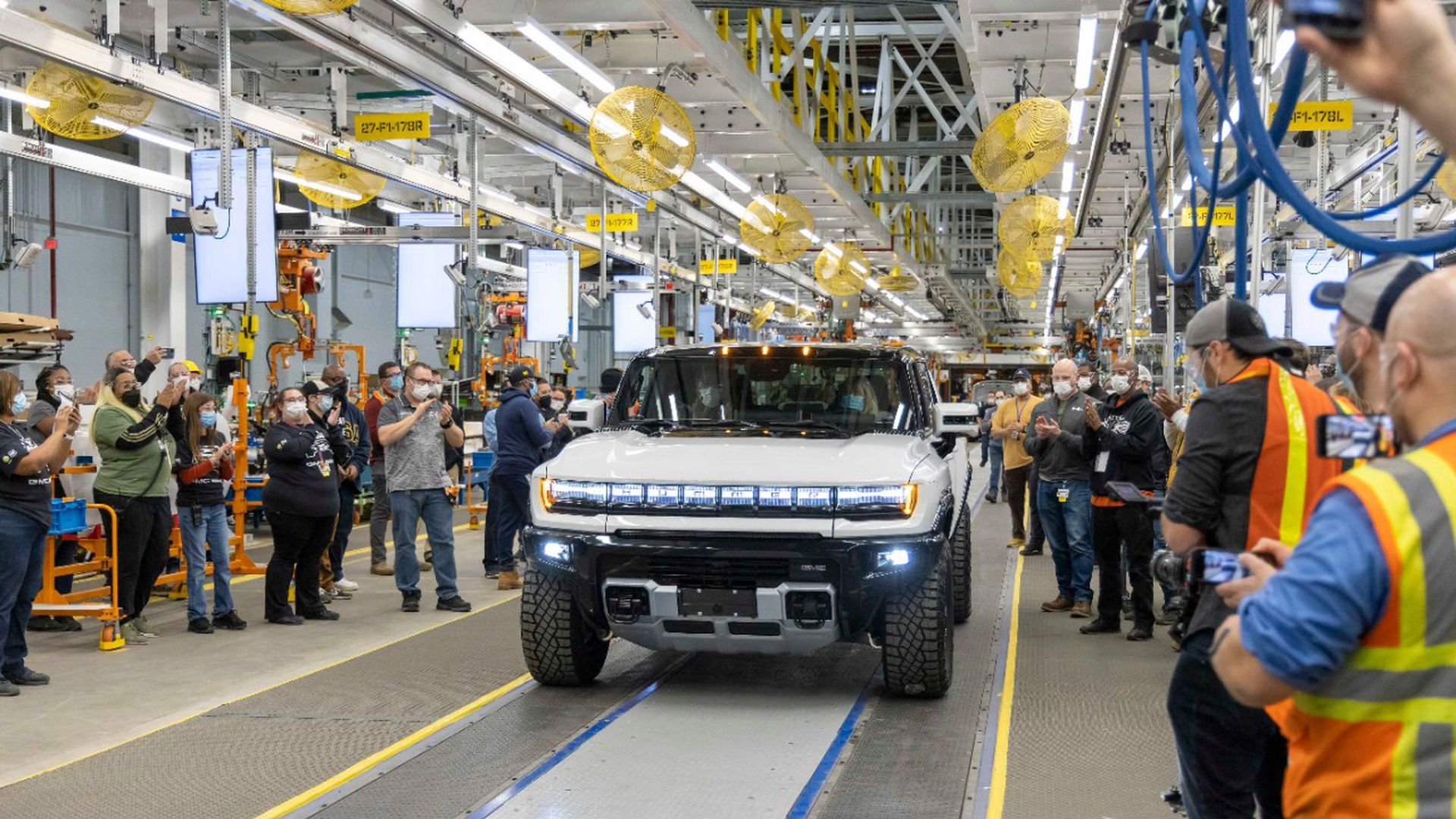
General Motors has begun deliveries of two new electric models to customers: the GMC Hummer, and the EV600 van, the first offering from its BrightDrop commercial delivery vehicles business.
Driving the news: GM said Friday that FedEx, which has ordered 500 electric delivery vehicles from the recently created BrightDrop unit, received the first five.
A key input to the batteries that power electric vehicles and smartphones has more than tripled in price this year, as investment in the EV industry skyrockets.
Why it matters: Lithium carbonate is one material needed to create lithium-ion batteries. Battery packs for EVs can cost several thousand dollars, and keeping their costs down is one part of making EVs more affordable.
/2021/12/21/1640097832406.gif?w=3840)