Averting the worst effects of climate change will eventually require the entire world to get off carbon, but some critics allege richer countries are trying to halt fossil fuels in poorer countries while continuing to drill at home.
Why it matters: New policies that aim to restrict fossil fuel development in poorer countries in the name of climate change are on a collision course with those nations' need for energy-fueled growth and development.
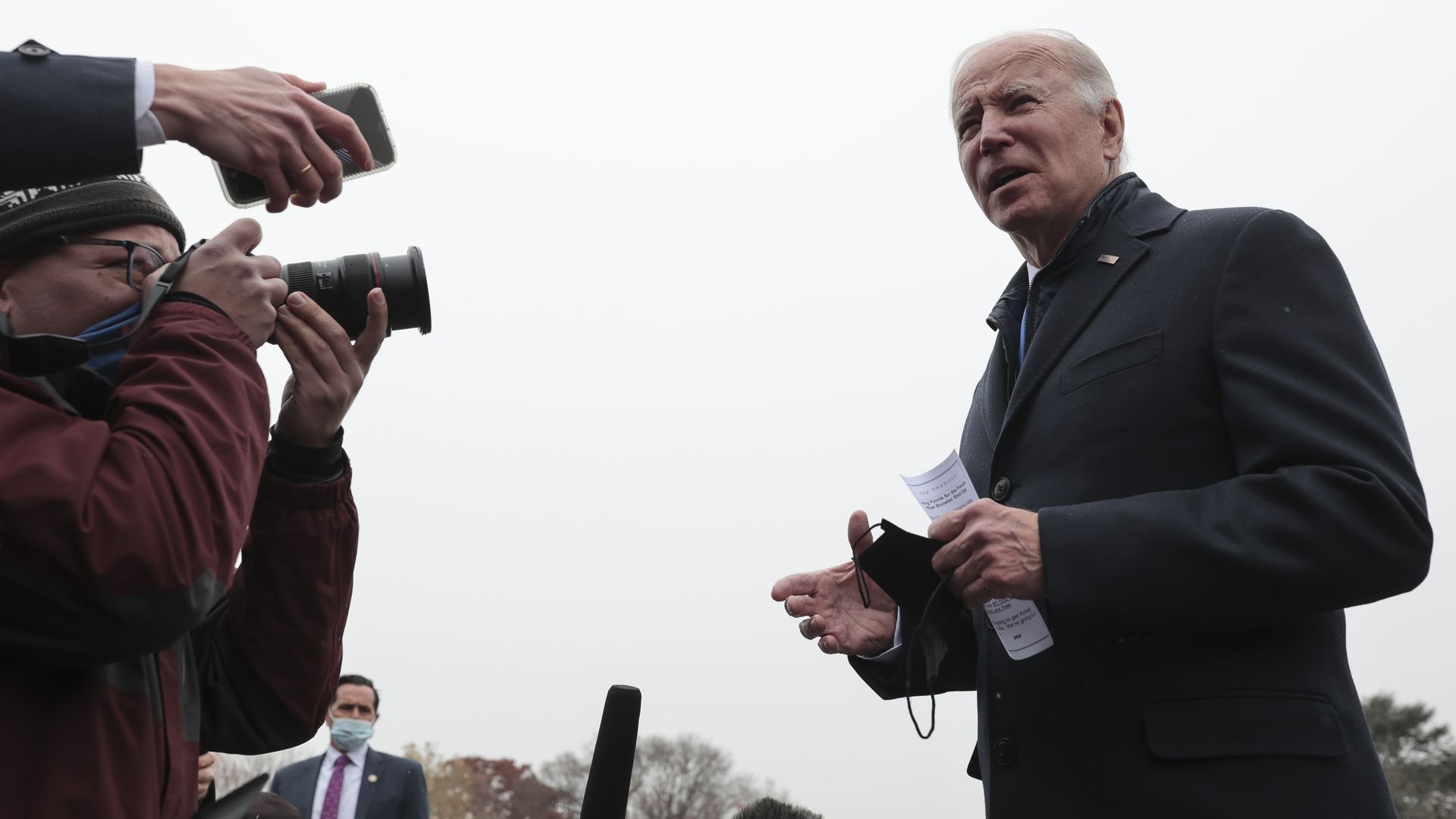
President Biden signed an executive order Wednesday that requires the federal government achieve multiple goals related to reducing its carbon emissions, including achieving net-zero emissions by 2050.
Why it matters: Meeting the objectives of the order would require a massive investment by the federal government to buy electric vehicles, upgrade buildings and change how it procures electricity.
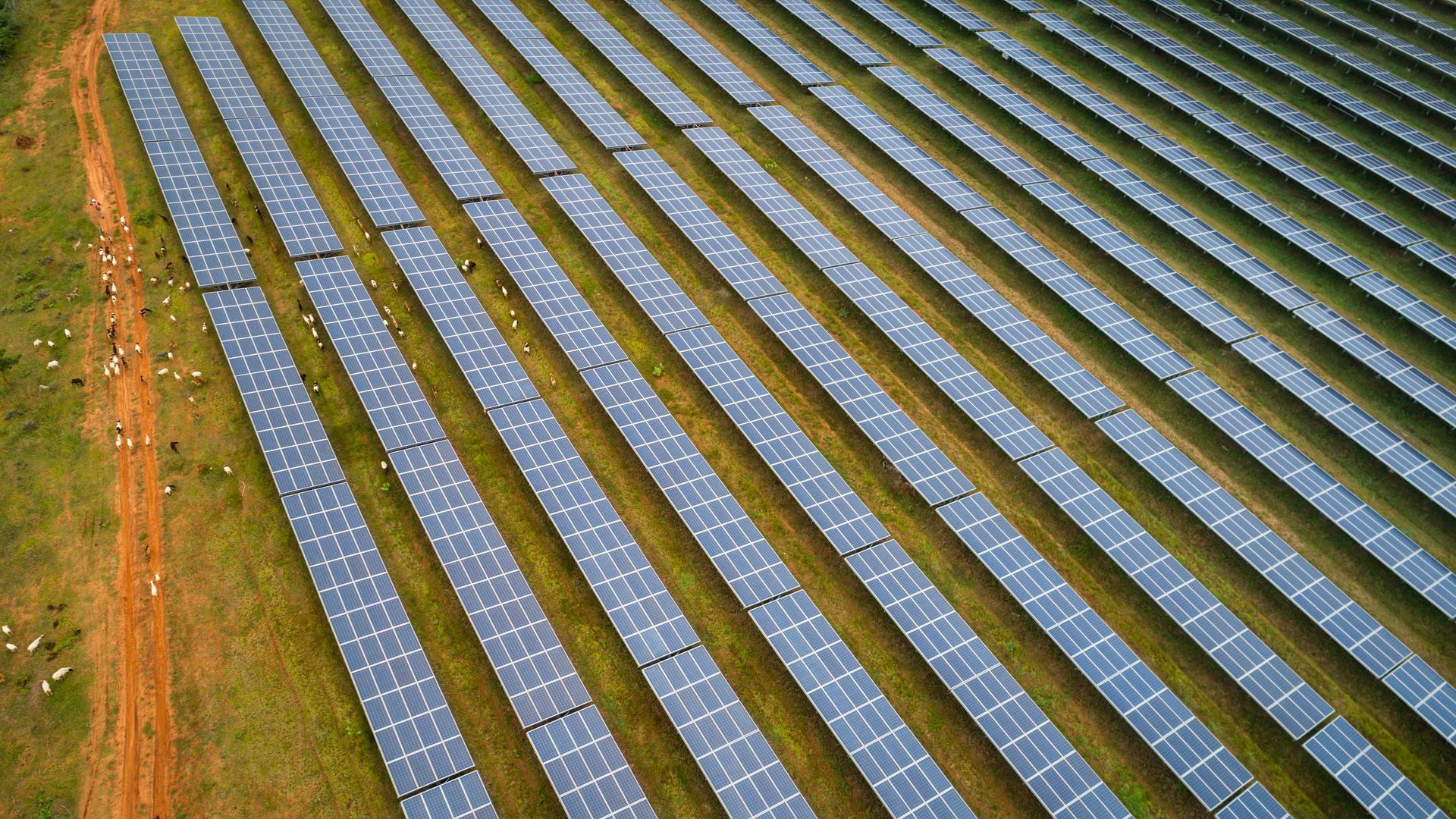
The U.S. InternationalDevelopment Finance Corporation (DFC) will provide up to $500 million in debt financing for the U.S. company First Solar's plan to build a major module factory in India.
Why it matters: The DFC said its the largest debt financing transaction in its history. And the WSJ delves into the geopolitics of the deal, noting it's "putting American taxpayer money behind a bid to weaken China’s dominance of the solar industry’s supply chain."
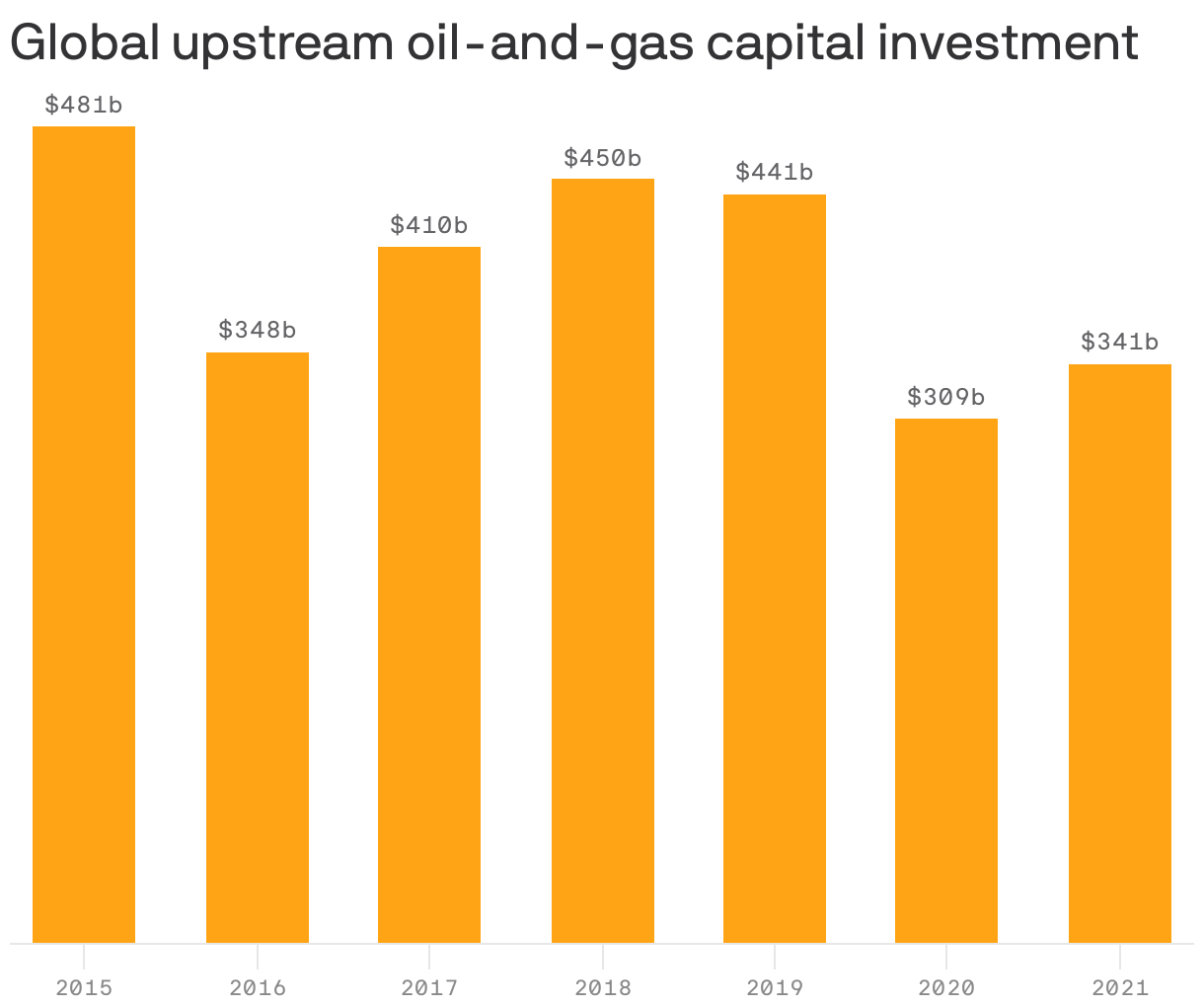
Reproduced from the International Energy Forum and IHS Markit; Chart: Axios Visuals
A new report concludes that global spending on oil-and-gas exploration and production needs to increase greatly in coming years to ensure adequate supplies, even as demand growth slows.
Driving the news: The Saudi Arabia-based International Energy Forum and the consultancy IHS Markit say investment should reach nearly $525 billion in 2030 to enable market balance.
In announcing Tuesday that it's going public via a special purpose acquisition vehicle (SPAC), climate intelligence company Tomorrow.io signaled its intent to become a top provider of weather and climate risk information in an increasingly risky world.
The big picture: The extreme weather and climate risk services space is getting more crowded. Boston-based Tomorrow.io offers a wider array of services than most of its fellow upstarts and now competes with bigger companies like IBM and Verisk Analytics.
BP is acquiring Amply Power, a three-year-old tech startup that provides a suite of services for electric vehicle fleets.
Why it matters: BP, in Tuesday's announcement, said the acquisition represents its "first major step into electrification in the U.S." Terms of the deal were not disclosed.
The global ocean is emerging as a promising target for carbon removal efforts, according to a new report.
Why it matters: It's now clear that removing and storing carbon dioxide, as well as reducing carbon emissions, will be necessary to avoid the most dangerous effects of climate change.
"Don't Look Up", the new movie directed by Adam McKay of "The Big Short" fame, is the most ambitious, acerbic and powerful climate change and media satire ever made.
Why it matters: Pop culture depictions of climate change can start conversations and change minds, potentially clearing the way for more policies to combat the problem, or on the other hand, hardening opposition against cutting emissions.
The pandemic, natural disasters and response to other tragedies spurred giving in 2021, according to GoFundMe's annual report.
Why it matters: The crowdfunding platform says one donation is made every second to help people across the globe. One in three fundraisers is started for someone else.
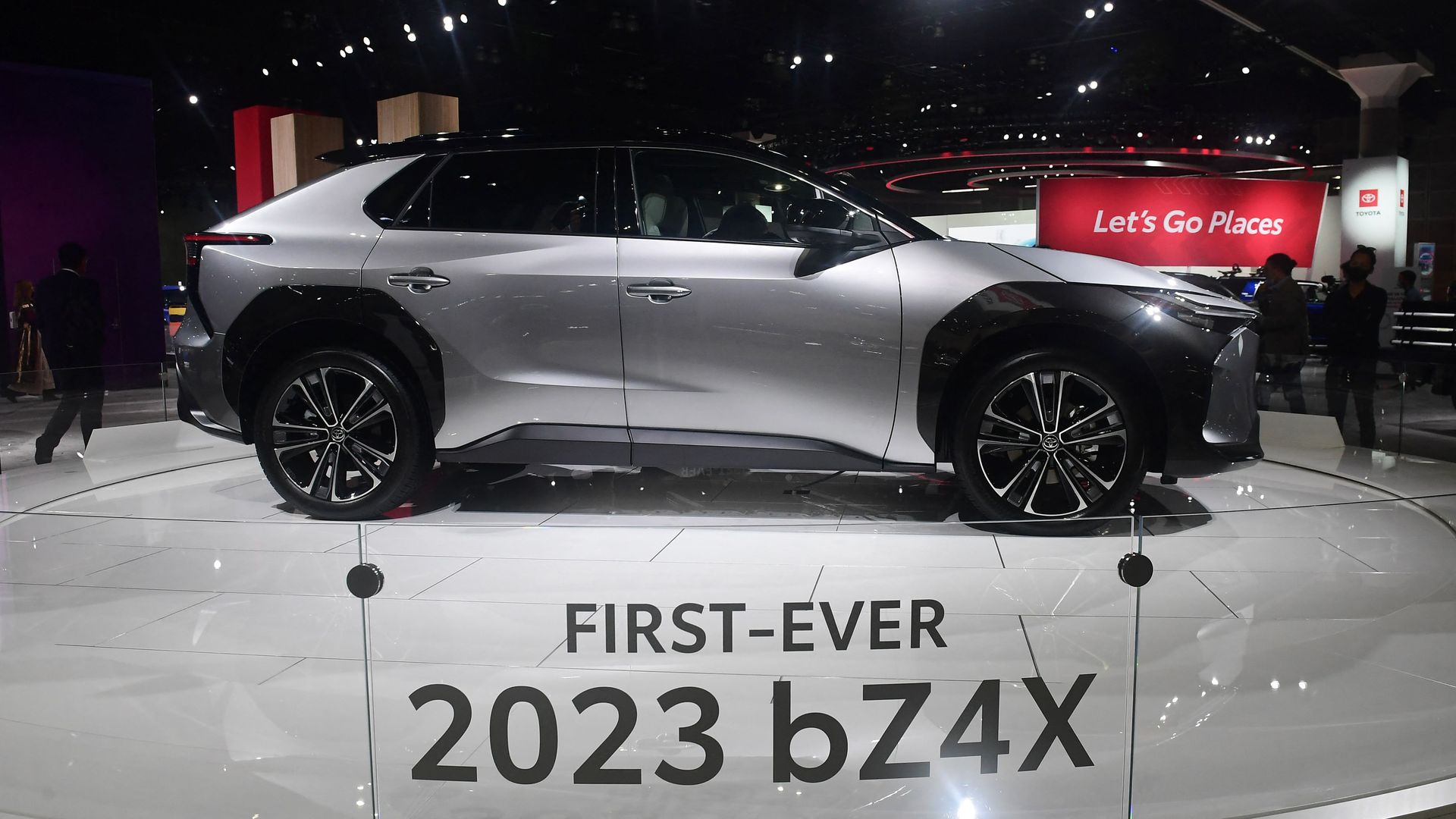
Toyota's plan to build a manufacturing plant in North Carolina for EV batteries is the latest move by auto giants, startups and suppliers to set up shop in conservative or swing-y states.
Driving the news: On Monday, the company said it's building a $1.3 billion plant in the Greensboro area to produce batteries for hybrid and electric vehicles.
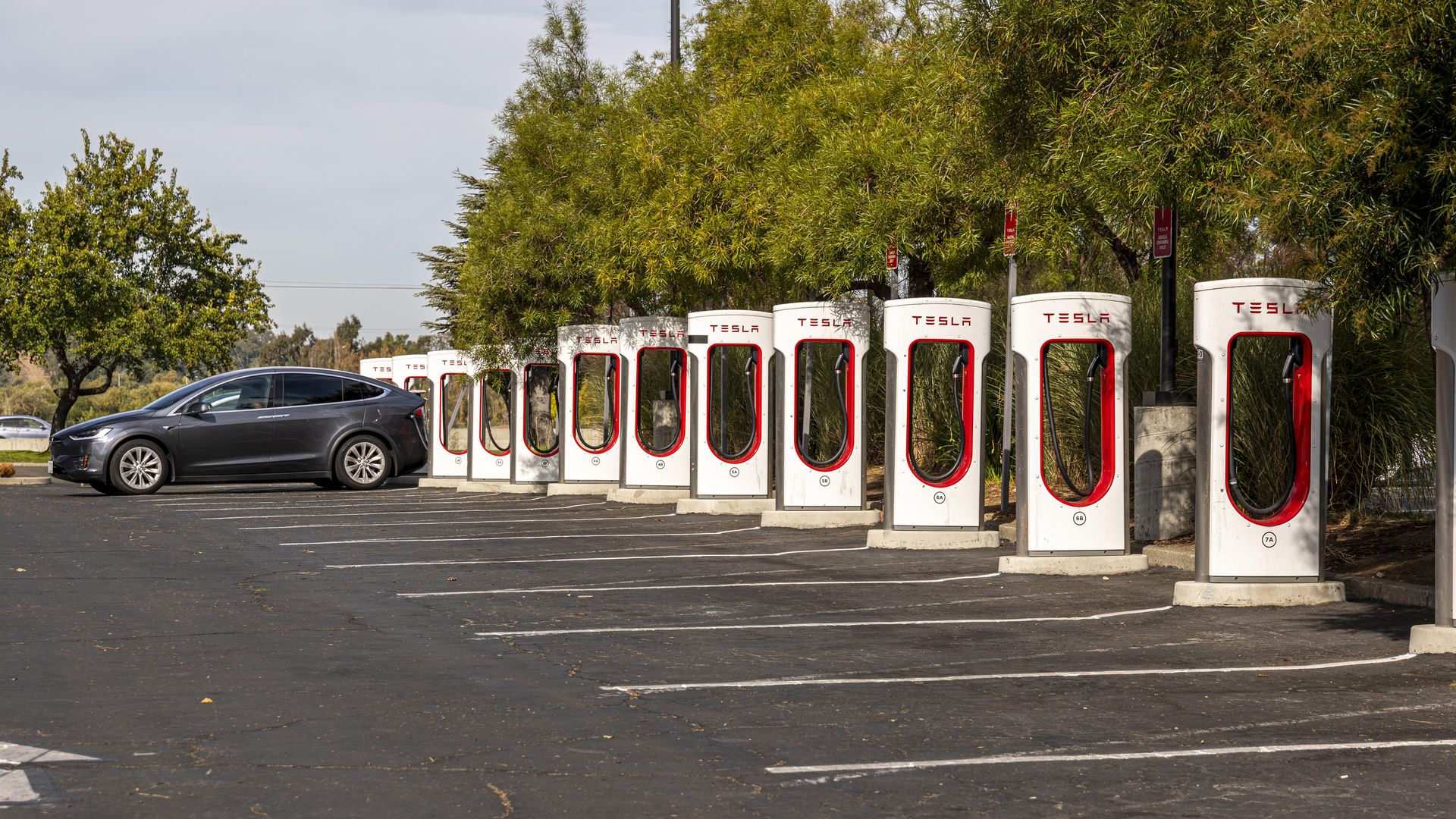
The big trade group for investor-owned power companies is set to unveil Tuesday a new coalition aimed at making electric vehicle charging more accessible along the nations' highways.
Driving the news: The Edison Electric Institute is rolling out the National Electric Highway Coalition. It merges two existing efforts — Electric Highway Coalition and the Midwest Electric Vehicle Charging Infrastructure Collaboration — and brings in new companies.
Toyota announced Monday it's investing $1.3 billion to construct an electric vehicle battery "megasite" near Greensboro, North Carolina, set to open in 2025.
Why it matters: The Greensboro-Randolph Megasite will employ 1,750 people and have four production lines, each capable of delivering enough lithium-ion batteries for 200,000 vehicles when it opens, per a Toyota statement.