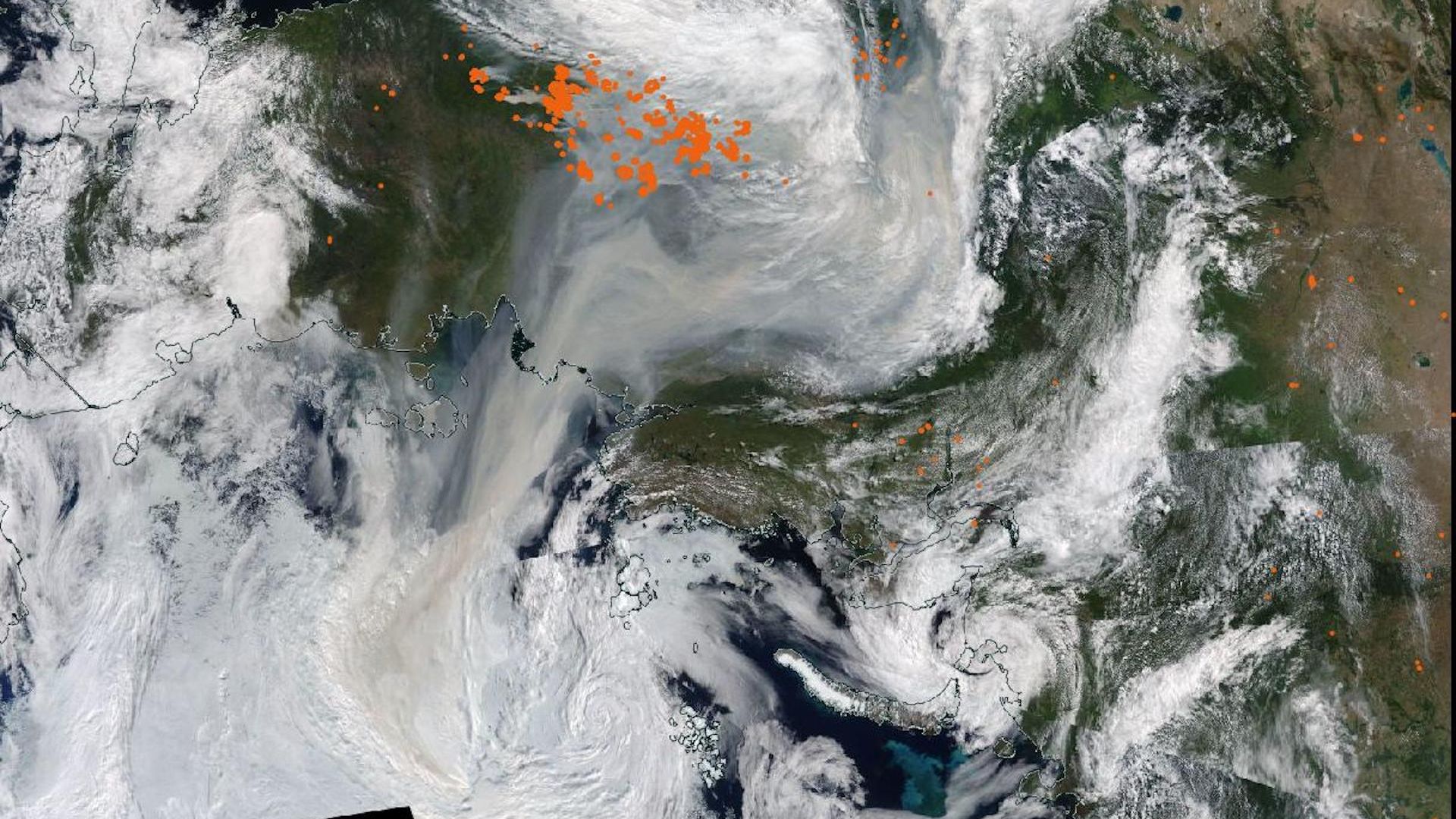
Intense wildfires burning across Siberia's Sakha Republic sent a plume of smoke all the way to the North Pole on Sunday into Monday, as seen by scientists tracking the blazes via satellite imagery.
Why it matters: The fires have been raging since early spring, and while this region is known for seasonal blazes, there are signs the fires are becoming more intense, starting earlier and lasting longer.
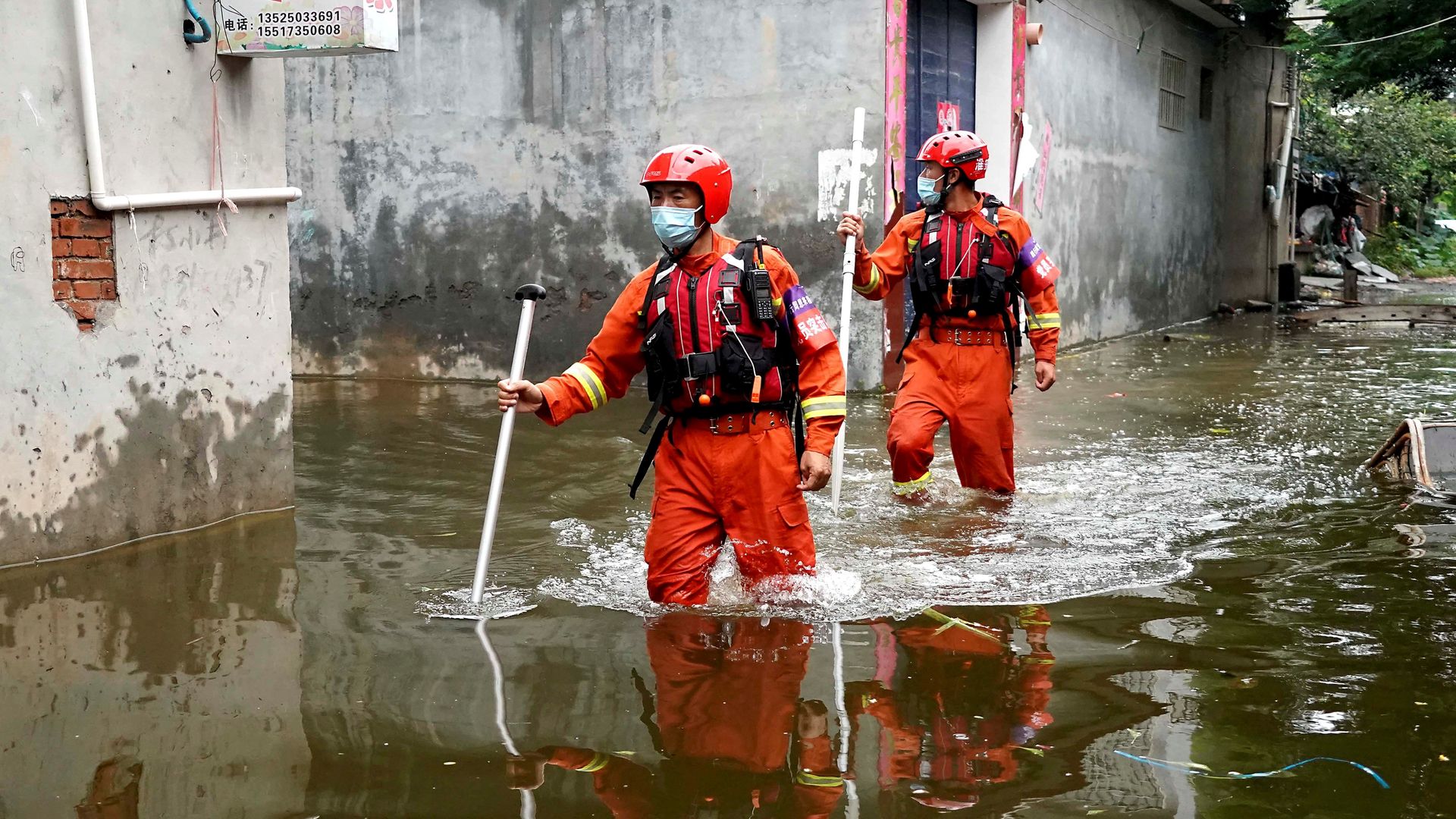
The death toll from last month's severe flooding in central China climbed to 302 on Monday, with 50 people still missing, AP reported.
Driving the news: China experienced record rainfall on July 20, which resulted in flooding throughout Zhengzhou and surrounding cities. The death toll as of last Friday was 99.
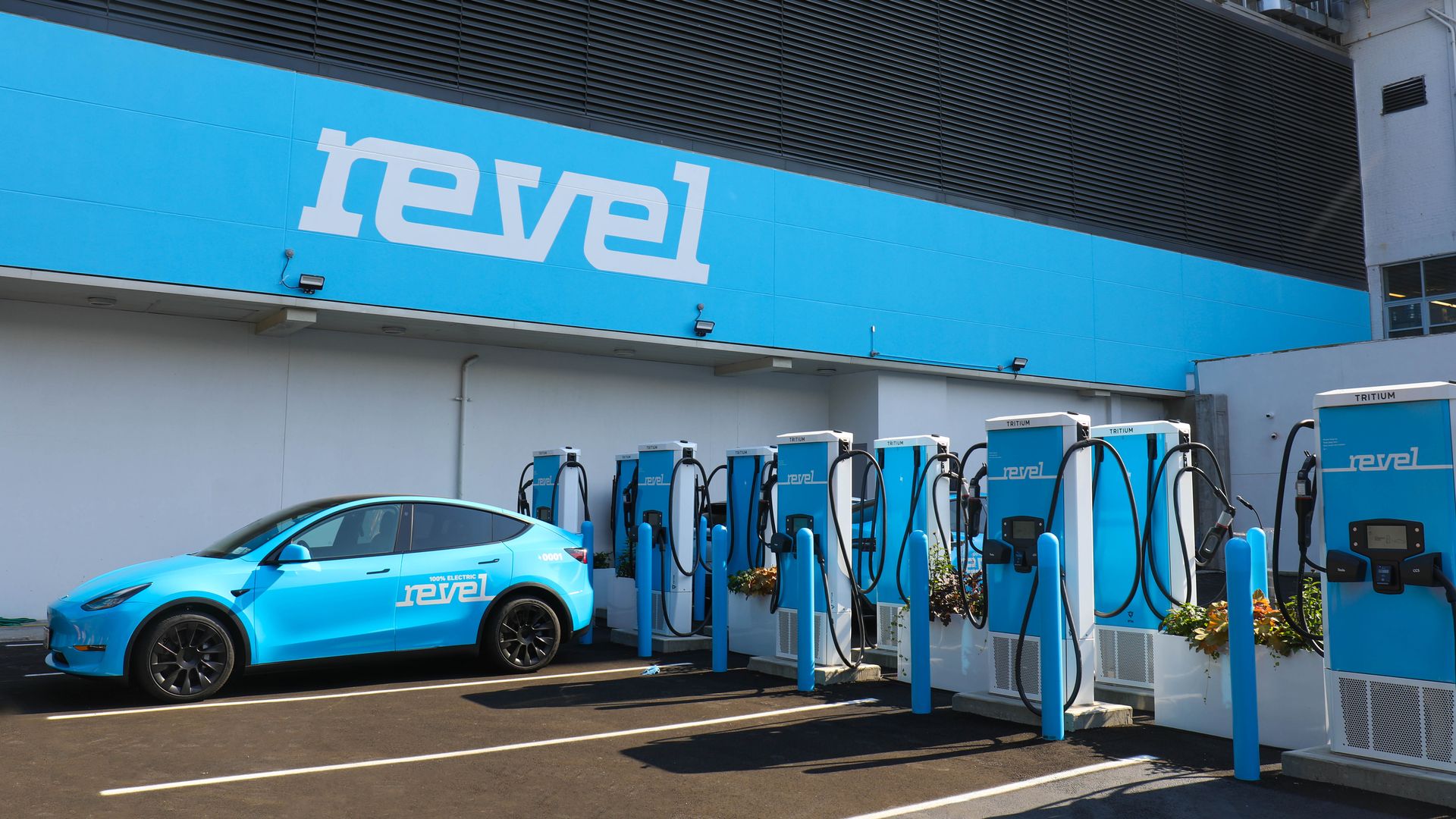
Revel is launching a new ride-hailing service in New York City today that sets itself apart from Uber and Lyft: every car is a Tesla, and all the drivers are employees.
Why it matters: Revel's business model will test whether EVs are up to the challenge of nonstop service and whether gig workers are the only way a ride-hailing service can expect to make money.
While Uber and Lyft say they intend to shift their networks to EVs, they've fought attempts by drivers to seek employee status — and the pay and benefits that come with it.
Driving the news: Revel will begin with 50 custom-painted Tesla Model Ys available for pickups and dropoffs below 42nd Street in Manhattan.
Unlike the traditional ride-sharing model, the cars will be owned and maintained by Revel, and they are licensed by the New York City Taxi and Limousine Commission.
It's launching with 150 drivers and fleet maintenance operators, all of whom will be employees of the company, with guaranteed wages and access to benefits.
The cars will be charged at Revel's new fast-charging "Superhub" in Brooklyn, which has 25 Level 3 fast-chargers available for public use.
Between the lines: Revel, which already rents thousands of electric mopeds and e-bikes in New York, sees itself as part of a movement to electrify transportation. But the lack of charging infrastructure in big cities is a hindrance, says CEO and co-founder Frank Reig.
"The real issue here, in cities like New York, is that if we're going to electrify rideshare and push EV adoption, there’s a huge missing ingredient. There is no charging infrastructure in cities. It doesn’t exist."
"It needs to be built, and it needs to be built now or else no city will meet their electric vehicle target. None of them will," Reig tells Axios.
What to watch: Reig says Revel can be profitable because EVs have lower operating costs and because it is focused on dense urban areas where utilization is high and ride-sharing prices are "rational."
Cutting oil production before we cut our demand for oil could undermine much of the progress that needs to be made on climate change.
Why it matters: If companies cut back on producing oil but consumers don’t cut back on consuming it, demand will exceed supply and prices will shoot up. That’s bad for our pocketbooks and risks the transition to cleaner energy.
It’s getting harder and harder to communicate the two essential realities of human-caused climate change: that our failure to slow and eventually stop it is contributing to devastating human suffering all over the world, and that it’s not too late to act.
The big picture: Experts have long told climate communicators —including scientists, journalists and politicians — that disaster porn immobilizes people, leaving them cowering in a corner. You've got to give them a sense of hope, the research shows.
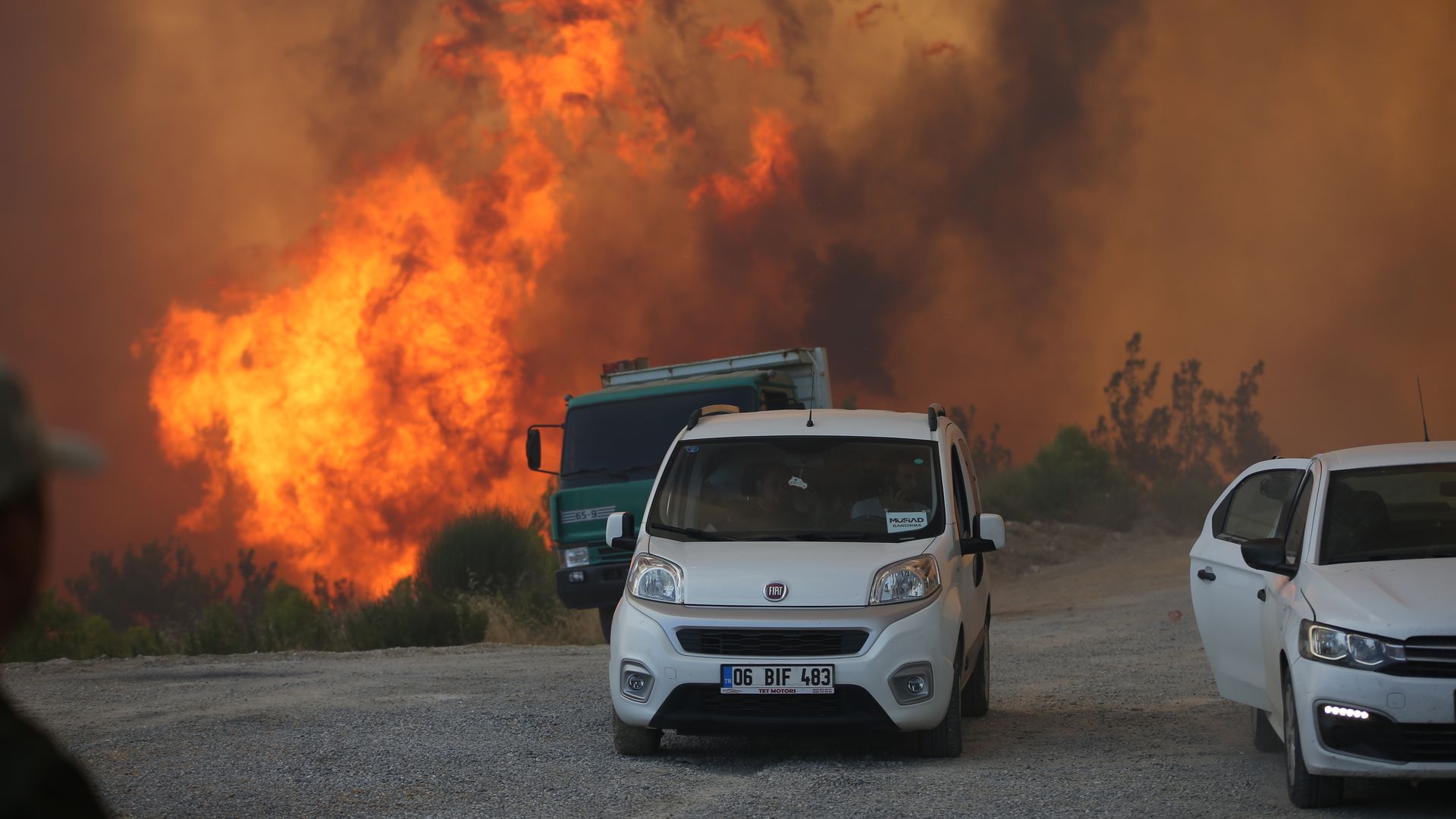
Thousands of tourists in Turkey were forced to evacuate Sunday after wildfires, which erupted last Wednesday, encroached on popular travel destinations, NBC reports.
Why it matters: More than 100 wildfires broke out near southern and western Turkey this week, with at least six people, including two firefighters, reported to have died in the fires.