Exxon is calling for expansive industry-government collaboration to develop big carbon capture and storage projects around Houston, Texas.
Why it matters: Technology to trap emissions and permanently stash them underground could become a tool against global warming, but deployment has been very slow to get off the ground and remains in the nascent stages.
The Treasury Department offered more information Monday on plans to expand its focus on global warming, and said John E. Morton, a climate finance expert who served in the Obama administration, will lead the efforts.
Why it matters: Announcement of the new "Climate Hub" and Morton's appointment signal how the Biden administration is stitching climate policy into the fabric of agencies across the government.
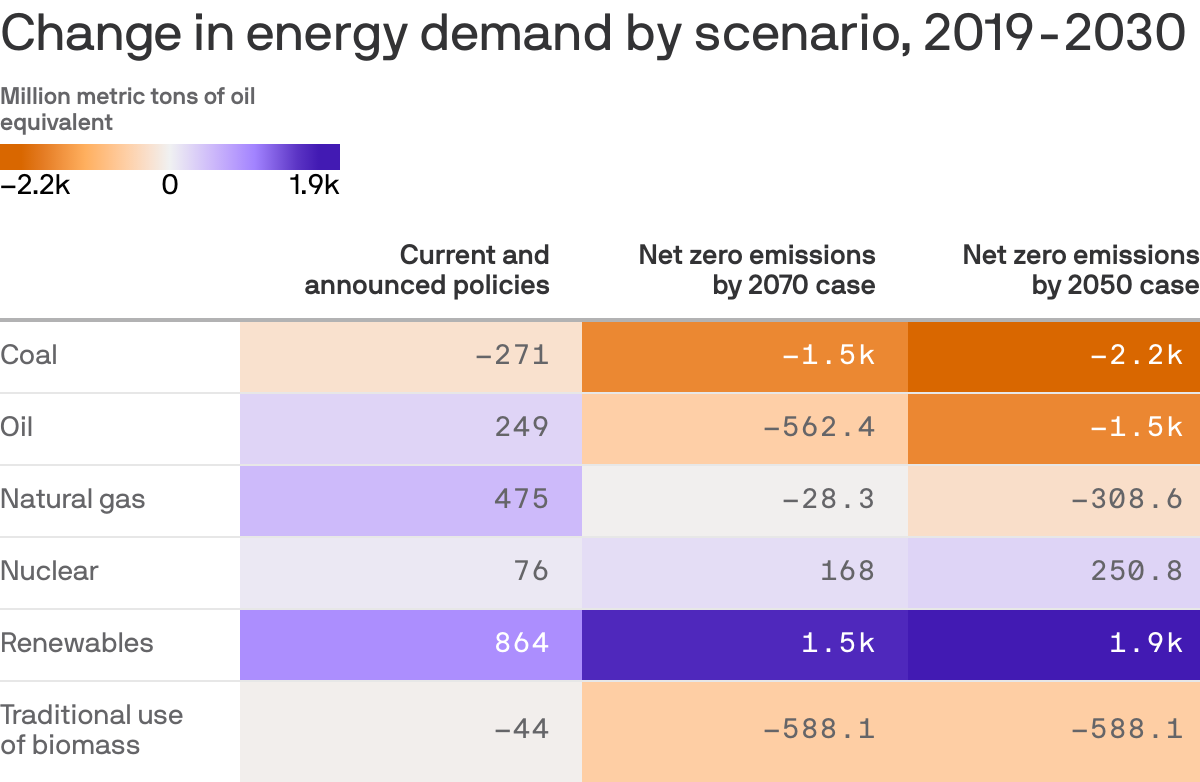
International Energy Agency modeling underscores the kind of sweeping energy transformations needed in the relatively near future to meet the Paris Agreement's temperature goals.
The big picture: The chart above via IEA's World Energy Outlook last October shows changes in demand for various fuel sources in three IEA scenarios.
Amazon Monday morning announced investments in several new utility-scale wind and solar projects and said it's now Europe's largest corporate renewable power buyer.
The big picture: Look for a burst of corporate clean energy and climate pledges this week as companies hope to show their bona fides alongside this week's White House global climate summit and Earth Day.
Cities and states continue to push forward on their climate goals, raising their level of ambition as the White House prepares to host a global climate summit this week.
Why it matters: Cities account for a significant share of emissions and worked to reduce them despite the Trump-era federal pullback. City leaders also must prepare for climate impacts such as the sea-level rise and more intense heat waves.
Get ready for lofty statements, urgent calls for carbon-cutting progress, new pledges — and known unknowns about how much concrete action will follow — at President Biden's global climate summit this week.
What we're watching: The White House will showcase a new 2030 U.S. emissions-cutting target and unveil plans for billions of dollars to help developing nations fight climate change, according to Bloomberg.
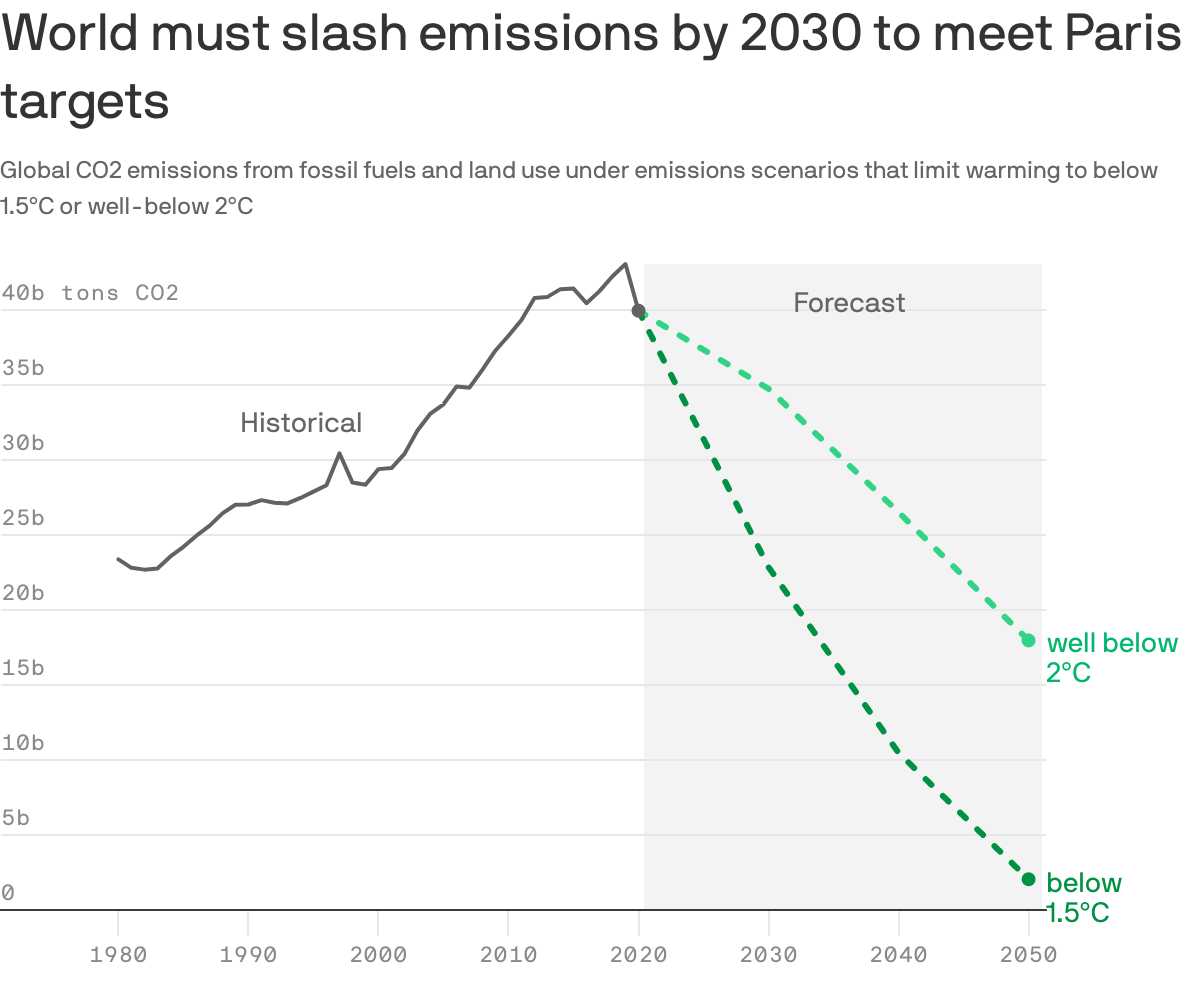
Data: SSP/Global Carbon Project; Chart: Will Chase/Axios
The odds of calamitous climate events, from collapsing polar ice sheets and the ensuing sharp rises in sea levels to deadly heat waves, increases dramatically if the world exceeds the Paris Climate Agreement's temperature targets.
Why it matters: In order to have a decent chance of meeting the agreement's most ambitious temperature target — holding warming to 1.5 °C above preindustrial levels — greenhouse gas emissions need to be sharply reduced before 2030.
The biggest hurdle for President Biden in winning new emissions reduction commitments at this week's White House summit is America's on-again, off-again history of climate change efforts.
Why it matters: The global community is off course to meet the temperature targets contained in the Paris Climate Agreement. The White House wants the summit Thursday and Friday to begin to change that.
A massive wildfire spread from the foothills of Table Mountain to the University of Cape Town Sunday, burning historic South African buildings and forcing the evacuation of 4,000 students, per Times Live.
The big picture: Visitors to the Table Mountain National Park and other nearby attractions were also evacuated and several roads, including a major highway, were closed. South Africa's oldest working windmill and the university's Jagger Library, which houses South African antiquities, were among the buildings damaged.
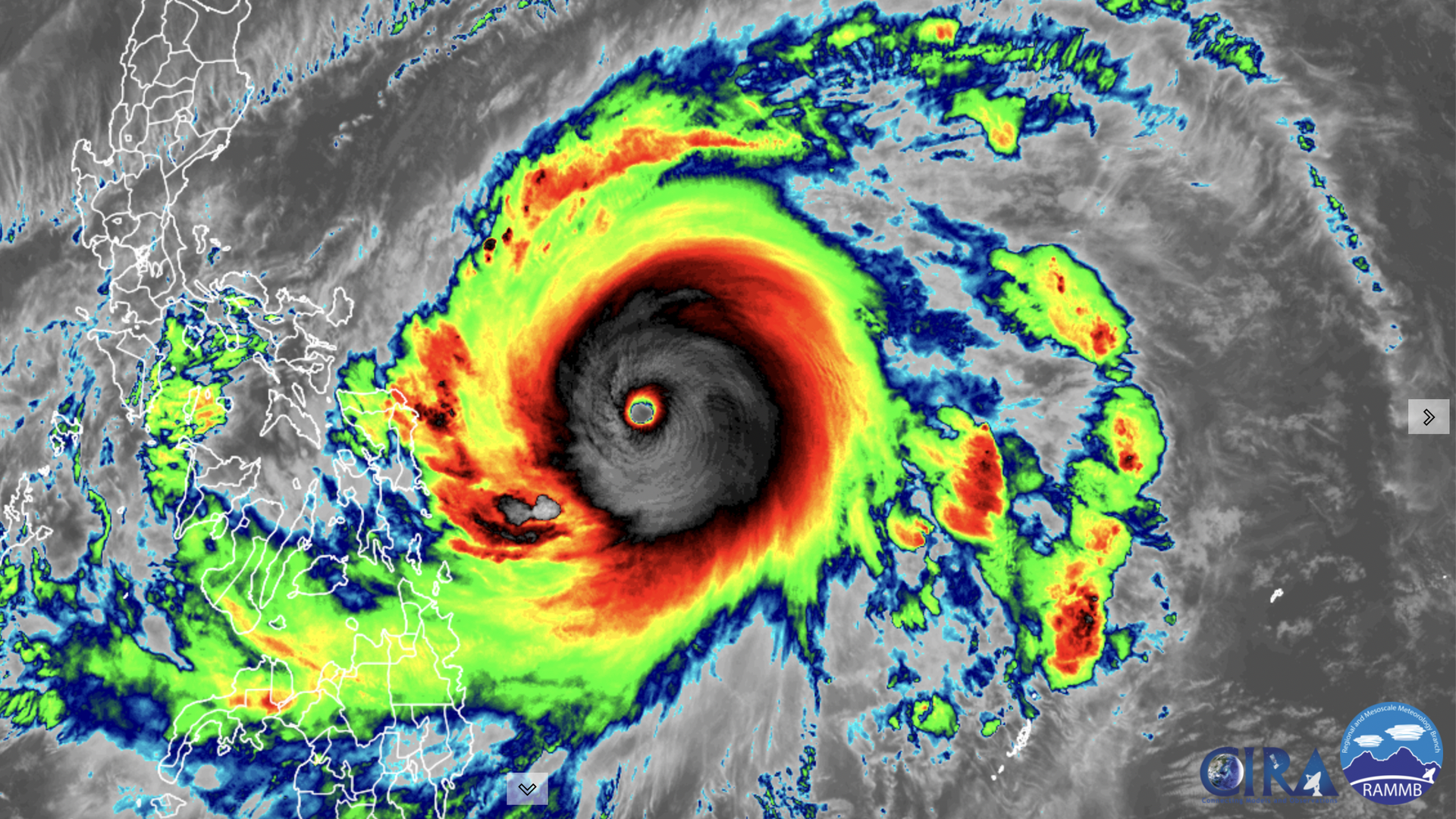
Super Typhoon Surigae surged in intensity from a Category 1 storm on Friday to a beastly Category 5 monster on Saturday, with maximum sustained winds estimated at 190 mph with higher gusts.
Why it matters: This storm — known as Typhoon Bising in the Philippines — is just the latest of many tropical cyclones to undergo a process known as rapid intensification, a feat that studies show is becoming more common due to climate change. It weakened slightly, to the equivalent of a strong Category 4 storm, on Sunday.
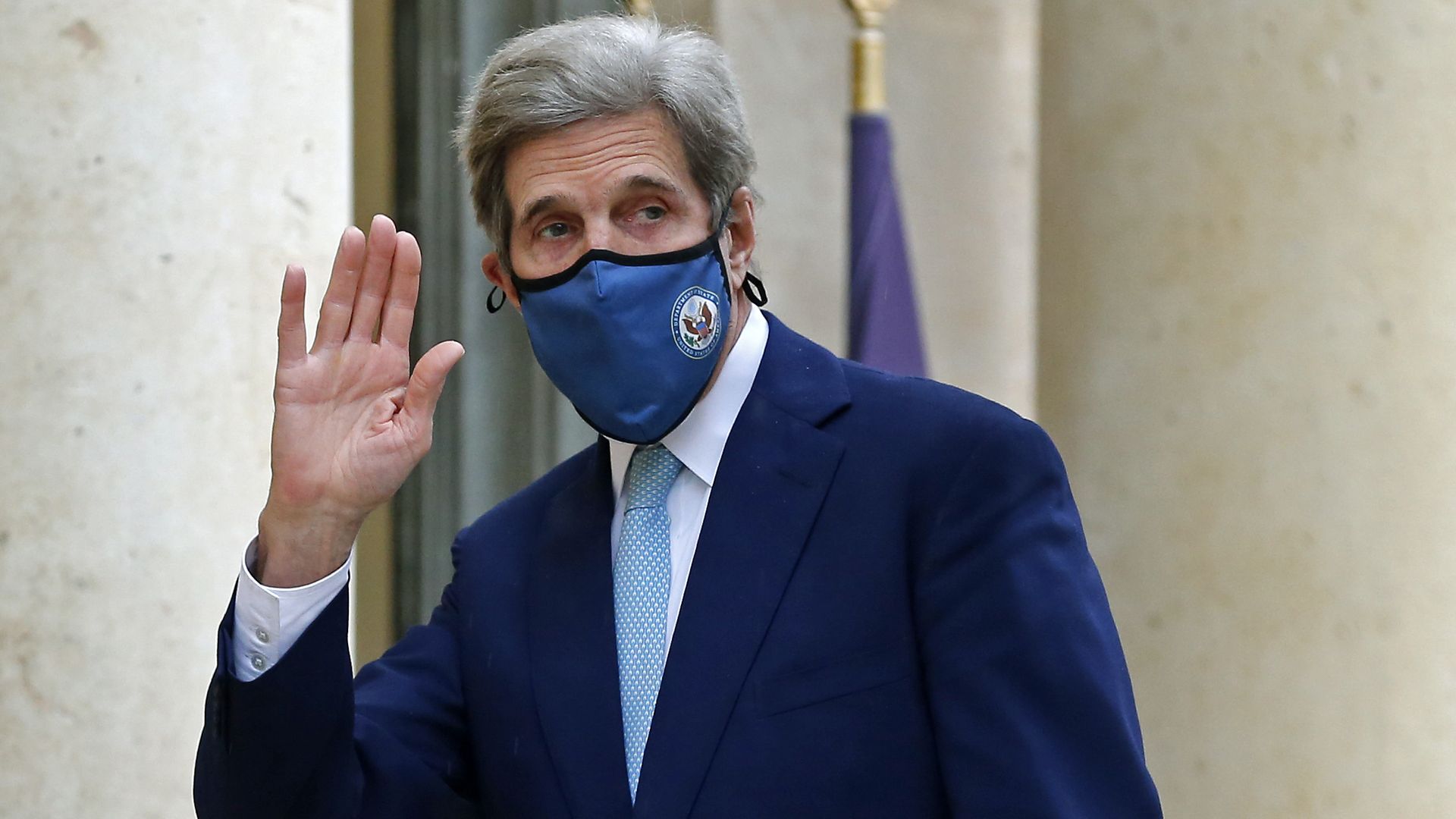
Despite an increasingly tense relationship, the U.S. and China agreed Saturday to work together to tackle global climate change, including by "raising ambition" for emissions cuts during the 2020s — a key goal of the Biden administration.
Why it matters: The joint communique released Saturday evening commits the world's two largest emitters of greenhouse gases to work together to keep the most ambitious temperature target contained in the Paris Climate Agreement viable by potentially taking additional emissions cuts prior to 2030.




/2021/04/19/1618837835657.gif?w=3840)