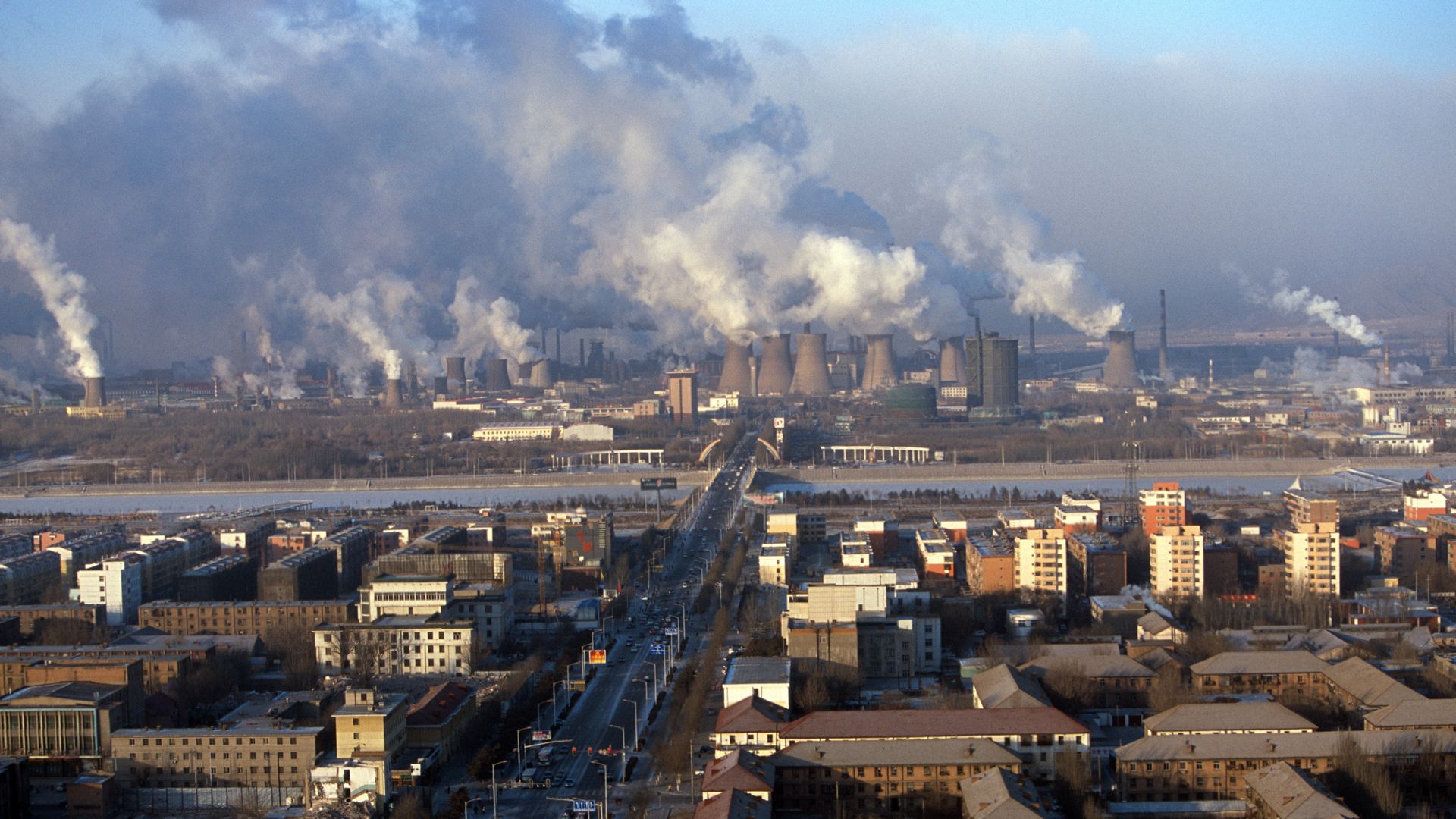
A new(ish) International Energy Agency analysis outlines the importance — and immense challenge — of China's pledge to become "carbon neutral" by 2060.
Why it matters: Its recommendations get to the scope of the tech deployment needed, and what a seismic shift it would represent for China's economy.
The chart above helps visualize one reason why the oil industry doesn't have reason to completely freak out over emerging election results. It shows, via the research firm BloombergNEF, the amount of U.S. oil production on federally owned vs. private lands.
Why it matters: One of the most aggressive parts of Biden's agenda is ending new drilling permits on federal lands and waters. But as you can see, a large majority of U.S. output is on private lands.
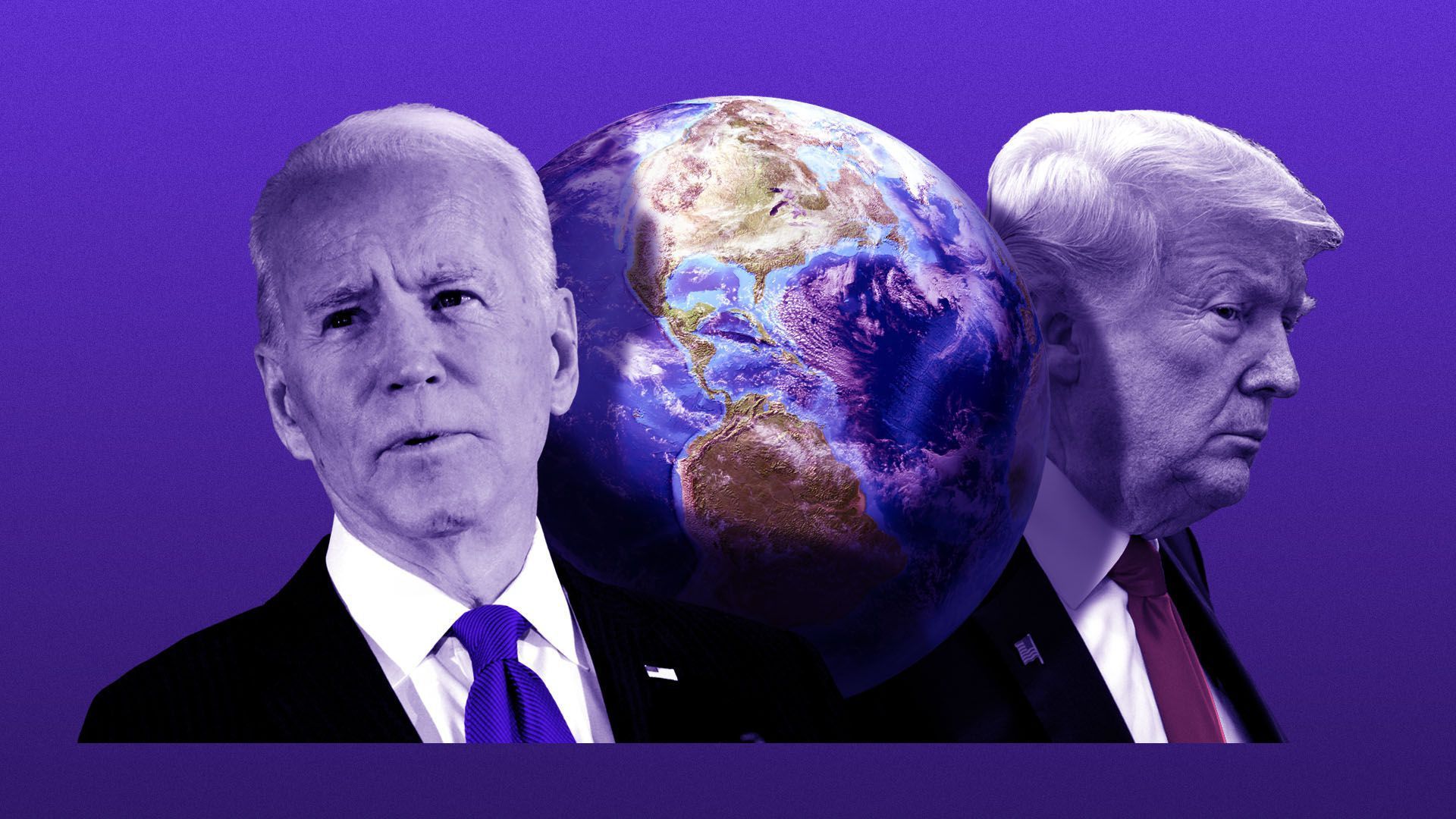
A potential President Joe Biden would face an oppositional Senate and a skeptical world if he tried to enact an aggressive climate-change agenda.
Driving the news: Odds are increasing that Biden will win the White House while Congress is likely to remain divided, with Republicans controlling the Senate and Democrats leading the House.
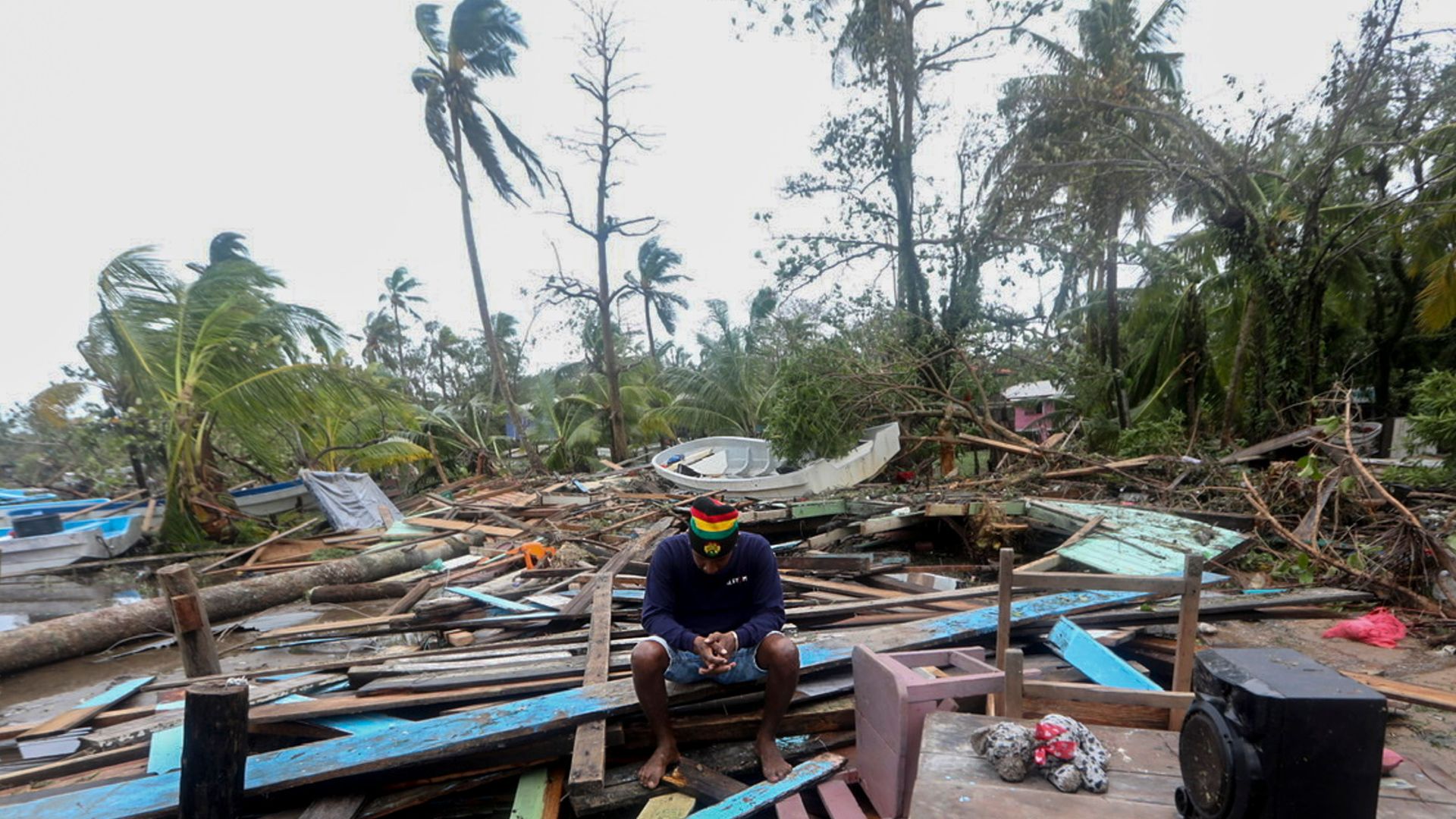
Florida officials are bracing for storm Eta, which killed at least five people after making landfall in Nicaragua as a Category 4 hurricane this week, per Reuters.
The big picture: Eta is the 28th named storm of the 2020 Atlantic hurricane season, tying a 2005 record.
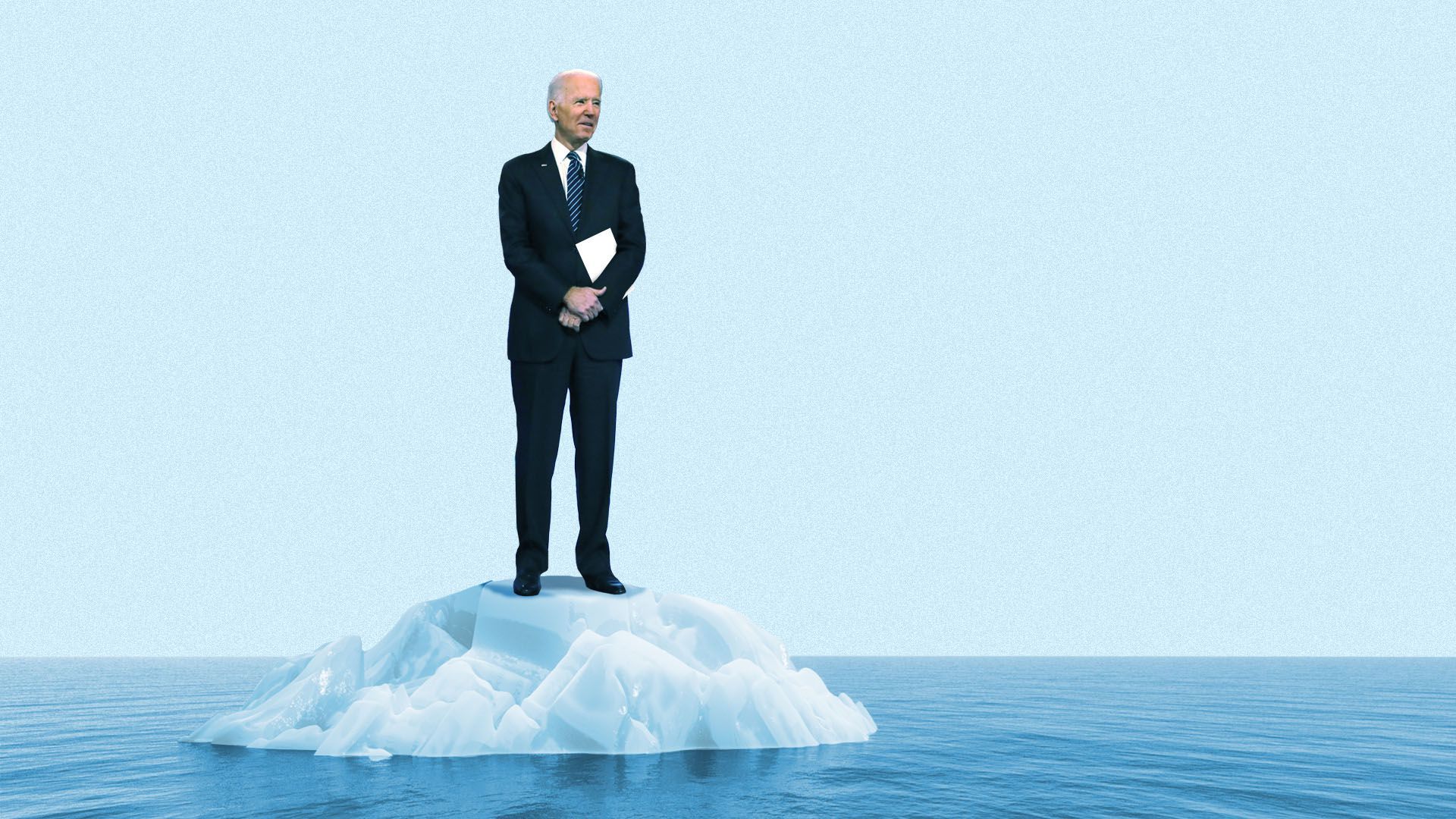
Should Joe Biden ultimately win the White House, his climate agenda will almost certainly be limited — at least for the foreseeable future — to what he can pursue using executive powers.
The state of play: While several Senate races are outstanding, Democrats look unlikely to regain the majority in that chamber despite pickups in Colorado and Arizona, which aren't enough.
Texas went fairly comfortably red again, but it looked quite close for a while, and so now seems as good a time as any to look at the state's energy as well as political complexities.
The intrigue: Texas is increasingly no longer seen as only the oil patch, and it's a fascinating state to watch. That's especially the case at a time when the future of oil demand remains a question mark and more and more countries are vowing new steps on climate — regardless of U.S. policy.
The Atlantic has begun solving a big mystery in climate advocacy circles — how Jeff Bezos will spread around money from the $10 billion "Bezos Earth Fund" announced in February.
Why it matters: The fund's size makes it a huge presence in climate philanthropy. And, until now, the fund has been a mysterious presence, given the dearth of info and the broad scope of funding areas.
Call it the long goodbye from the Paris climate agreement.
Driving the news: President Trump’s 2017 announcement withdrawing America from the 2015 accord becomes official at midnight Wednesday after a prolonged process required by the United Nations. It’s a chaotic coincidence that it comes the day after Election Day.