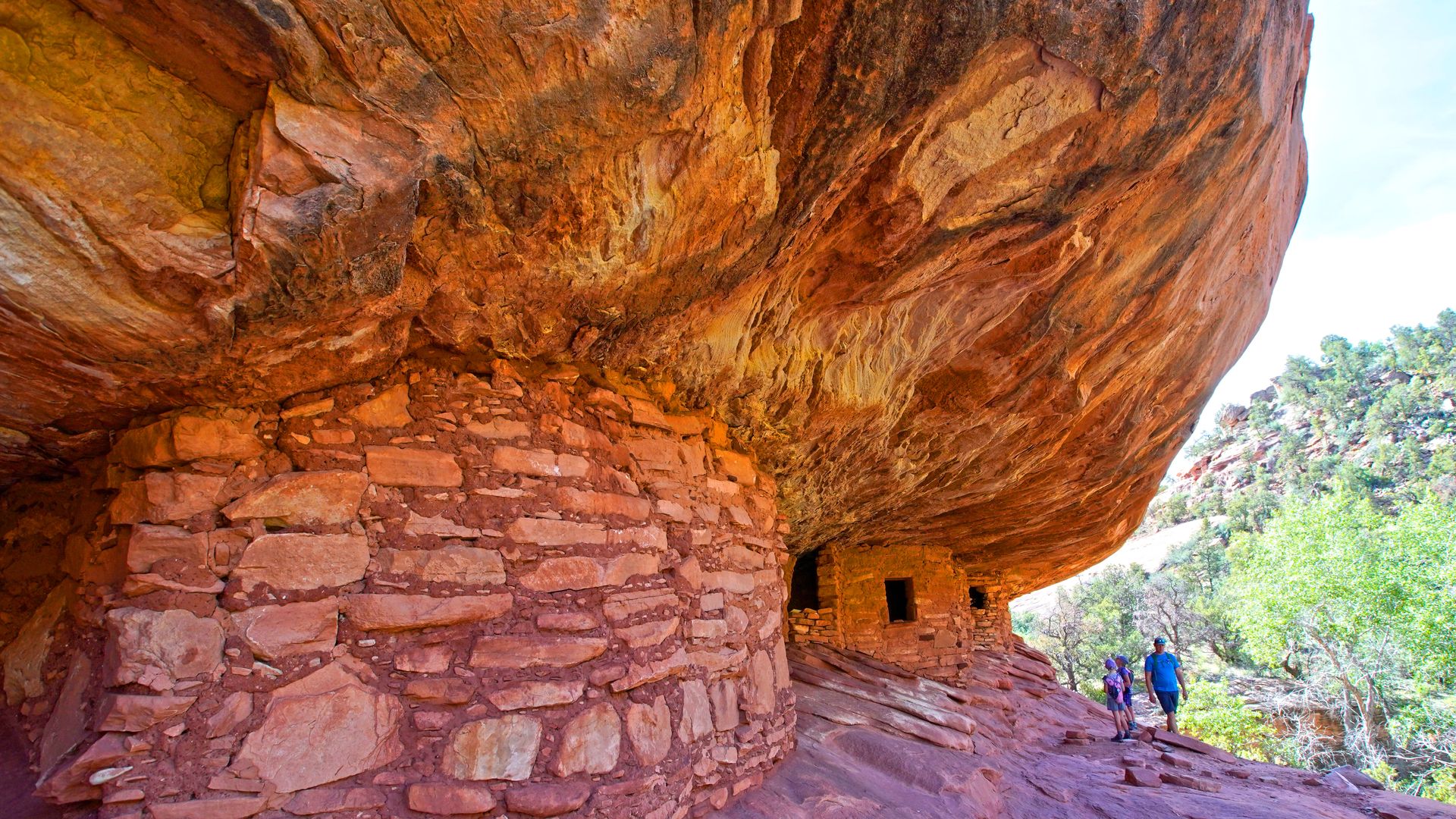
The Interior Department's plans to allow mining, drilling and grazing on lands formerly protected as Utah's national monuments went into effect on Thursday, the Washington Post reports.
The big picture: In 2017, President Trump reduced the size of Utah's Bears Ears National Monument by 85% and the Grand Staircase-Escalante by almost half, the acting assistant secretary for Land and Minerals Management with the Interior Department said, per AP.
The latest Energy Information Administration weekly data shows that U.S. crude oil exports have averaged above — usually well above — 3 million barrels per day for 12 consecutive weeks.
Why it matters: The weekly data that runs through the end of January is a sign that 3 million-plus is the new normal for U.S. crude exports.
An AI company with energy applications is emerging from stealth mode with $10 million from backers including VC arms of Chevron and the Malaysian oil giant Petronas.
Driving the news: Worlds, a spatial AI company being spun out of the firm Hypergiant Sensory Sciences, announced the Series A funding led by Align Capital.
Only a very small handful of oil companies have laid out any kind of targets around Scope 3 emissions, which make up the vastly larger pollution from the use of their products in the economy, but that's quickly changing amid rising activist and investor pressure on oil giants over global warming.
Driving the news: Oil-and-gas giant Equinor rolled out on Thursday new climate plans that include a pledge to cut carbon intensity (that is, emissions per unit of output) by at least 50% by 2050 — a commitment that will cover Scope 3.
Amazon is sharing new info about its late 2019 vow to buy 100,000 electric delivery vehicles from Rivian.
Why it matters: It's among the most aggressive moves in the fleet electrification space and, if indeed it proceeds, will cement Rivian's prominence among electric vehicle startups.
Two of the most important companies on the energy beat are having very different weeks.
The big picture: Tesla's shares went bananas again Tuesday, spending much of the day well above $900 before falling at the trading close and continuing its fall early Wednesday. Meanwhile, Exxon's stock has been on a downward trajectory all year that picked up speed with Friday's disappointing earnings report — eventually reaching a decade-low.
A global transition is underway from coal to renewable energy, but a corresponding jobs shift is far less certain.
Driving the news: Wind-industry jobs aren’t a “feasible” replacement for local coal-mining jobs in the world’s four biggest coal-producing nations, and although solar is better situated than wind, it would require a massive buildout, a new peer-reviewed report finds.
A powerful storm system that's seen temperatures plummet in the Rockies is set to bring heavy rain across the Southeast "and a long stretch of wintry weather from the southern Plains to the interior Northeast," the National Weather Service warns.
What's happening: Per the NWS, the effects of the system will be "far-reaching" and impact travel in a vast area that's likely to affect millions of people. Multiple weather-related crashes have already been reported in Denver — including one fatality, per the Denver Post. The city's temperature fell 58 degrees from a "daily-record-tying high of 74 at 2 p.m. Sunday to 16 degrees by 8 p.m. Monday," the Washington Post notes.