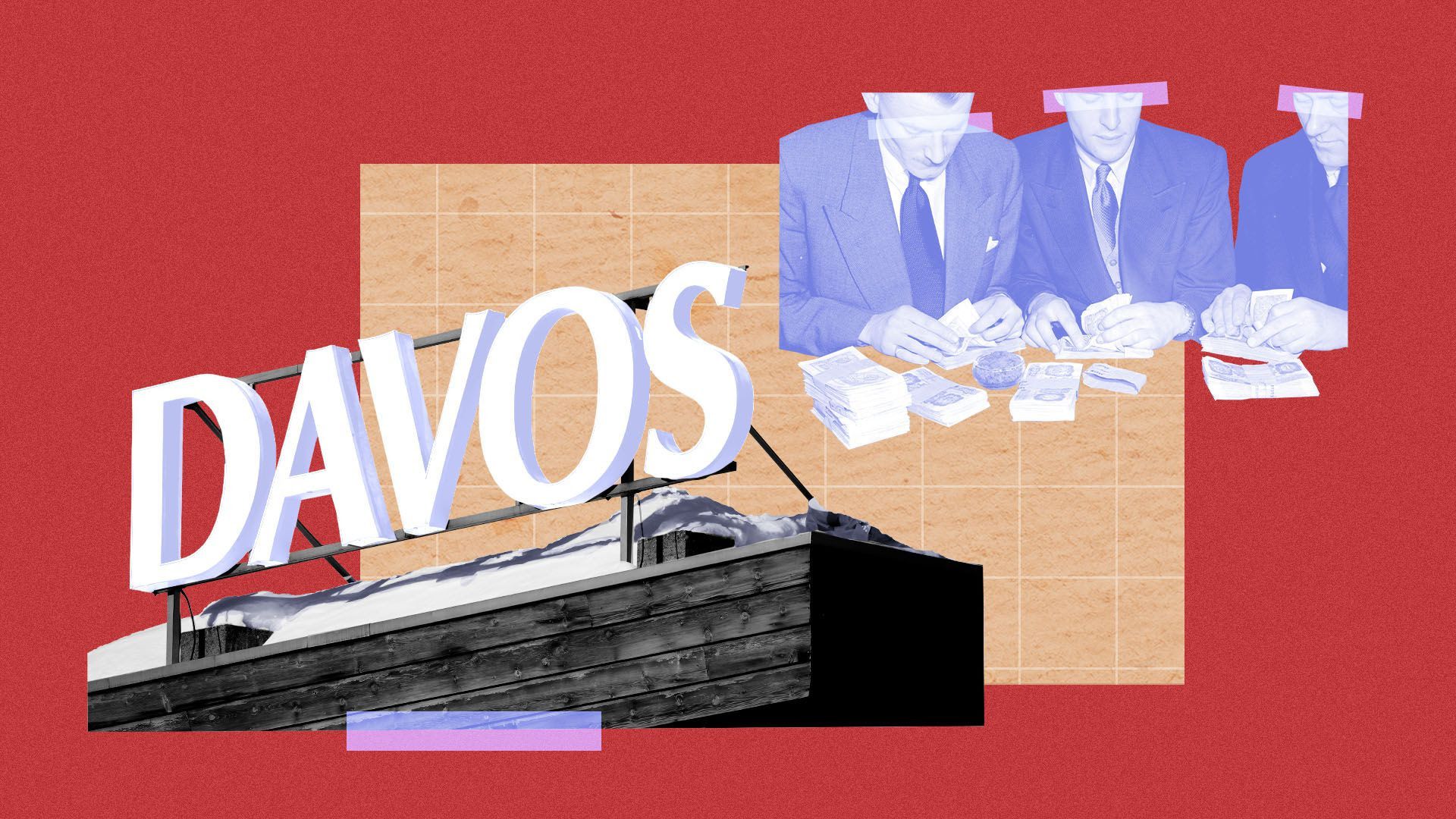
Call it the hypocrisy gap. Davos has always struggled with the difference between the conference's rhetoric and its reality. This year, as climate change and talk of "stakeholder capitalism" increasingly dominate the public agenda, the gap between why delegates go and why they say they go is wider than ever.
Why it matters: Davos, once a quiet Alpine talking shop, has become a global media frenzy. Governments, corporations, and the World Economic Forum itself (slogan: "Committed to Improving the State of the World") increasingly see Davos as an opportunity to send the message that they care deeply about {insert cause here}. But that's not what keeps the plutocrats returning year after year.
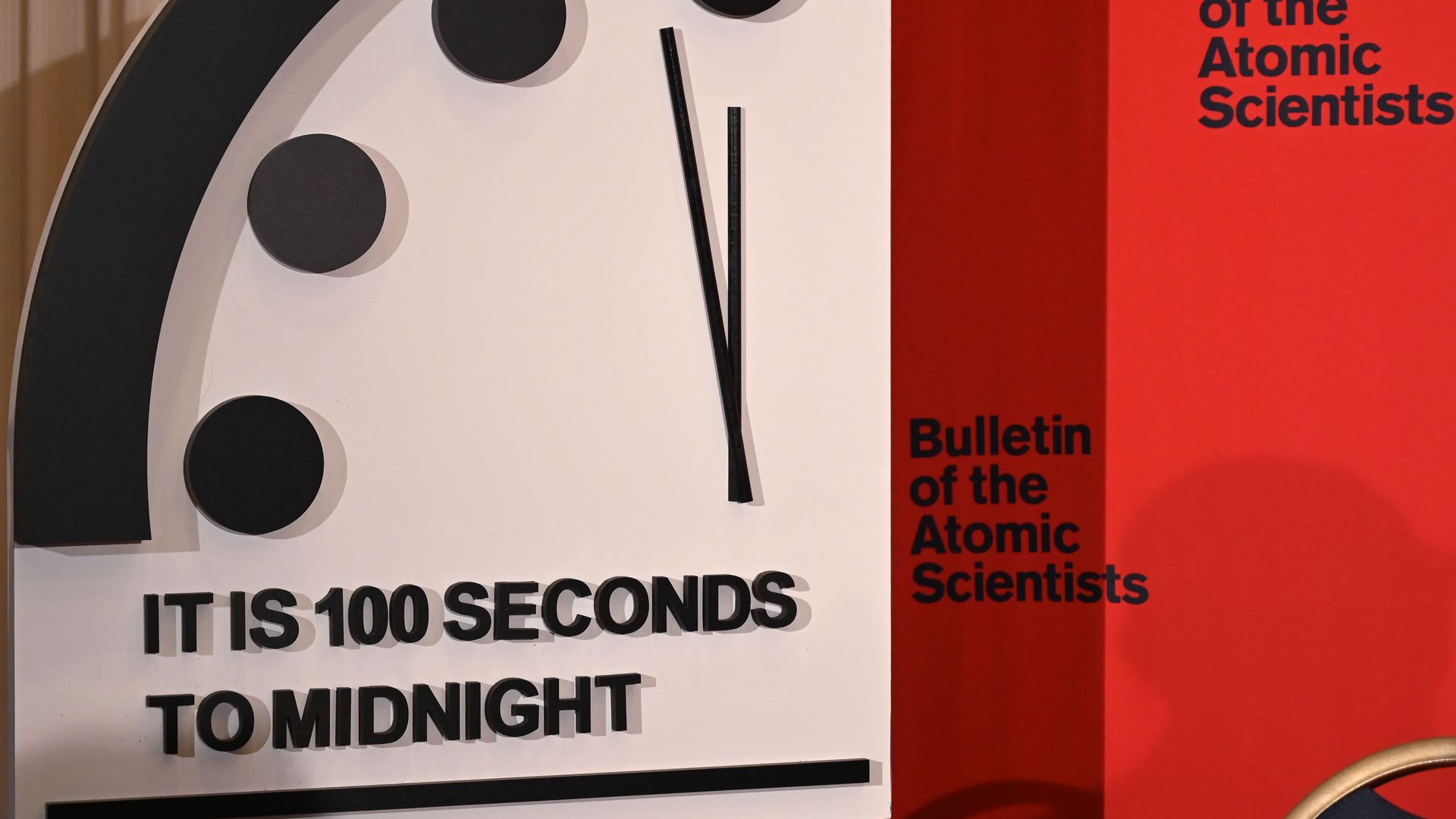
The Doomsday Clock was set Thursday to 100 seconds from midnight — the closest it has ever been to mankind's metaphorical destruction since its creation in 1947 — due to the growing threat of climate change and looming threat of nuclear war, according to the Bulletin of the Atomic Scientists' Science and Security Board.
What they're saying: The board shifted the clock ahead 20 seconds — its first change in seconds, instead of minutes — "to underscore the need for action." Its executive chairman, former California Gov. Jerry Brown, said, "Dangerous rivalry and hostility among the superpowers increases the likelihood of nuclear blunder. Climate change just compounds the crisis. If there's ever a time to wake up, it's now."
Hilco Redevelopment Partners will pay $240 million to buy Philadelphia Energy Solutions, a 5,000 acre oil refinery property in South Philadelphia, per bankruptcy court documents.
Why it matters: PES was the East Coast's oldest and largest oil refinery, before being partially destroyed by a fire and explosions last year. There had been hopes that this sale process would find a buyer interested in rebuilding and restarting the plant, which had employed around 1,000 people, but Hilco says it has no plans to do so.
Amazon, AT&T and IKEA are a few members of a new corporate alliance launched Wednesday that's aimed at deploying more electric vehicles in corporate fleets.
Why it matters: The players in the Corporate Electric Vehicle Alliance are big. And corporate fleets are seen as ripe for more EV adoption, given the advantages of centralized charging, bulk purchases and more.
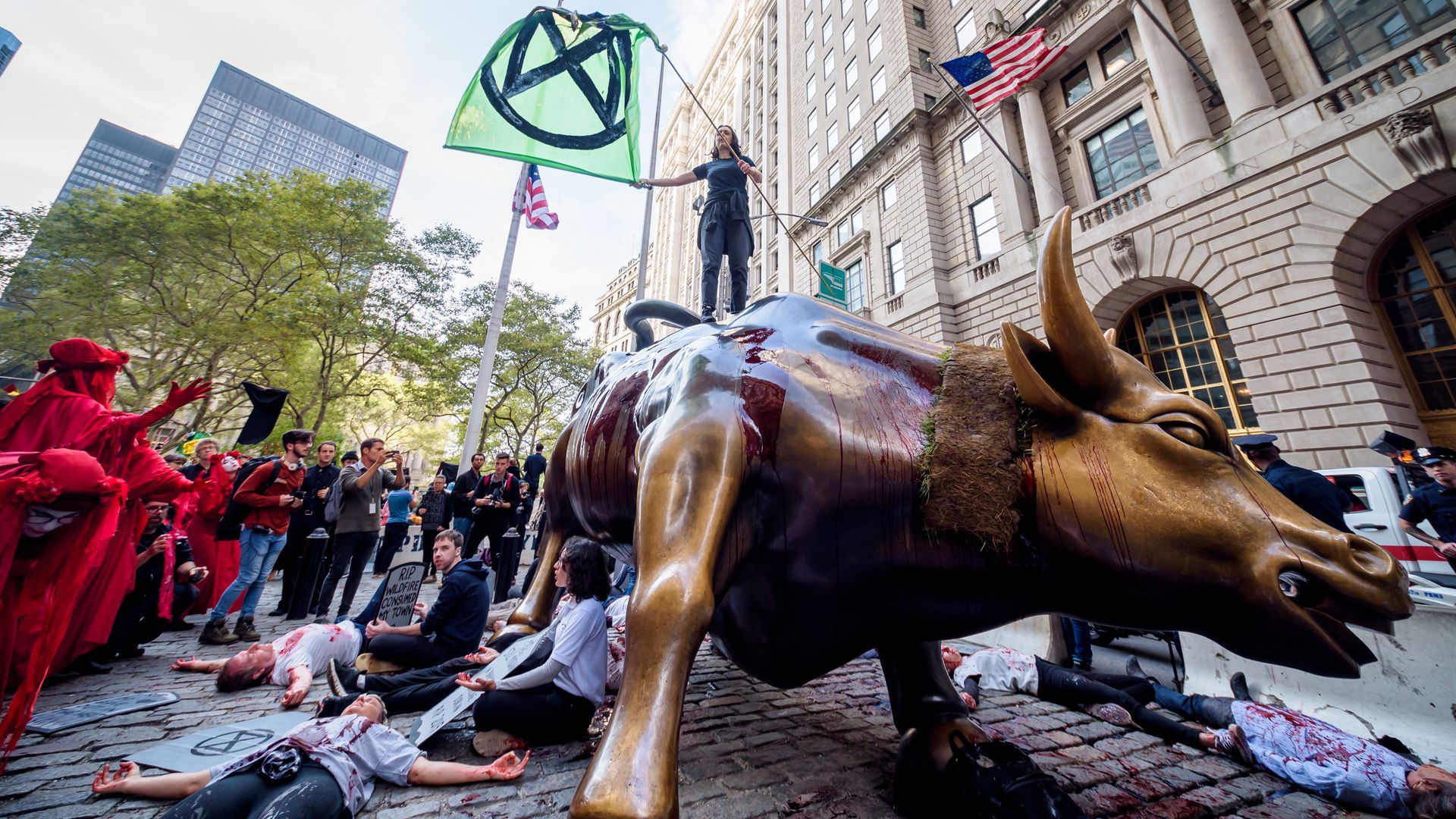
Big Oil often takes center stage, but big finance is having its climate moment this year, between the 2020 presidential elections and events at Davos.
Why it matters: It's the latest sign of how Wall Street is increasingly at the center for climate advocacy in at least two ways — and how White House hopefuls are part of those efforts.
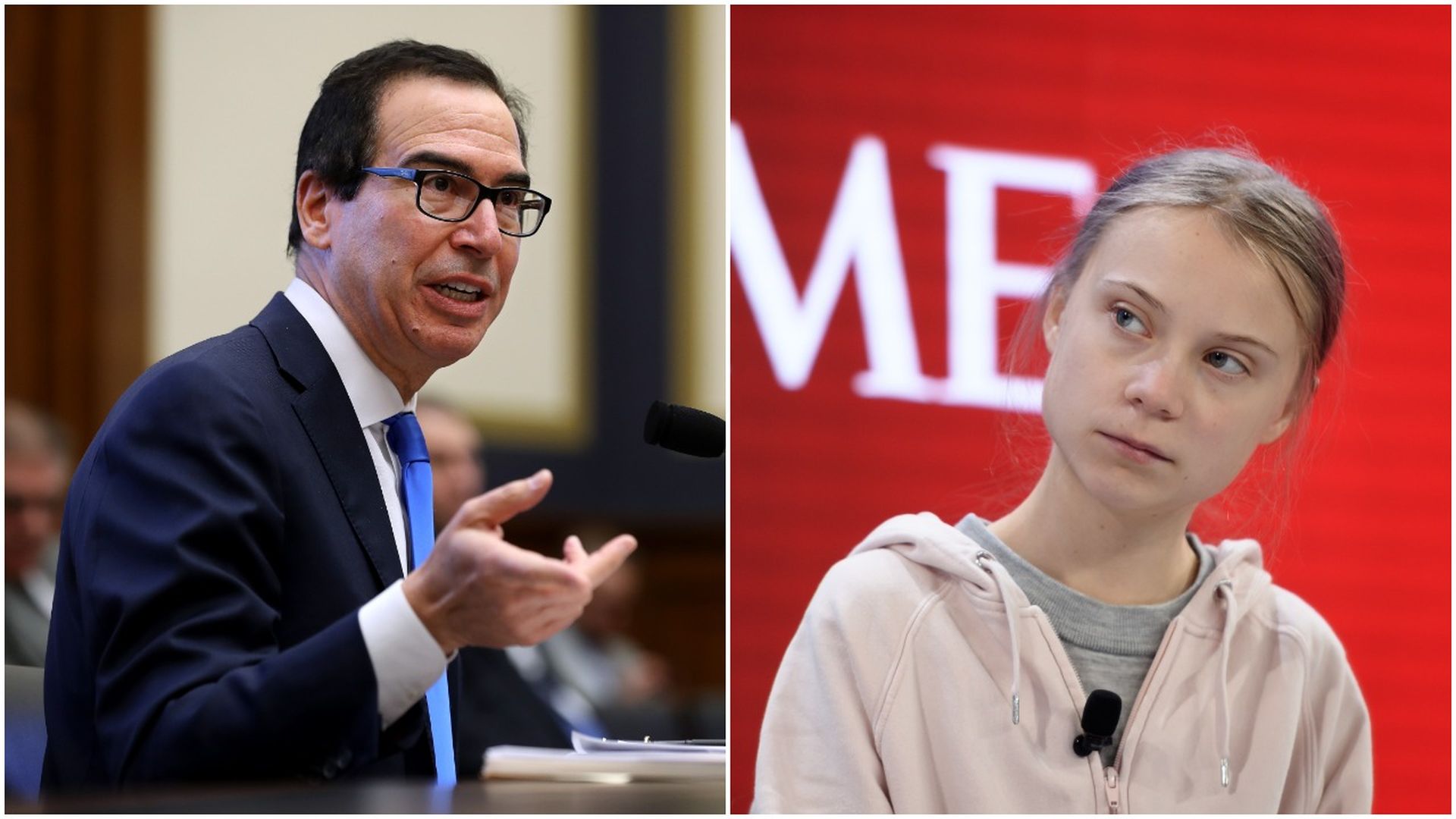
Treasury Secretary Steven Mnuchin took aim Thursday at teenage climate change activist Greta Thunberg during a press conference at the World Economic Forum in Davos, Switzerland, questioning if she is even qualified to talk about economic challenges, Bloomberg reports.
"Is she the chief economist? Who is she? I'm confused ... After she goes and studies economics in college, she can come back and explain that to us."
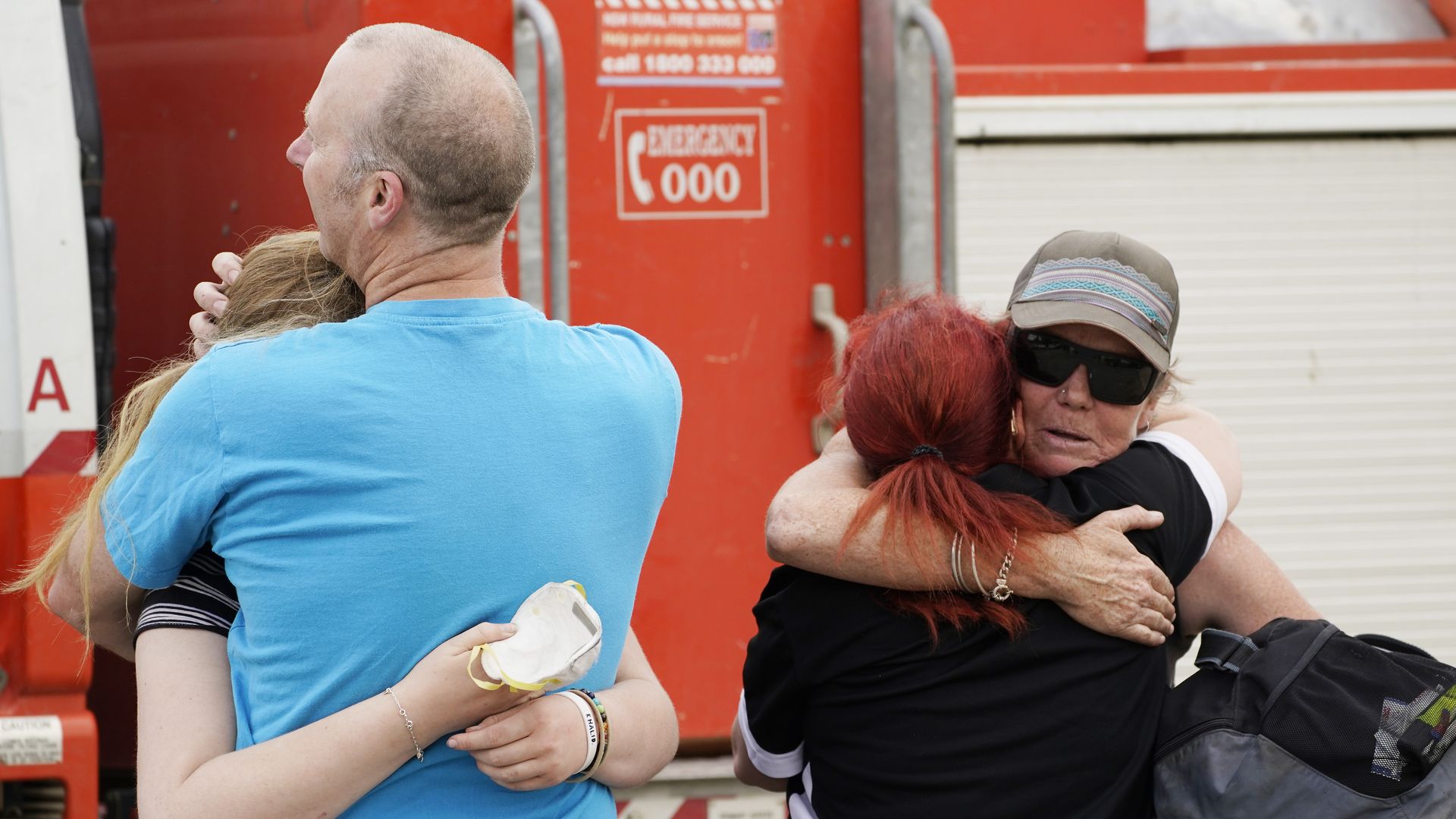
Three U.S. firefighters have died after a New South Wales Rural Fire Service air tanker crashed while fighting bushfires in the Australian state's Snowy Mountains, authorities confirmed at a news conference Thursday.
Details: NSW Premier Gladys Berejiklian said the Lockheed C-130 Hercules, operated by the Canadian company Coulson Aviation, crashed near Cooma in the southern part of the state. NSW RFS commissioner Shane Fitzsimmons said, "Initial reports are there was a large fireball associated with the impact of the plane as it hit the ground."
What's happening: Dust storms have been pummeling parts of southeast Australia for days. A massive bushfire in the Australian Capital Territory impacted flights at Canberra Airport, where hail the size of golf balls struck earlier in the week. The storms come days after floods hit southeast Queensland, which has also been impacted by the fires. Here's what's been happening, in photos.