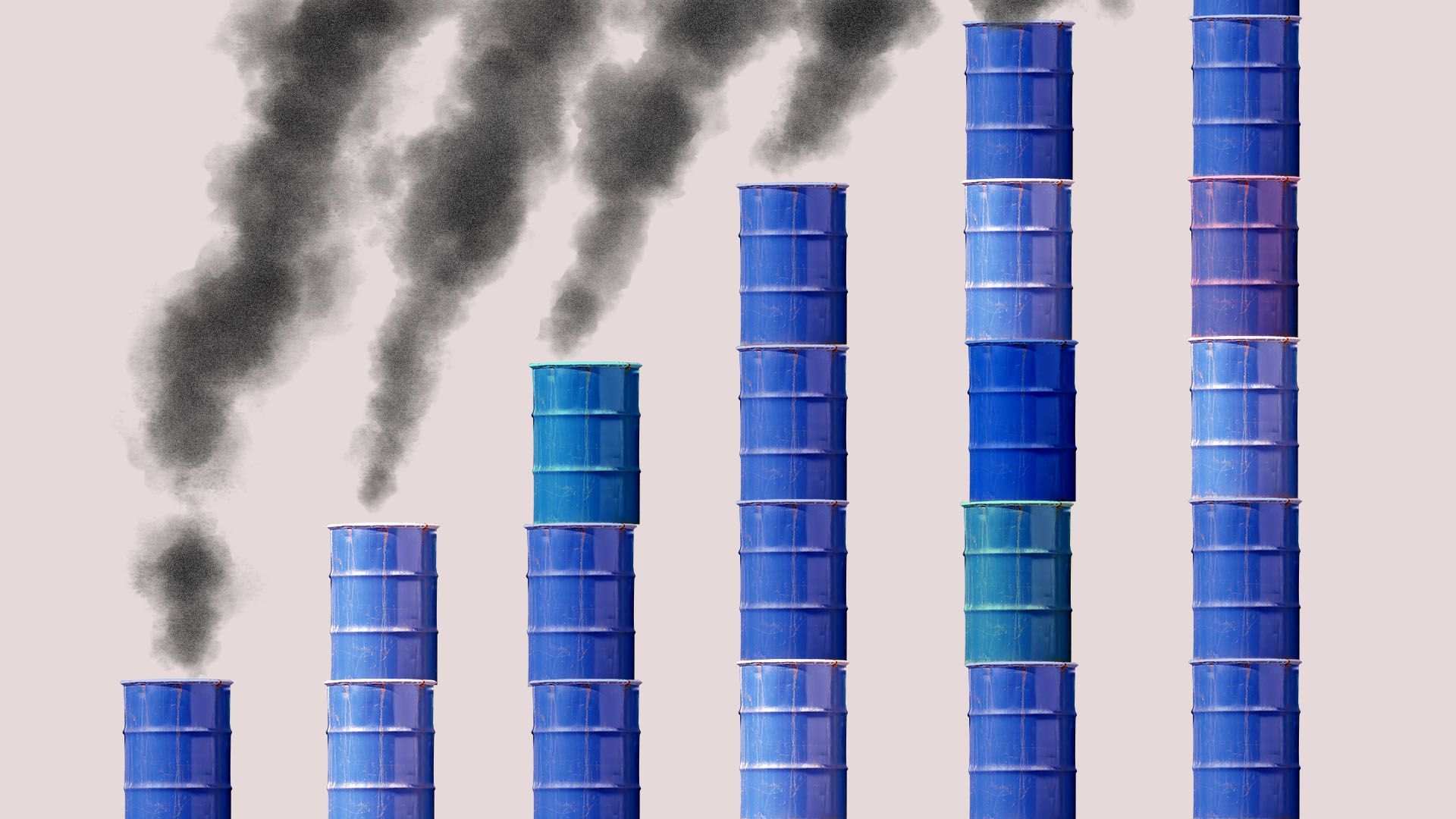
The planet faces a collective action problem of existential proportions. No one country or company can prevent catastrophic global warming; all of them need to work in conjunction with one another.
Why it matters: That kind of cooperation flies in the face of the standard capitalist mode, which is competition. If shareholders were to unite and force companies to cooperate on carbon reduction, that could prevent the death and displacement of millions of people.
The Gulf Coast industrial facilities built to use surging oil and natural gas production from shale formations could become a very large source of greenhouse gas emissions, a peer-reviewed study concludes.
Why it matters: The paper in Environmental Research Letters bolsters understanding of shale's potential climate effects by looking closely at petrochemical plants, LNG terminals and other facilities (much of it in the planning stages).
A new analysis finds that California is not on track to meet its 2030 greenhouse gas reduction targets absent new and toughened clean energy policies.
Why it matters: California has many of the nation's most aggressive programs, so the results shows the difficulty of achieving steep state-level cuts in that state and others adopting ambitious climate targets.
It's official: Last year was the world's second hottest on record, and 2010-2019 was the hottest decade ever recorded.
Why it matters: The findings, published in two separate reports by NOAA and the British weather service the Met Office Wednesday, are in line with those of research group Berkeley Earth, revealed at the start of the year. It's yet more evidence of the long-term warming trend that stems from human-induced greenhouse gas emissions.
More than a dozen trade groupsled by the Consumer Brands Association (CBA) Wednesday morning launched a coalition to help craft federal policy that would "fundamentally reimagine the U.S. recycling system."
Why it matters: The coalition includes some prominent K Street players and hopes to create "consistent rules and practices" around what's now a crazy-quilt of recycling systems nationwide.
Wind and solar make up more than three-quarters of the electricity capacity coming online in the country this year, new U.S. Energy Information Administration data show.
Why it matters: These two renewable sources of energy are increasingly becoming cost-competitive, even while government subsidies for them are lessening, compared to traditionally dominant sources, such as natural gas and coal.
BlackRock's climate strategy rolled out Tuesday won't leave anyone confusing the asset management giant with Greenpeace, despite the suite of big new pledges.
Driving the news: Take the plan to dump producers of thermal coal — the stuff used in power plants — from their active portfolios.
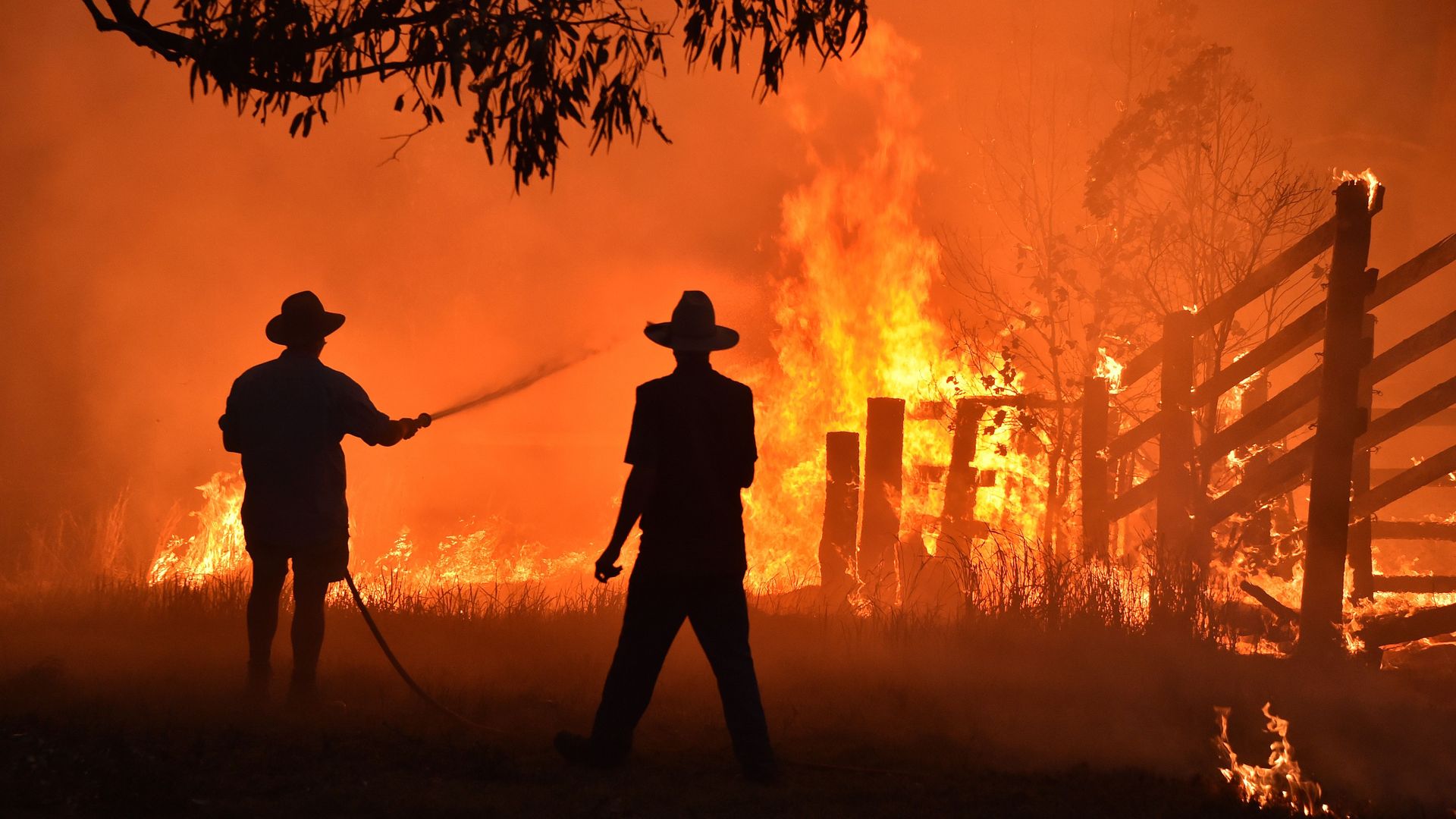
The world is entering the age of extreme fire — and we're increasingly unprepared for it.
The big picture: As we've seen in Australia, California and the Amazon, fires are burning hotter, longer and more frequently around the world. Our resources to suppress them are stretched dangerously thin. And even though the wildfires are getting worse, the way we fight them hasn't changed in a century.